

The All Progressives Congress Presidential Campaign Council (APC-PCC) has challenged former Vice President Atiku Abubakar to explain the legal, fiscal and operational basis of his proposed “production subsidy” for locally refined petrol.
The council’s position followed Atiku’s recent call for a reduction in petrol and diesel prices and his proposal for government support to locally refined petroleum products as a means of lowering pump prices.
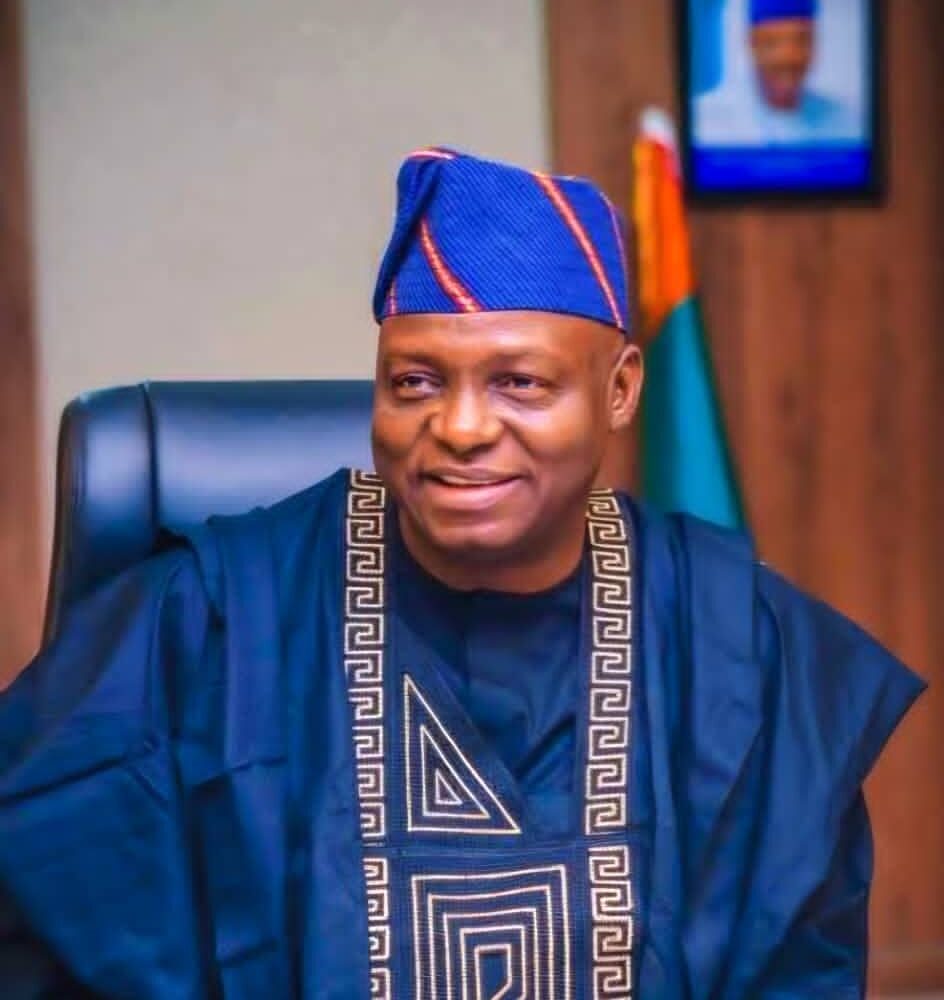
In a statement issued on Sunday by its spokesman, Dele Alake, the APC-PCC said the proposal raised important questions about its compatibility with the Petroleum Industry Act (PIA) 2021 and the financial implications for government.
Alake cited Section 205(1) of the PIA, which provides that wholesale and retail prices of petroleum products shall be determined by unrestricted free-market conditions.
He also referred to the Nigerian Midstream and Downstream Petroleum Regulatory Authority (NMDPRA), which recently stated that it does not fix petrol pump prices or issue administrative pricing templates except where statutory conditions for intervention are met.
The council therefore asked Atiku to clarify whether a refinery receiving the proposed subsidy would be required to sell petrol at a prescribed price.
It said that if the answer was yes, Atiku should identify the legal framework that would allow government to impose such a condition and explain how it would operate within the provisions of the PIA.
“If the answer is no, he should explain how public support to refiners would guarantee lower prices at filling stations,” the council said, warning that without an enforceable mechanism, refiners could receive the benefit while consumers continued to pay market prices.
The APC-PCC also demanded details of the financial implications of the proposed intervention, particularly how it would be funded.
According to the council, Atiku had previously suggested that the intervention could involve supplying crude oil to domestic refineries at preferential prices.
Alake argued that any discount on crude supplied to local refineries would reduce the value accruing to the Federation and consequently affect revenues available to the federal, state and local governments.
The council estimated that, depending on the size of the discount, volume covered and whether the support applied to the entire barrel or only petrol sold domestically, the cost of the proposed subsidy could run as high as ₦17 trillion or ₦21 trillion annually.
It consequently demanded that Atiku disclose the proposed subsidy rate, annual spending ceiling, volume of crude or petrol to be covered, source of funding and mechanism that would guarantee lower pump prices.
The council also asked for details of safeguards against diversion, smuggling and fraudulent claims, as well as clarification on whether implementation of the proposal would require amendments to the PIA.
Alake stressed that an appropriation by the National Assembly could authorise expenditure but would not, on its own, resolve every regulatory question arising under the Petroleum Industry Act.
The APC-PCC further challenged Atiku to reconcile his current position with his previous support for downstream deregulation.
The council recalled that Atiku, while speaking at the Lagos Business School in November 2022, had described the petrol subsidy system as fraudulent and pledged to complete its removal.
It also cited Atiku’s August 25, 2026 declaration on X that he would “restore it”, asking him to explain the policy shift and how the proposed arrangement would avoid the abuse, scarcity, smuggling and fiscal losses associated with the old subsidy regime.
The council also traced aspects of Nigeria’s downstream petroleum deregulation to the administration of former President Olusegun Obasanjo, during which Atiku served as Vice President.
It said diesel was deregulated in June 2003, while aviation fuel also moved to market pricing under the same administration. The Buhari administration later deregulated kerosene in 2016, while petrol remained under the old subsidy regime until the reforms provided for under the PIA.
According to the APC-PCC, Nigeria spent about two decades developing the PIA, with the reform process beginning in 2000, during Atiku’s first term as Vice President.
The council therefore said Atiku should explain how his proposed production subsidy aligns with the legal and regulatory framework that emerged from the petroleum-sector reform process.
Defending the Tinubu administration’s approach, the APC-PCC said the government was pursuing alternative-energy solutions, including compressed natural gas (CNG) and electric mass transit programmes, to reduce transportation costs.
The council said more than 120,000 vehicles had been converted to CNG, with additional private conversions ongoing, while CNG and electric buses were being deployed across several states.
It said commuters in seven states and the Federal Capital Territory were already benefiting from reduced fares on routes served by CNG and electric buses.
The council cited Borno State, where it said CNG services charge between ₦50 and ₦100 on routes where commercial operators charge between ₦300 and ₦600.
It also cited the Suleja-Abuja route in Niger State, where passengers reportedly pay ₦550 instead of about ₦800.
The council said Kaduna’s free CNG buses carried more than 1.4 million passengers in five months of 2025, saving residents an estimated ₦1.39 billion in fares.
It added that alternative-energy transport initiatives had reduced fares by as much as 50 per cent in Adamawa State, while Abia State had deployed 40 electric buses and 20 charging stations.
The APC-PCC maintained that the Tinubu administration would continue with a deregulated petroleum market while supporting increased investment in domestic refining.
It cited the Dangote Petroleum Refinery’s expansion and reported progress towards its 650,000-barrel-per-day nameplate capacity as evidence of growing domestic refining capacity.
The council, however, acknowledged the pressure high petrol prices place on Nigerian families and said the Tinubu administration would continue to implement measures to support citizens.
It said the NMDPRA was working with the Federal Competition and Consumer Protection Commission against price-gouging and with the Nigeria Customs Service to tackle the diversion of petroleum products across Nigeria’s borders.
The APC-PCC argued that returning to a subsidy regime could revive challenges associated with the former system, including mounting public expenditure, petrol queues, smuggling and revenue losses.
The council called on Atiku to provide Nigerians with a detailed policy document and an independent legal and fiscal analysis of his proposed production subsidy.
It maintained that every intervention in the downstream petroleum sector must be lawful, transparent, properly costed and capable of delivering measurable benefits to consumers.
Alake said until Atiku provided the requested details, the production-subsidy proposal remained an uncosted policy promise without a clearly identified legal or operational framework.