

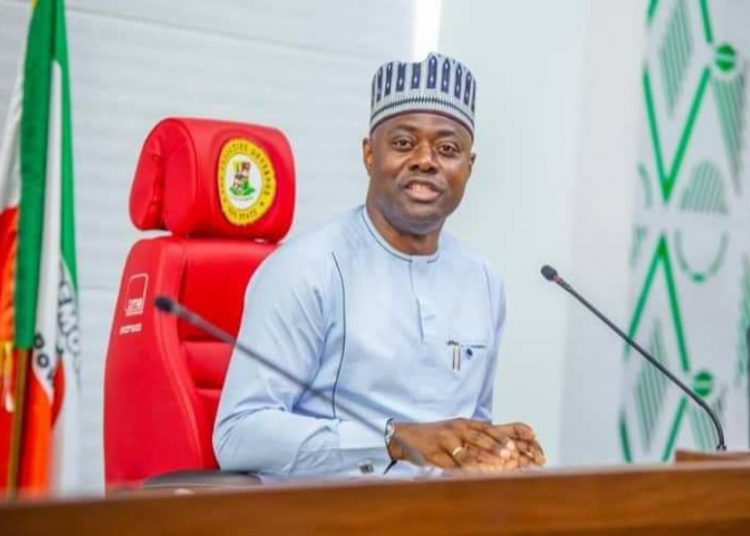
The Muslim Rights Concern (MURIC) has accused Oyo State Governor, Seyi Makinde, of religious discrimination and alleged persecution of Muslims in the state, warning Nigerian Muslims against supporting his 2027 presidential ambition.
The Islamic human rights organisation alleged that Makinde was seeking the support of Muslim voters across the country despite what it described as his record of marginalisation and violation of the religious rights of Muslims in Oyo State.
In a press statement issued on Wednesday, November 4, 2026, MURIC’s Founder and Executive Director, Professor Ishaq Akintola, alleged that the governor would exploit Muslim votes to secure the presidency but could turn against the same community if elected.
Makinde, who is seeking the presidency under the platform of the Allied Peoples Movement (APM), declared his ambition in May 2026 as part of the PDP-APM political alliance ahead of the 2027 general election.
MURIC said it was concerned that the governor was campaigning across the country, particularly in northern communities, to solicit Muslim support while allegedly denying Muslims in his home state their fundamental rights.
“We are surprised that Seyi Makinde wants to lead a multi-religious country like Nigeria where the Muslims form the majority after committing a ton of atrocities against the Muslims,” the organisation stated.
The group accused the governor of political marginalisation, economic deprivation and religious persecution, insisting that his alleged actions in Oyo State raised concerns about how he would treat Muslims if elected president.
Listing what it described as five major instances of anti-Muslim actions under Makinde’s administration, MURIC recalled the demolition of Olore Mosque and Adogba Central Mosque in Ibadan in October 2019.
It alleged that the demolitions took place despite appeals from Islamic organisations and Muslim leaders.
The organisation also faulted the relocation of the rebuilt Adogba Central Mosque from its former strategic location around Iwo Road to a less prominent neighbourhood, alleging that Makinde’s name was conspicuously displayed on the mosque as its benefactor.
According to MURIC, although the governor subsequently removed his name from the mosque’s main gate following public criticism, his name remained on the building’s wall.
The organisation questioned whether public funds were used for the reconstruction, demanding evidence to establish that the governor personally financed the project.
MURIC further accused the Makinde administration of allowing Muslim students and teachers in public schools to be compelled to participate in Christmas carol activities.
It also alleged that Muslim students were forced to attend Christian evangelistic crusades organised in public schools, citing activities involving the ministry of the late Reinhard Bonnke and his successor, Daniel Kolenda.
The group claimed that the governor responded aggressively when it challenged the alleged practices, including the reported involvement of the Department of State Services (DSS) in summoning its Executive Director, Professor Akintola.
On political appointments, MURIC alleged that Muslims were inadequately represented in Makinde’s administration, claiming that the governor appointed five Muslims and 11 Christians as commissioners, while only one Muslim was appointed board chairman against five Christians.
Describing the alleged developments as evidence of religious imbalance, the organisation questioned whether the governor would guarantee equal treatment for Muslims across Nigeria if he eventually occupied the nation’s highest political office.
“An anti-Muslim governor today will be an anti-Muslim president tomorrow. Don’t give him Muslim votes because he is most likely to persecute Muslims when he becomes president,” MURIC declared.
The organisation consequently urged Nigerian Muslims to scrutinise Makinde’s political record and disregard what it described as attempts by individuals working with the governor to persuade them through financial inducements.
It maintained that Muslims should not allow their electoral support to be used against their religious interests.
MURIC’s statement comes amid growing political activities ahead of the 2027 general election, with presidential candidates and political parties intensifying consultations and engagements across the country.


