

On September 23, 1987, Akwa Ibom State was created from the former Cross River State by the military administration of General Ibrahim Babangida.
Thirty-nine years later, the state stands as a notable example of how a young sub-national entity can evolve through successive phases of governance, with its development shaped by different administrations and changing priorities.
The story of Akwa Ibom can broadly be viewed through four phases: foundation, transformation, industrialisation and consolidation.
Before the return of democracy in 1999, successive military administrations were confronted with the task of building the institutional and administrative foundations of the young state.
Seven military administrators served during the period, establishing the structures required to run the state, with Uyo as its capital. The development of the state secretariat, expansion of administrative institutions and the establishment of the 31 local government areas provided an important framework for governance and grassroots administration.
The return of democratic rule in 1999 ushered in a new chapter.
Obong Victor Attah, an architect, emerged as the state’s first elected governor. His administration brought a long-term development vision, with emphasis on projects and institutions intended to position Akwa Ibom for sustained growth.
Projects such as the State House of Assembly complex, Ibom Hotel and Golf Resort, Ibom Power Plant and Victor Attah International Airport reflected that vision.
Beyond infrastructure, Attah played a prominent role in the struggle over the onshore-offshore dichotomy, a dispute that had significant implications for the revenue available to oil-producing states.
The Supreme Court judgment and the subsequent 13 per cent derivation framework altered the fiscal circumstances of oil-producing states, including Akwa Ibom, providing a stronger financial base for development.
The Attah administration also pursued civil service reforms and expanded the vision of what the young state could become.
In 2007, Senator Godswill Akpabio assumed office as governor, beginning a period widely associated with vigorous implementation and visible physical transformation.
If the Attah years focused substantially on strategic vision, the Akpabio years were characterised by an aggressive push to translate that vision into visible infrastructure and social interventions.
More than 1,900 kilometres of roads were constructed during the period, including major highways, Airport Road and a number of flyovers that transformed the appearance and connectivity of Uyo and other parts of the state.
The Ibom International Airport was completed, alongside supporting aviation infrastructure, including a maintenance, repair and overhaul facility.
Uyo itself underwent significant physical transformation, with major projects including the 30,000-capacity stadium, Ibom E-Library and Tropicana Entertainment Centre.
The administration also introduced free and compulsory education and free healthcare for pregnant women and children under the age of five, linking physical development with social investment.
In the health sector, the Ibom Specialist Hospital became one of the administration’s major investments, reflecting an ambition to position the state as a destination for quality healthcare.
The philosophy of visible governance was captured in the expression, “Let my people see what government money can do,” a phrase that became closely associated with Akpabio’s administration and contributed to his sobriquet, “The Uncommon Transformer.”
The period significantly changed perceptions of Akwa Ibom, as the state moved from the foundational work of its early years towards an era of large-scale infrastructure development.
In 2015, Udom Emmanuel assumed office and shifted the emphasis towards industrialisation and expanding the state’s productive capacity.
The syringe and intravenous fluid factories, coconut refinery, metering factory and vehicle assembly plants reflected efforts to increase local production, create jobs, reduce import dependence and broaden the state’s economic base.
Under Emmanuel, the philosophy was that infrastructure should not exist merely as physical monuments but should provide the foundation for production, enterprise and economic opportunity.
His administration also advanced the Ibom Deep Sea Port project and pursued agricultural initiatives under the Green Economic Revolution.
Model primary schools were developed across the local government areas, while other interventions were targeted at improving education and human capital.
On May 29, 2023, Pastor Umo Eno assumed office as governor and introduced the ARISE Agenda, an acronym built around Agricultural Revolution, Rural Development, Infrastructural Maintenance and Advancement, Security Management and Education.
With the state having accumulated decades of investments in infrastructure, institutions and development projects, the emphasis shifted towards consolidation and grassroots impact.
Through initiatives such as the ARISE Farmers Accelerator, the administration has supported farmers and distributed agricultural inputs as part of efforts to strengthen food production and improve livelihoods.
Roads, healthcare facilities and other development projects have also been pursued across the state’s 31 local government areas.
For the Umo Eno administration, consolidation means ensuring that existing investments are maintained, completed, operationalised and made to deliver tangible benefits to citizens.
It does not mean abandoning the past. Rather, it means making the investments of the past work more effectively for the future.
The administration has also promoted political and social unity in the state. The relationship between Governor Umo Eno and Senate President Godswill Akpabio has created room for cooperation between the state and the Federal Government on major development initiatives.
Among the projects receiving attention are the Ibom Deep Sea Port, expansion of the airport and federal road projects, including sections of the Lagos-Calabar Coastal Highway, the East-West Road and the Ikot Ekpene-Aba Road.
Beyond the physical projects, the political relationship has also been presented as contributing to an atmosphere in which political energy can increasingly be redirected towards development.
Perhaps the clearest illustration of Akwa Ibom’s developmental journey is the airport.
Conceived under Victor Attah, completed during the administration of Godswill Akpabio, further developed under Udom Emmanuel and receiving continued attention under Umo Eno, the airport represents a thread of continuity across successive administrations.
Its story illustrates a broader principle: development is rarely the product of one administration alone. Projects conceived by one government can be completed by another, expanded by a third and maintained or repositioned by subsequent administrations.
At 39, therefore, Akwa Ibom’s story is one of continuity, adaptation and collective ambition.
From the foundational years of state creation, through the transformation associated with major infrastructure projects, the industrialisation drive and the current emphasis on consolidation, successive administrations have contributed different chapters to the state’s development story.
The next chapter will depend on how effectively the state consolidates its gains, sustains its infrastructure, expands productive opportunities and continues to improve the lives of its people.
Akwa Ibom at 39 is not simply a story of what has been built. It is a story of what successive generations of leadership and citizens have sought to create — and of the continuing ambition to turn past investments into a stronger foundation for the future.
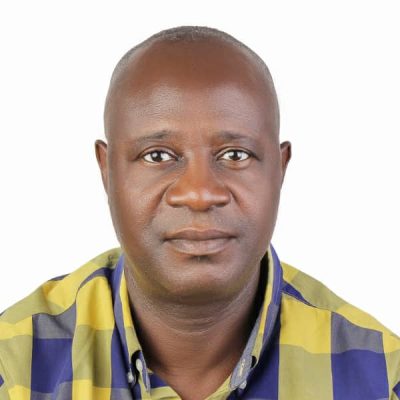
*Hon Eseme Eyiboh, is Special Adviser (Media and Publicity) and Spokesperson to the President of the Senate, Senator Godswill Akpabio,