
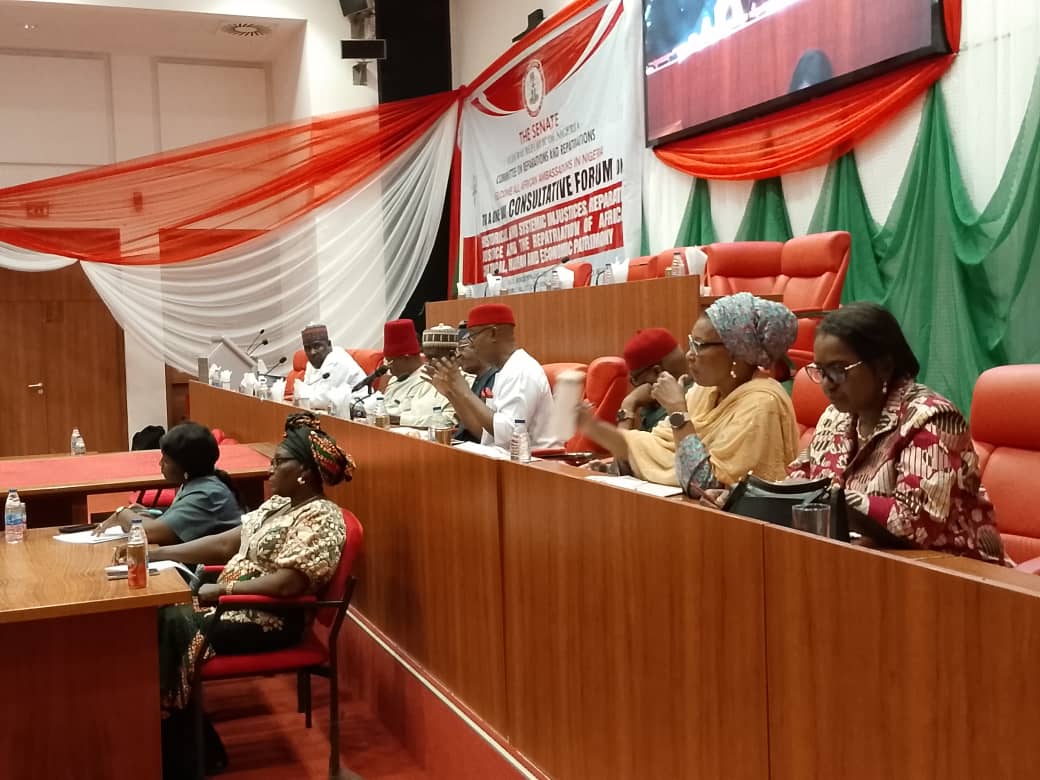
In a landmark effort to address the long-standing legacies of colonialism and chart a new course for justice, the Nigerian Senate Committee on Reparation and Repatriation hosted a high-level consultative forum with African diplomats at the National Assembly Complex, Abuja.
The one-day forum convened envoys from across the continent to deliberate on reparative justice, the restitution of looted cultural assets, and the adoption of unified strategies to redress centuries of historical exploitation.
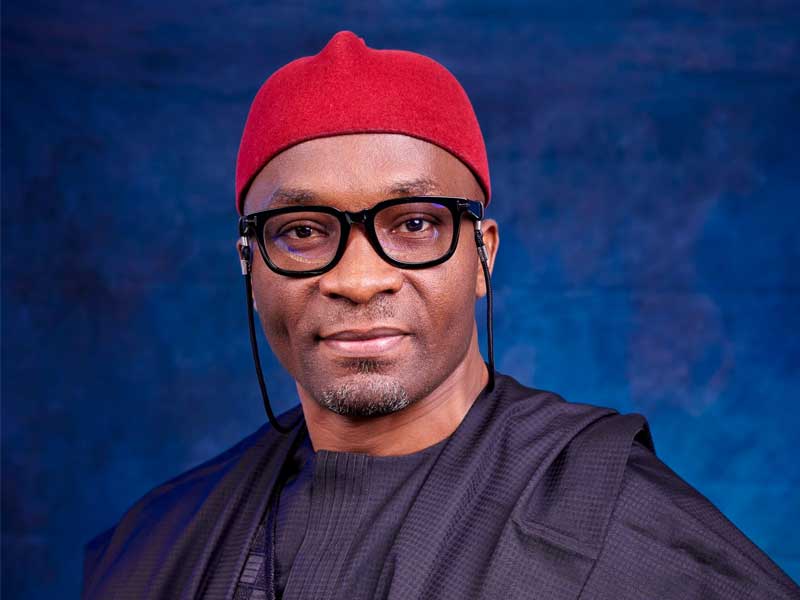
Chairman of the Senate Committee, Senator Ned Munir Nwoko, in his welcome address, emphasized the importance of African unity in confronting the continent’s painful past. He said the time had come for African nations to demand accountability for the injustices of slavery and colonization, particularly in relation to the economic and cultural losses that have endured for generations.
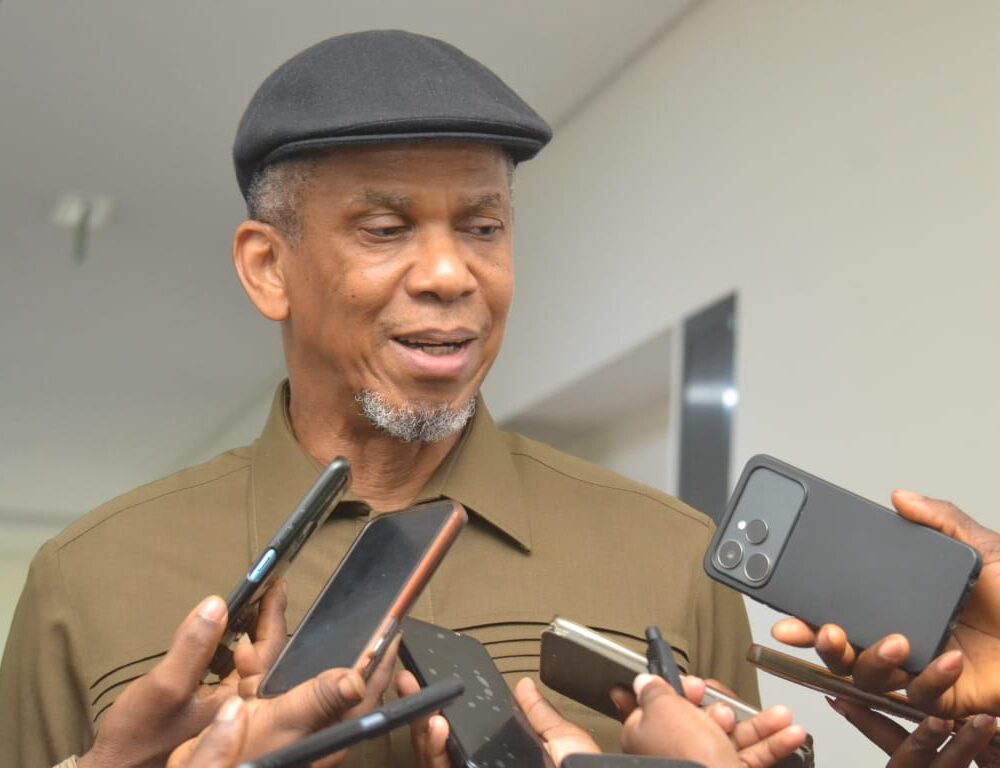
Speaking on behalf of the President of the Senate, the Chief Whip, Senator Tahir Mongunu, acknowledged that global attention on the subject of reparations is steadily growing.
“Across the globe, the issue of reparation and repatriation has taken center stage. The scars of slavery, colonialism, systemic injustice, and forced migration continue to define the African experience,” Mongunu stated.
The gathering was emotionally charged, especially during a powerful poetic performance by Rex E. Odoemenam, whose evocative delivery brought tears to many, including Senator Victor Umeh, who described the message as “a reminder of the continent’s brutal past.”
During the forum, African diplomats expressed overwhelming support for the Senate’s initiative. Ambassador Mohammed Fouad of Egypt reaffirmed solidarity with the call for justice and stressed the importance of returning cultural artifacts taken during colonial rule, noting that Egypt’s ancient civilization had suffered immense cultural theft.
Ambassador Selestine Gervas Kekele of Tanzania shared his nation’s experience, remarking that although Germany had returned some human skulls taken during the colonial era, valuable items such as dinosaur fossils remained abroad and were generating foreign revenue. He advocated for a continental approach and called for Caribbean nations to be included in the wider conversation on reparative justice.
Ambassador Maxwell Ranga of Zimbabwe lamented Africa’s prolonged silence in the face of exploitation. He decried the continued extraction of African resources and labour and underscored the urgent need for African industrialization and economic sovereignty.
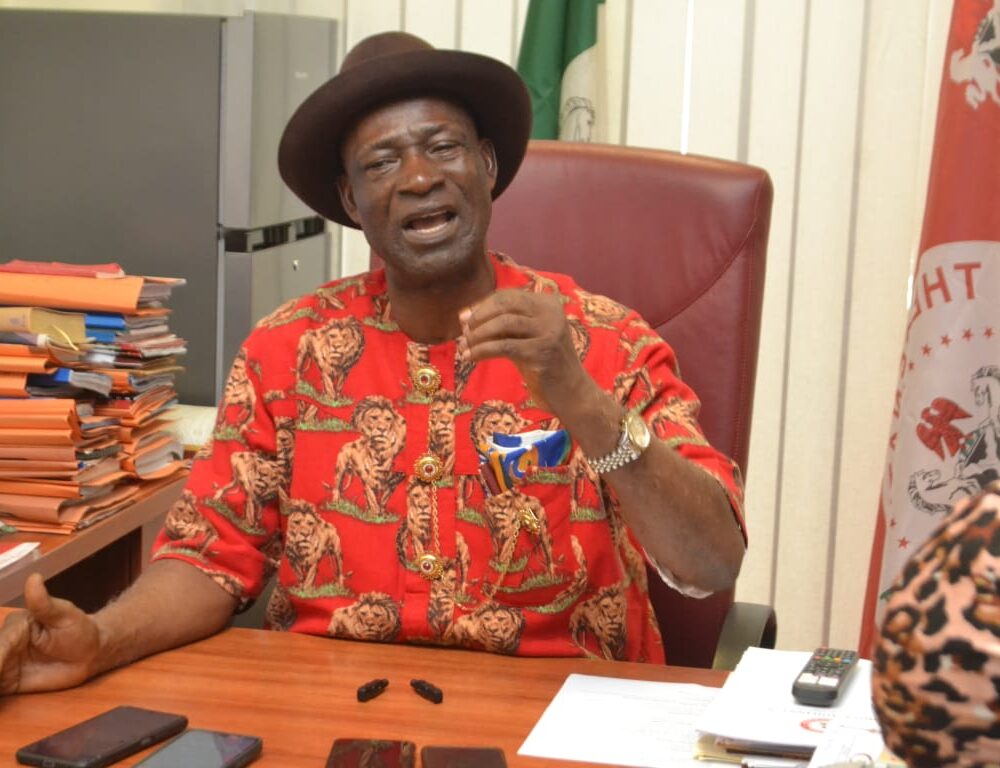
Senator Ipalibo Banigo described the event as “a moment of reckoning” and cautioned against politicizing the historical pain inflicted on African societies.
“If we forget our history, we risk repeating it,” she warned.
In a passionate remark, Senator Ned Nwoko challenged the diplomatic community to reflect on Africa’s disunity.
“Why should Africans need international passports to travel between neighbouring countries?” he asked, calling for deeper regional integration and a breakdown of artificial colonial borders that still divide the continent.
The forum also acknowledged the contributions of consultants who have worked closely with the Senate Committee in advancing its cause, recognizing their support in shaping the national and continental agenda on reparations and repatriation.
In his closing remarks, Senator Nwoko called on African diplomats to take ownership of the movement within their respective countries.
“This is not just a Nigerian movement; it is a pan-African mission. Let us rise together and reclaim our dignity, our history, and our future,” he declared.
The forum marked a historic step forward in building consensus among African nations to demand redress for the injustices of the past and forge a united front in reclaiming what rightfully belongs to the continent.