

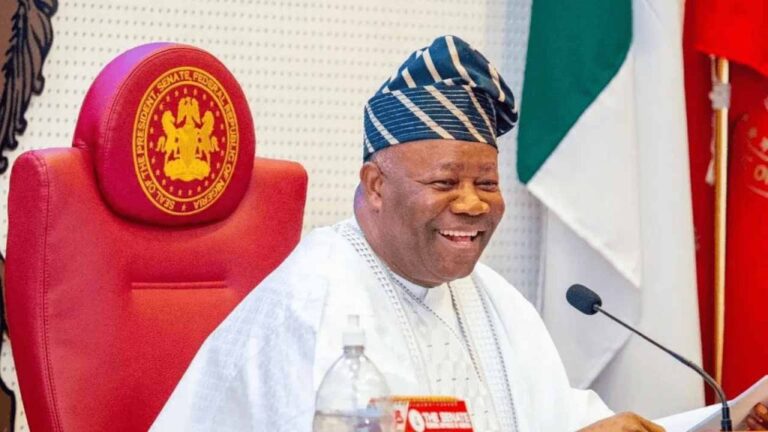
The Senate has constituted a seven-member ad hoc committee to harmonise lawmakers’ inputs on proposed amendments to the Electoral Act, as efforts intensify to strengthen Nigeria’s electoral framework ahead of the 2027 general elections.
The decision followed a three-hour closed-door executive session held on Thursday, during which senators further examined the Electoral Act (Repeal and Enactment) Bill currently before the National Assembly.
Announcing the development, Senate President Godswill Akpabio said the committee was mandated to synthesise, harmonise, and distil the views of senators on the bill and resolve outstanding concerns.
“The committee is mandated to contribute, galvanise, and distil the opinion of senators on the bill,” Akpabio stated.
The panel is chaired by Senator Niyi Adegbonmire, Chairman of the Senate Committee on Judiciary, Human Rights and Legal Matters. Other members include Senators Adamu Aliero, Aminu Tambuwal, Adams Oshiomhole, Danjuma Goje, Tony Nwoye, and Titus Zam.
Akpabio disclosed that the committee has been given three days to conclude its assignment and submit its report by Tuesday.
The move followed the Senate’s decision on Wednesday to step down consideration of the bill to allow for a more detailed review after deliberations on the report of the Senate Committee on Electoral Matters. Lawmakers agreed that the far-reaching implications of the bill required careful scrutiny.
Although the House of Representatives has already passed the bill, Akpabio stressed that the Senate must exercise due diligence before concurring.
“This is a very important bill, especially as it is election time. We must take our time to ensure justice is done to all, so that we do not end up at the tribunal,” he said.
According to the Senate Committee on Electoral Matters, the proposed amendments are aimed at strengthening electoral integrity, enhancing transparency, and boosting public confidence in the voting process. The reforms are also expected to expand voter participation, curb electoral malpractice, and improve INEC’s operational capacity.
Senate Leader, Opeyemi Bamidele, highlighted key provisions of the bill, including stiffer sanctions for electoral offences such as vote-buying, tougher penalties for result falsification, and obstruction of election officials.
Other major reforms include electronically generated voter identification with downloadable voter cards and unique QR codes, mandatory electronic transmission of results, voting rights for eligible prisoners, standardised delegates for party primaries, and early release of election funds at least one year before polling day.
Bamidele noted that the reforms are designed to guarantee credible, transparent, and secure elections beginning with the 2027 general polls, subject to approval by at least two-thirds of state Houses of Assembly.
“At the end of it all, good governance, enhanced security, and the welfare of our constituents remain our cardinal objectives,” he said.