There are moments when a nation reveals itself not through speeches or statistics, but through instinct. In the split seconds after metal met metal on the Lagos–Ibadan Expressway near Sagamu, Nigeria’s character surfaced with uncommon clarity. A global boxing icon lay in the aftermath of a violent crash, two lives were already lost, and chaos threatened to metastasise. What followed was not panic, but purpose. Not indifference, but empathy. Not disorder, but discipline.
Anthony Joshua’s name may fill arenas from London to Las Vegas, but on that stretch of Ogun asphalt, he was first a human being in distress. And Nigerians—ordinary motorists, bystanders, and uniformed professionals—responded in a way that felt deeply familiar yet perpetually undervalued: they rallied.
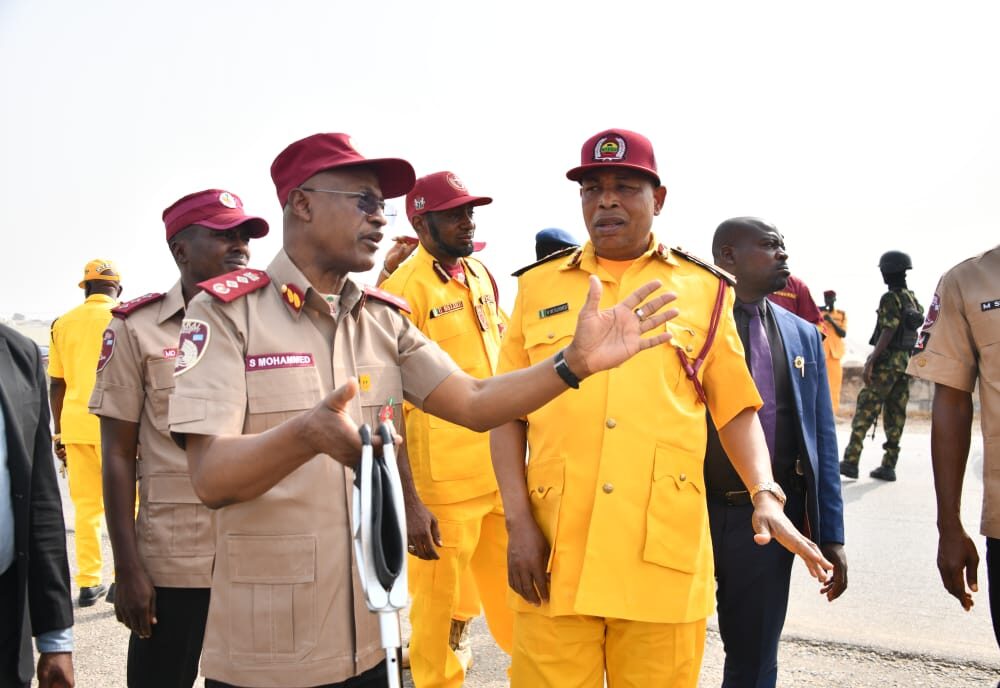
Within three minutes of notification, operatives of the Federal Road Safety Corps (FRSC) were on scene. In a country often caricatured for institutional lethargy, that detail matters. Speed, here, was not recklessness but readiness. The rescue was clinical: victims extracted, traffic controlled, secondary crashes averted, the injured evacuated, the deceased handled with dignity. It was emergency response not as improvisation, but as protocol executed under pressure.
This was the state doing what it is meant to do—quietly, competently, and without spectacle.
The facts are sobering. Two vehicles. Five adult males. Excessive speed and wrongful overtaking—those perennial killers of Nigerian highways—meeting a stationary truck. Two lives lost. One injured. Two spared. Anthony Joshua rescued alive with minor injuries. The line between celebrity survival and anonymous tragedy was thin, arbitrary, and unforgiving. The road, as always, was indifferent.
Yet it is precisely in such moments that the Nigerian spirit asserts itself. Long before the language of “first responders” became fashionable, Nigerians practised it instinctively. A crowd gathers not to gawk but to help. Strangers become kin. Time slows, priorities sharpen, and the preservation of life eclipses all else. It is an ethos forged by scarcity but sustained by solidarity.
The FRSC’s role in this episode deserves more than passing commendation. For years, the Corps has laboured in an unglamorous trench: enforcing speed limits that many disdain, preaching patience on roads designed to test it, and responding to crashes that are as preventable as they are frequent. Its successes are measured not in applause but in lives saved—often unnoticed, occasionally unacknowledged.
Here, however, the competence was visible. Traffic was managed with restraint. Rescue and evacuation were coordinated with precision. The Nigeria Police Motor Traffic Division was duly notified. Morgue protocols were followed. Warnings were reiterated, not as bureaucratic ritual, but as moral insistence: slow down, overtake wisely, arrive alive.
There is a temptation to frame this story as a brush with fate involving a famous man. That would be a mistake. The more important narrative is institutional and cultural. It is about a public agency demonstrating that professionalism is possible, even routine. It is about citizens responding to crisis with empathy rather than apathy. It is about a country too often reduced to its failures quietly displaying its strengths.
Anthony Joshua will heal. His bruises will fade. The two men who died will not return. Their families will grieve in private, far from the headlines. The true measure of this incident lies not in who was saved, but in how the response unfolded.
Nigeria, for all its contradictions, remains a place where humanity still interrupts haste, where strangers still stop, and where duty when taken seriously still saves lives. On that day in Ogun State, the Nigerian spirit showed up early. The FRSC was ready. And the road, unforgiving as ever, reminded us why both matter.
Impressively musing
By
Abdullahi O Haruna Haruspice