
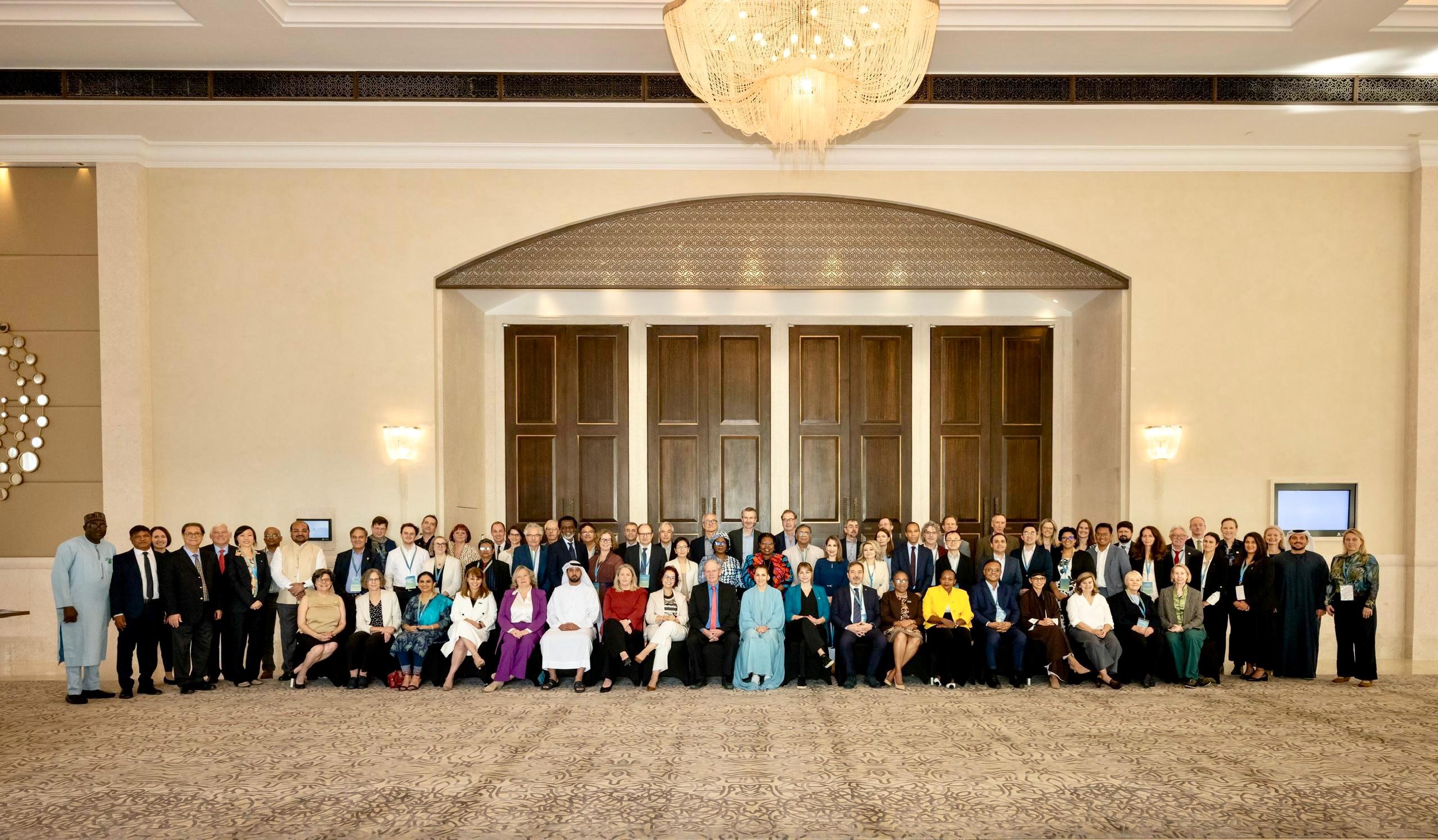
The Agricultural Research Council of Nigeria (ARCN) has reinforced Nigeria’s leadership in agricultural research through active participation at the 23rd CGIAR System Council Meeting (SC23), held from 9–12 December 2025 in Abu Dhabi, United Arab Emirates.
According to the Public Relations Officer to the Executive Secretary of ARCN, Khadijat O. Ameen, the high-level meeting was hosted by the International Affairs Office of the UAE Presidential Court under H.E. Mariam Mohammed AlMheiri and brought together senior policymakers, development partners and heads of leading global agricultural research institutions to chart pathways for resilient, sustainable and inclusive agri-food systems.
Key participants included the Executive Managing Director of CGIAR, Dr. Ismahane Elouafi; Director General of ICARDA, Mr. Aly Abousabaa; Director General of CIMMYT, Dr. Bram Govaerts; Director General of WorldFish, Dr. Essam Mohammed; and Director General of the Alliance of Bioversity International and CIAT, Dr. Juan Lucas Restrepo. Representatives of major funding agencies, including the Swedish International Development Cooperation Agency (Sida), also took part.
Nigeria was represented by the Executive Secretary and Chief Executive Officer of ARCN, Dr. Adamu Abubakar Dabban, who actively participated in plenary sessions, panel discussions and strategic engagements with global partners.
Dr. Dabban showcased Nigeria’s agricultural research and innovation priorities, stressing the importance of strengthening National Agricultural Research Systems (NARS) to ensure that scientific advances translate into direct benefits for smallholder farmers.
Speaking on behalf of Sub-Saharan Africa, he called for stronger alignment between CGIAR investments and the practical needs of farmers, noting that research funding must result in measurable gains in productivity, resilience and livelihoods.
“The CGIAR financial report shows strong investment in agricultural research, which is very encouraging. However, the critical question is how these resources are reaching farmers and improving lives on the ground,” Dr. Dabban said.
“It is essential that rigorous data, transparent evaluation and monitoring mechanisms are in place to track real-world impact, particularly for smallholder farmers across Sub-Saharan Africa.”
The meeting also featured senior representatives of regional and global agricultural research networks, including FARA, APAARI, AARINENA, CACAARI, EFARD and FORAGRO, reaffirming a collective commitment to science-driven and partnership-oriented solutions for transforming food, land and water systems.
In bilateral engagements with CGIAR centres and funding partners, Dr. Dabban advanced discussions on collaboration, capacity building and technology transfer. He highlighted ARCN’s ongoing initiatives in crop improvement, sustainable livestock development, mechanisation and climate-smart agriculture, while advocating stronger alignment with CGIAR’s global research agenda.
The SC23 meeting concluded with renewed commitments to deepen international research partnerships, promote inclusive innovation and ensure that investments in agricultural research deliver tangible outcomes for farmers and communities worldwide.