
In the lush, oil-rich creeks of the Niger Delta, the sound of boots on the ground is no longer just a symbol of enforcement. It is increasingly becoming the rhythm of dialogue a cautious but deliberate dance toward peace, trust, and partnership.
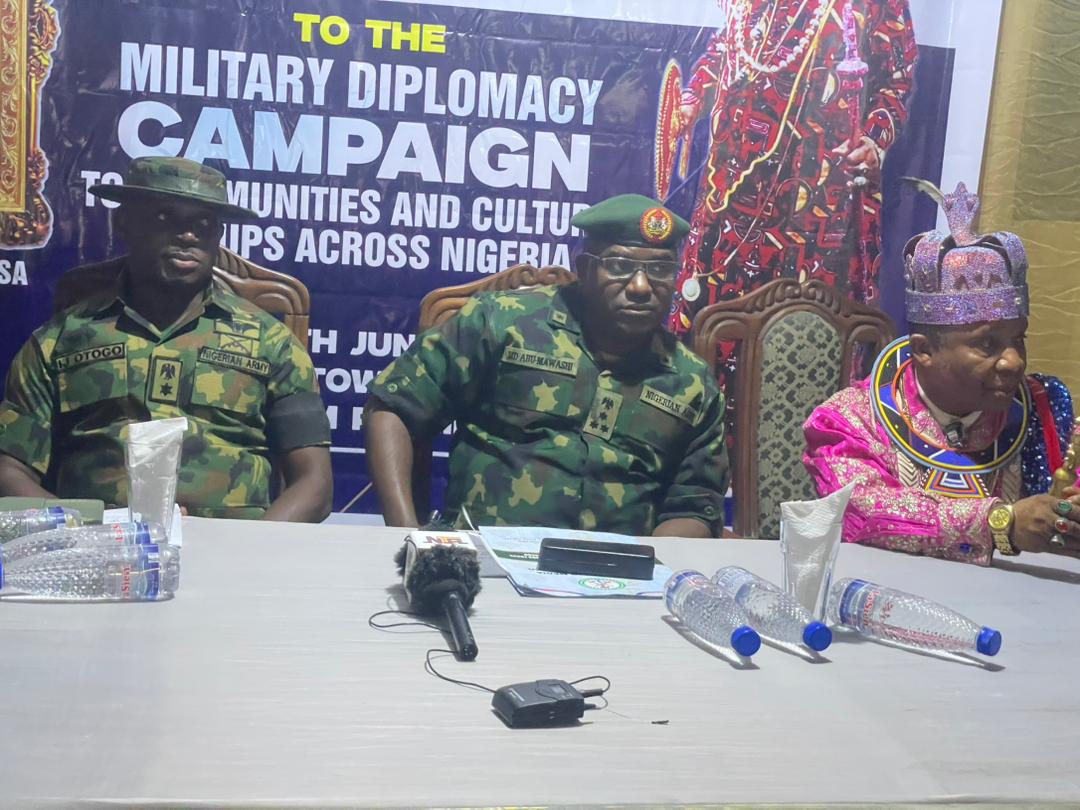
Earlier this week,the Defence Headquarters, Abuja, launched a bold and unprecedented initiative: the Military Diplomacy and Sensitization Campaign a multi-community outreach program spanning Degema, Ahoada, and Eleme LGAs in Rivers State. At the core of the mission was a clear message from the Chief of Defence Staff, General Christopher Gwabin Musa: “Security must begin with the people, not with the gun.”
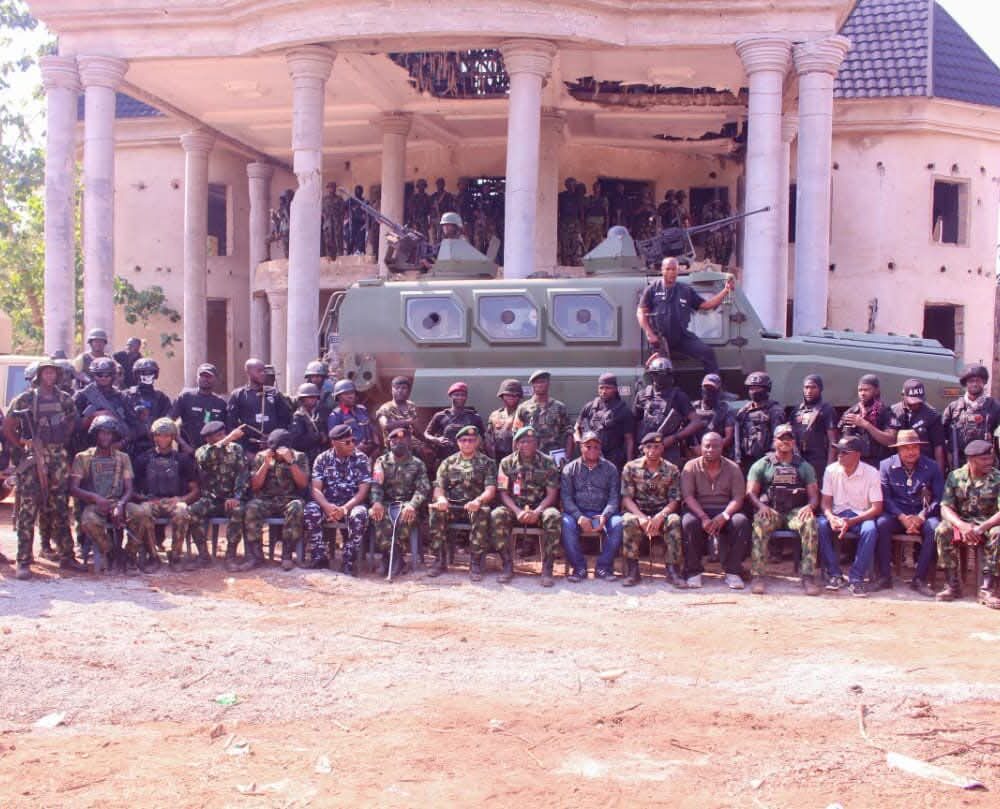
This campaign, coordinated by the Directorate of Defence Media Operations (DDMO) and led by Brigadier General Mohammed Dahiru Abu-Mawashi,with Defence Correspondents from Abuja,marked a shift from traditional force projection to human-centered engagement.
Degema: A Dialogue Rooted in Pain and Promise
In Degema, the campaign’s first stop, the military’s delegation did not arrive with armoured trucks but with open notebooks and listening ears.
Addressing a gathering of traditional rulers, youth groups, and women leaders, Brig Gen Abu-Mawashi acknowledged what many residents had longed to hear: that security failures are not just about criminality they are about broken trust, environmental injustice, and neglect.
“In 2024 alone, Nigeria lost over $3 billion to oil theft and related crimes,” he said. “We know that some of this happens with the complicity of rogue security personnel. Let me assure you we are confronting that cancer from within.”
The admission drew cautious applause. It was not the usual denial. It was accountability.
The community, in turn, responded with honesty of their own. A respected traditional chief questioned the military’s mechanisms for dealing with compromised officers.
“We see them. Some of them live among us. They protect the thieves, not the people,” he said. “How will you deal with that?”
The answer came with humility. The military, Brig Gen Dahiru said, is only as good as the intelligence it receives from the people. He urged residents to consider themselves co-authors of security.
Ahoada: The Shield of Partnership
In Ahoada East, the campaign took on a cultural dimension. Here, the reception was ceremonial complete with kola nuts, bitter kola, and a symbolic pepper-fish spice known as Okozo presented by His Royal Majesty Eze Noble Friday Uwon, a retired Chief Superintendent of Police and the Eze Igbu-Ehuda of Ahoada Kingdom.
“This is a shield of partnership,” the monarch said. “We’ve had politicians who came, made promises, and vanished. But this feels different. It feels deliberate.”
The military’s tone remained consistent: We are not here to dictate; we are here to co-create solutions.
From pipeline vandalism to youth radicalization, discussions spanned the socioeconomic roots of insecurity. Many in the audience expressed support but warned against “one-off gestures.”
“This initiative must not end here,” said a community youth leader, Comrade Victor Amachere. “If you really want our trust, we must see action, not just conversation.”
The message was clear: gestures must translate to systems, and visits must lead to visible outcomes.
Eleme: A King’s Call for Strategic Engagement
At Alesa Eleme Town Hall, the campaign found perhaps its most powerful echo in King Dr. Emperor J.D. Nkpe JP, the Paramount Ruler of Alesa Eleme Kingdom. For nearly three decades, the monarch has presided over a region that lies at the heart of Nigeria’s crude oil economy and also at the epicenter of its environmental crises.
“This land has fed the nation, but it has not been fed in return,” the king said. “Our farmlands are poisoned. Our youths are jobless. What we need is not just military presence we need presence of mind, heart, and justice.”
He called for strategic communication, transparent collaboration, and inclusive governance, especially for women and young people. He also issued a warning: “If hope disappears, extremism will thrive.”
The military listened. Brig Gen Dahiru assured that the campaign was not performative. “We are building a framework for sustained engagement,” he said.
A Military in Transition: From Enforcers to Partners
What made this campaign different is not just its reach, but its philosophy. It recognizes that while the military may win battles, only communities win peace. It acknowledged past failures from compromised personnel to poor communication and charts a new path centered on trust.
The presence of commanding officers like Lt. Colonel Waheed Rafiu Shittu (103 Battalion, Degema), Lt. Colonel M.Y. Shimfe (COAS Intervention Battalion VIII Ahoada), and Lt. Colonel I.J. Otogo (23 Battalion Eleme) reinforced the message: security is not sustainable without community ownership.
In every town, the same themes echoed: accountability, partnership, respect, and long-term presence.
Beyond Promises: Can This Campaign Change the Narrative?
The campaign’s success will ultimately be measured not by speeches, but by structures whether intelligence sharing becomes routine, whether military abuses are punished transparently, and whether youth empowerment becomes institutionalized, not politicized.
For now, the Defence Headquarters has set a promising tone one that many community members say they have not experienced in decades.
“This feels different,” said High Chief Precious Agbani in Degema. “Let it be the beginning of transformation.”
The challenge ahead is whether Nigeria’s armed forces can scale this model from the creeks of Rivers State to the hills of Plateau, the forests of Zamfara, and the farmlands of Borno. If they do, then the history of Nigerian security might finally be rewritten not with weapons, but with trust.
* Lukman Laleye Babalola is a Senior Defence Correspondent and Editor, Emporium Reporters and Emporium Magazine. He can be reached him at babalolalukman@gmail.com or 08037469328.