
By David Ookwu Akoji
Bingham University has deepened its international academic collaboration through a partnership with the Centre for Continuing Professional Education, Faculty of Philology, Peoples’ Friendship University of Russia (RUDN University), to organise a two-day professional short course on Ethical Artificial Intelligence and Digital Pedagogy.
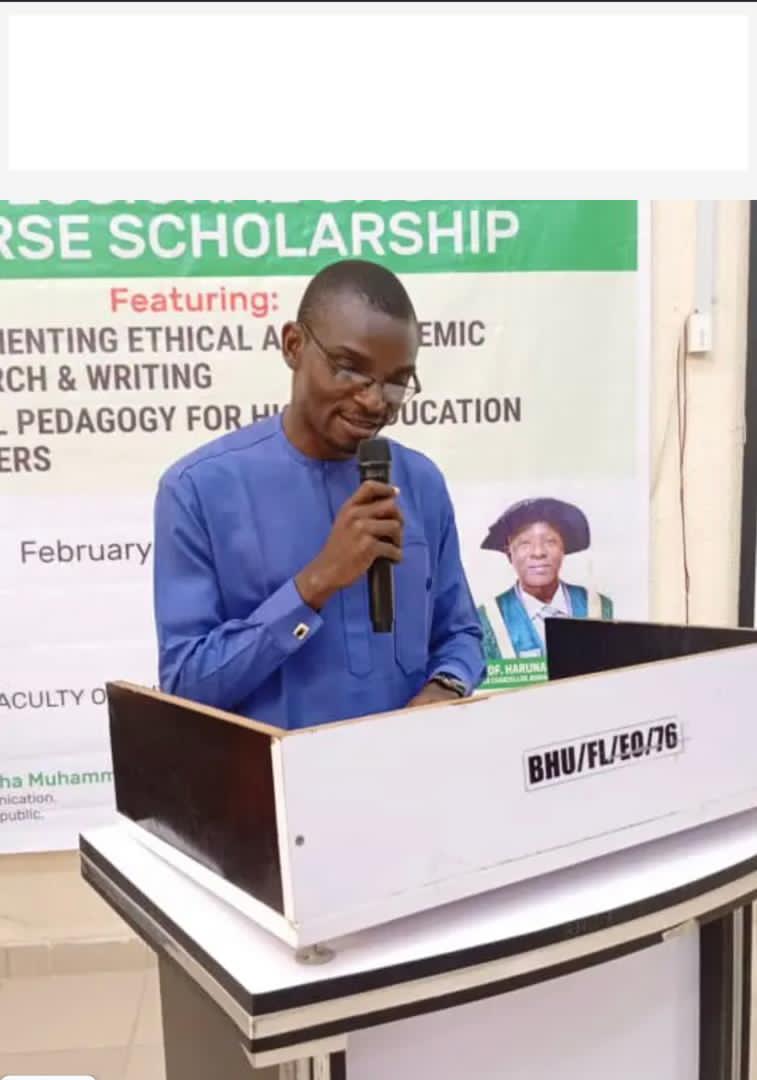
The training, held at the Faculty of Architecture Auditorium of Bingham University, attracted more than 120 participants, including academics, researchers, postgraduate students and media professionals from within and outside the university community.
Organised under the themes “Implementing Ethical AI in Academic Research and Writing” and “Digital Pedagogy for Higher Education Teachers,” the programme focused on equipping participants with contemporary skills for ethical scholarship, innovative teaching and sustainable media practice in the digital era.
Declaring the programme open, the Vice-Chancellor of Bingham University said the initiative aligns with the institution’s vision of promoting excellence, innovation and responsible technology use in higher education.
He noted that artificial intelligence is transforming research and teaching globally, stressing that universities must ensure such tools are deployed ethically and productively.
“Our responsibility as a university is to ensure these technologies are applied responsibly. This programme reflects Bingham University’s commitment to global standards in scholarship and academic integrity,” he said.
The Vice-Chancellor added that collaboration with international institutions like RUDN University strengthens knowledge exchange and positions the university within global academic networks.
In his welcome address, the Dean of the Faculty of Communication and Media Studies, Prof. Desmond Okocha, explained that the course was designed to prepare scholars and media professionals for the realities of digital transformation.
“Ethical AI, digital pedagogy and entrepreneurial journalism have become central to effective teaching, research and media practice. This training underscores our resolve to remain relevant and responsive to global developments,” he said.
The lead facilitator, Associate Professor Mustapha Mohammed Jamiu of RUDN University’s Faculty of Mass Communication, delivered sessions on ethical AI integration in academic research, digital pedagogy and innovative teaching strategies for higher education.
A major highlight of the first day was a virtual presentation by Dr. Rasaq M. Adisa of the University of Ilorin, who spoke on harnessing AI for academic research, focusing on ethical applications in literature review and data analysis. He demonstrated practical AI-supported research tools while emphasising the need to uphold academic integrity.
The second day shifted attention to media sustainability and innovation, featuring discussions on entrepreneurial journalism, media business models and revenue diversification strategies aimed at helping practitioners adapt to the evolving digital economy.
Participants described the programme as timely and impactful, noting that it broadened their understanding of ethical AI usage, modern pedagogical approaches and sustainable media entrepreneurship.
Organisers said the short course represents a strategic capacity-building initiative aimed at strengthening scholarship, improving teaching quality and advancing media practice in an increasingly technology-driven world.