

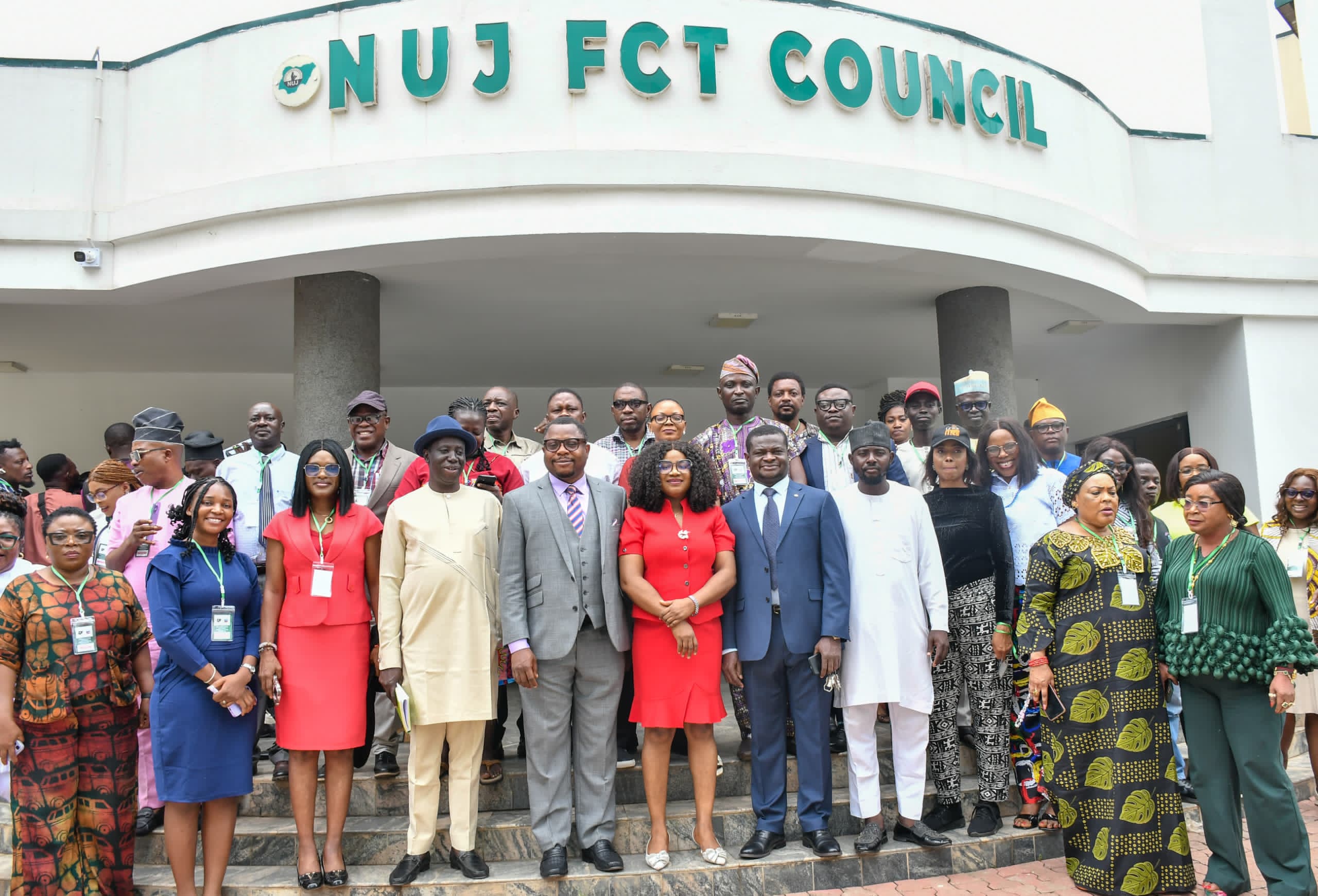
Chevron Nigeria Limited, in collaboration with the Nigerian Union of Journalists (NUJ), Federal Capital Territory (FCT) Council, on Tuesday trained over 70 journalists on the use of Artificial Intelligence (AI) to enhance media efficiency, improve quality reportage, and curb misinformation.
The one-day workshop, themed “Harnessing Artificial Intelligence in Journalism”, was sponsored by the NNPCL–Chevron Nigeria Limited Joint Venture and held in Abuja.

Delivering his remarks, General Manager, Policy, Government and Public Affairs, Chevron Nigeria Limited, Mr. Olusoga Oduselu represented by Mr. Victor Anyaegbudike reiterated Chevron’s commitment to media development and human capital growth as critical drivers of societal advancement.
“We recognize the media as critical agenda-setters and opinion moulders. Our long-term interest lies in adding value to society while creating value for stakeholders,” he said.
Oduselu acknowledged previous editions of the training held in Lagos, Delta, and the FCT, and highlighted Chevron’s AWARES programme, developed in partnership with Pan-Atlantic University, which has trained over 120 journalists since 2014.
In her keynote address, NUJ FCT Chairman, Comrade Grace Ike, emphasized the urgent need for journalists to adopt Artificial Intelligence tools to stay relevant, increase productivity, and sustain public trust.
“We stand at a transformative moment in journalism. AI is no longer futuristic it is already reshaping how we gather, verify, and deliver news,” Ike stated.
She noted that AI aids fact-checking, combats misinformation, tailors content to readers’ preferences, and supports reporters in transcribing and analyzing data. While commending Chevron for supporting the “vital training,” Ike encouraged journalists to responsibly embrace AI while upholding ethical standards.
“Let us embrace innovation boldly but responsibly, ensuring that technology enhances our mission to inform, enlighten, and serve society with courage and integrity,” she added.
Busola Ajibola, Deputy Director at the Centre for Journalism Innovation and Development (CJID), warned that journalists who fail to adopt AI risk losing relevance in the industry.
“Journalists must be proactive. Those who ignore AI tools may find their jobs under threat in the near future,” she said.
Dr. Emman Usman Shehu, Director of the International Institute of Journalism (IIJ) represented by senior journalist Dr. Simon Musa Reef presented on “Freedom of Information and Media Accountability.” He emphasized the importance of the FOI Act as a tool for accountability, citing an April 2025 Supreme Court ruling affirming the Act’s applicability across all tiers of government.
He, however, highlighted obstacles such as poor awareness, bureaucratic delays, and harassment of journalists seeking information.
Dr. Lemmy Ughegbe, in his session on “Mental Health of Journalists in the Era of Social Media,” described social media as both an opportunity and a threat. He warned that online harassment, misinformation wars, and identity theft are eroding journalists’ well-being.
“An online attack isn’t just technical. It’s personal. It can cause serious psychological harm,” he said.
Ughegbe called on media owners and institutions to protect journalists’ mental health, stating that “protecting ourselves is not selfish it is professional responsibility.”