
A coalition of civil society advocates has raised serious legal and child protection concerns over the handling of the case involving Walida AbdulHadi, calling for transparency, strict adherence to judicial directives, and an independent investigation into the circumstances surrounding the matter.
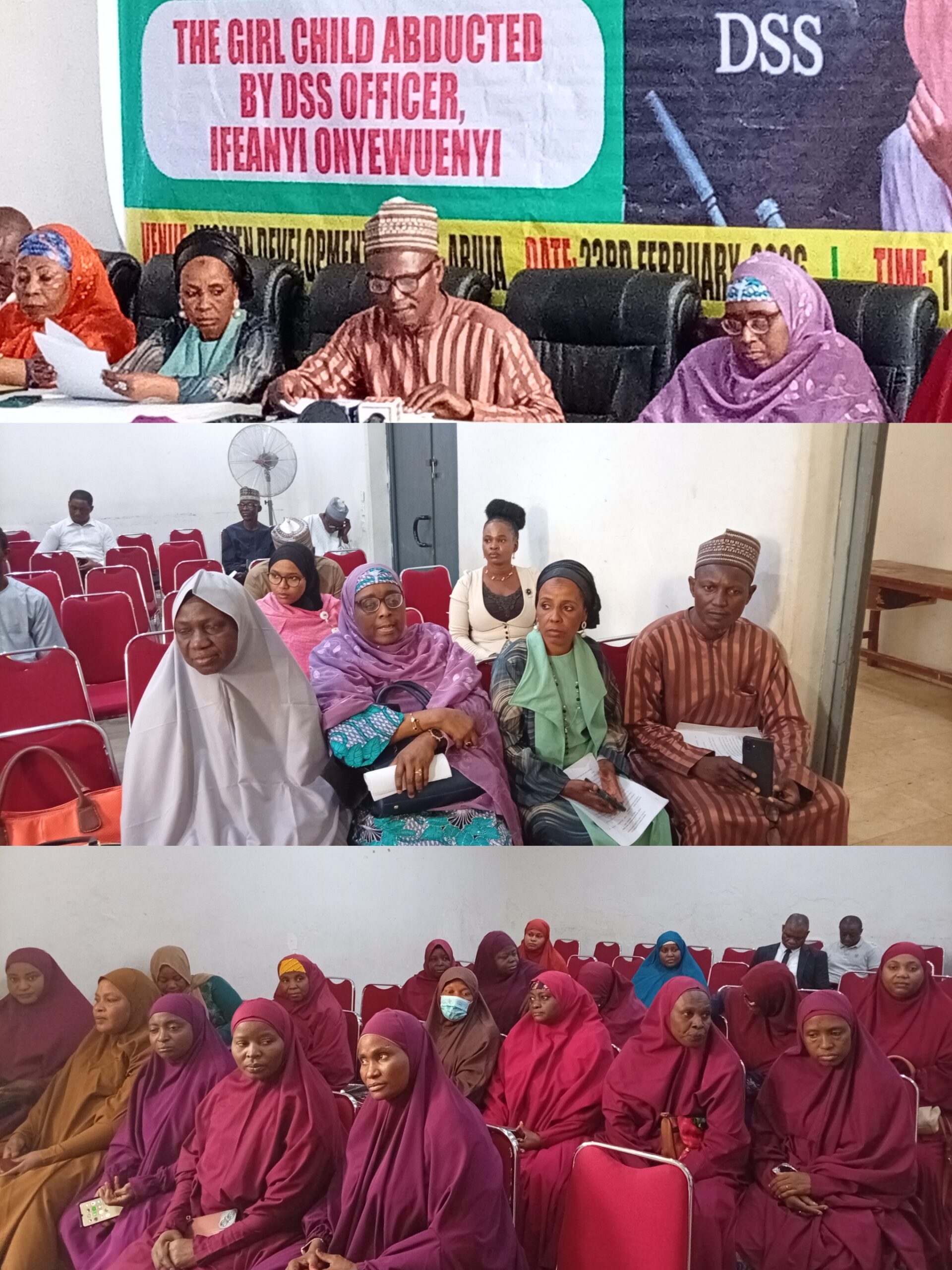
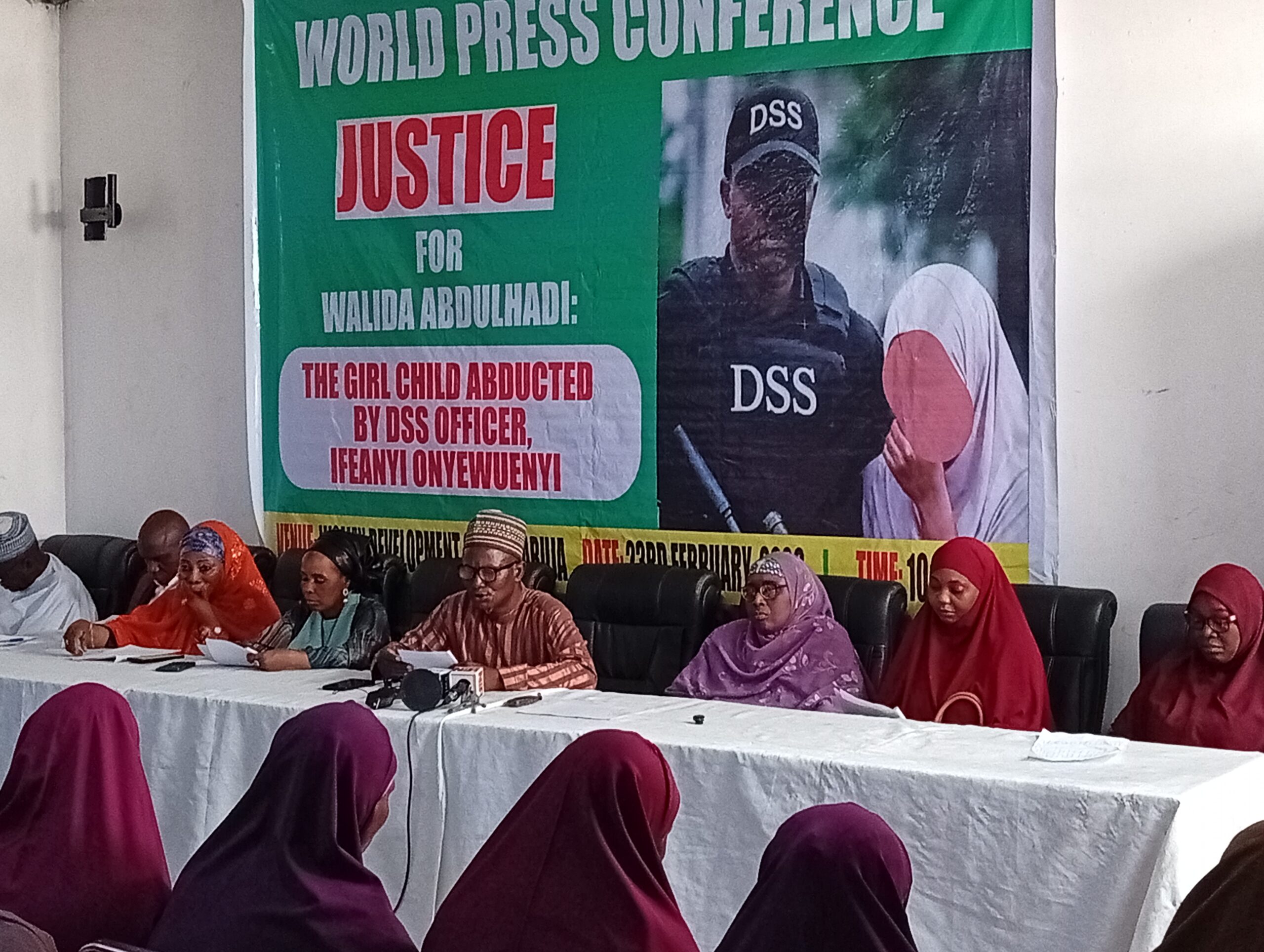
The concerns were expressed during a world press conference organised by the Coalition for Walida AbdulHadi and held at the Women Development Centre on Monday, February 23, 2026, in Abuja.
The event attracted a broad cross-section of stakeholders, including officials of the Department of State Services (DSS), members of the International Human Rights Commission, journalists, religious leaders, and representatives of civil society and advocacy organisations. Among those present were media practitioner and human rights advocate, Hajiya Medina Azaki, Medina Dauda,MURIC Abuja Chapter, Aisha Yusuf (Muslim Sisters Organisation),MESH ,Women in Da’awah, Abuja Muslim Forum(AMF), Al-Habibiyyah Islamic Society, Islamic scholar Alhaja Abdulahi Hussaini Khairiya, alongside other concerned citizens and faith-based groups.
Addressing journalists on behalf of the coalition, Muslim Rights Concerns MURIC Abuja branch Chairman, Ustaz Yunus Salahudeen said the briefing was convened as a call for humanity, justice, and respect for constitutional order, stressing that the matter transcended religious identity and instead concerned child protection, parental rights, institutional accountability, and the rule of law.
He explained that the case involved Walida AbdulHadi, a teenage girl from Hadejia in Jigawa State whose disappearance reportedly left her family in prolonged distress for more than two years. According to him, the uncertainty surrounding her whereabouts was so severe that her father was said to have conducted funeral rites believing she was no longer alive.
Salahudeen told journalists that subsequent developments allegedly indicated that the girl was found within the Federal Capital Territory in circumstances linked to a Department of State Services operative identified as Ifeanyi Onyewuenyi, also referred to in some reports as Ifeanyi Festus. He stressed that the allegation required transparent, lawful, and independent scrutiny by appropriate authorities.
“This is not about religious rivalry,” he said. “It is about child protection, parental rights, judicial authority, and the rule of law.”
The coalition expressed concern over reports suggesting that after becoming separated from her family in late 2023 while allegedly in a vulnerable mental condition, the girl remained in a private residence in Abuja for an extended period. During that time, it was alleged that she became pregnant and later delivered a child, while her family was reportedly informed of a marriage ceremony and a change in religious affiliation when she was still legally considered a minor.
While acknowledging that these claims remained allegations requiring independent verification, the coalition maintained that the procedural handling of the matter raises serious constitutional questions.
Speaking further, Salahudeen said reports indicated that a competent court had issued directives relating to the case, including orders connected to custody arrangements. He expressed concern over what the coalition described as delayed or unclear compliance with judicial directives, warned that continued institutional custody in a matter involving allegations against a staff member could create perceptions of conflict of interest and undermine public confidence.
He stressed that institutions connected to allegations should not appear to function simultaneously as investigator, defender, and final authority, noting that obedience to court orders remains fundamental to constitutional governance. According to him, media narratives or public perception cannot substitute lawful judicial processes, particularly in matters involving minors.
The coalition also raised concerns over conflicting public claims regarding Walida’s age, noting that earlier accounts suggested she was 16 years old at the time she left home, while later narratives described her as 22 a distinction Salahudeen described as legally decisive. He called for independent verification through official records such as birth and school documentation to eliminate doubt and restore public confidence.
Throughout the briefing, the coalition emphasized that due process, transparency, and independent investigation are essential to sustaining public trust, adding that statements made while an individual remained under institutional custody must be evaluated within the context in which they were obtained.
He further warned against framing the issue along religious or regional lines, describing it as a national concern about the protection of vulnerable persons and respect for judicial authority. Nigeria’s unity and institutional credibility, he said, depend on fairness, accountability, and strict adherence to the rule of law.
Also speaking at the event, a media practitioner and Human Rights activist Medina Dauda Nadabo called for responsible public discourse and greater societal awareness, cautioned against conflating religious narratives with legal and child-protection issues. She emphasized the need for stronger parental engagement, community cooperation, and access to accurate information to prevent similar situations in the future.
The press conference ended with a collective appeal for calm, transparency, and respect for due process, with participants insisting that the case represents a broader test of Nigeria’s commitment to justice, humanity, and the rule of law.