
The Chief of Army Staff (COAS), Lieutenant General Waidi Shaibu, has reiterated the Nigerian Army’s commitment to standardising its healthcare system while ensuring lifelong welfare support for serving personnel and veterans.
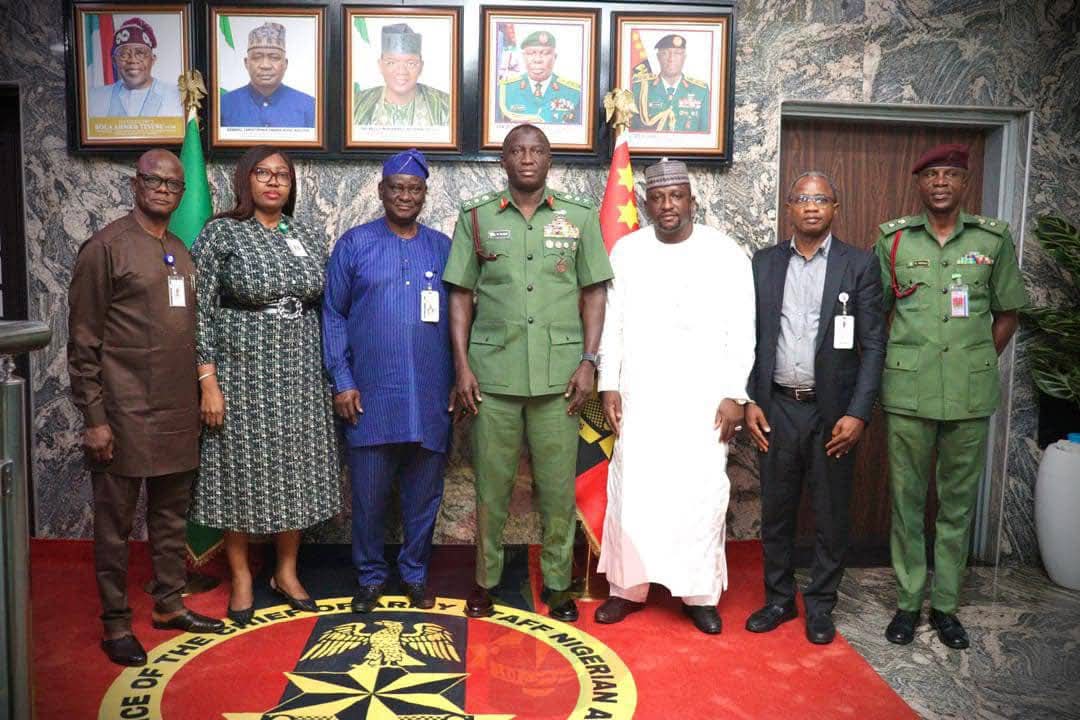
General Shaibu made this known on Tuesday in Abuja when he received the Managing Director and Chief Executive Officer of Defence Health Maintenance Limited (DHML), Surgeon Rear Admiral Azeeze Bayo Afolayan (Rtd), during a courtesy visit to the Army Headquarters.
He stressed that the optimisation of medical services within the Army depends largely on the integration of standardised administrative protocols and enhanced collaboration among relevant agencies. According to him, the evolving nature of military operations across Nigeria’s six geopolitical zones requires a responsive and modern healthcare framework capable of sustaining troops’ physical and mental readiness.
The COAS noted that the welfare of personnel must extend beyond active service, emphasising the need for a comprehensive support system for retired soldiers. He observed that many veterans face socio-economic challenges after retirement due to limited access to resources.
“After years of dedicated service, the man must survive,” he said, reaffirming that the Nigerian Army has a lifelong obligation to ensure its retirees are not left without adequate medical and financial support.
General Shaibu also highlighted the importance of institutional memory, describing the DHML boss as a valuable insider whose continued contributions after retirement demonstrate the enduring relevance of experienced personnel in national service.
In his remarks, Surgeon Rear Admiral Afolayan advocated for the institutionalisation of Standard Operating Procedures across military medical units, particularly within human resources and administrative departments. He noted that effective healthcare delivery relies on structured systems, accurate data management, and clearly defined processes rather than ad-hoc arrangements.
He further outlined a framework for expanding the use of Secondary Care Providers, explaining that the initiative would enable better distribution of medical personnel and improve access to specialist care for troops and their families.
According to him, leveraging well-equipped secondary care facilities would not only optimise the Army’s medical workforce but also ensure timely and cost-effective healthcare delivery, especially for personnel deployed in high-risk operational areas.
The engagement reflects ongoing efforts by the Nigerian Army to strengthen its healthcare system, enhance personnel welfare, and align its medical services with global best practices.