
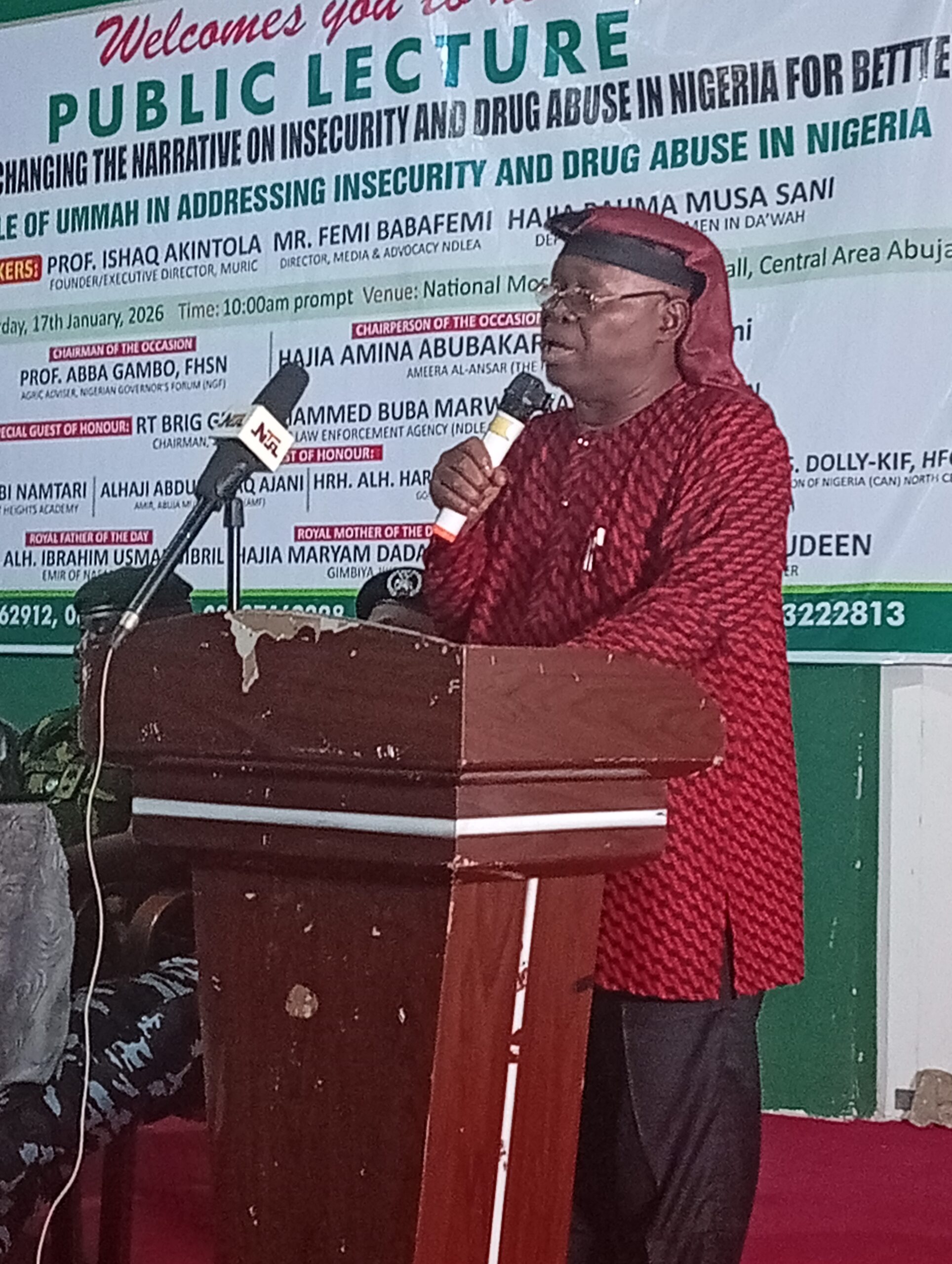
The Founder and Executive Director of the Muslim Rights Concern (MURIC), Prof. Ishaq Akintola, has attributed Nigeria’s rising insecurity to corruption, political mismanagement, and drug abuse, called for collective action by the Ummah, government, security agencies, and communities.
Akintola made the remarks while delivering a public lecture organised by MURIC Abuja Branch on the topic “The Role of the Ummah in Addressing Insecurity and Drug Abuse in Nigeria” with the theme “Towards Changing The Narrative on Insecurity and Drug Abuse in Nigeria.”
He recalled the diversion of $2.1 billion meant for the Nigerian Armed Forces during the administration of former President Goodluck Jonathan, saying the alleged misappropriation weakened the military and created opportunities for Boko Haram and other terrorist groups to expand.
“If those funds had been properly used to equip the armed forces, Boko Haram and other terrorist elements might have been eradicated. The consequences of corruption and political mismanagement are now evident in insecurity across the country,” Akintola said.
He also linked extravagant spending by public officials to poverty and youth vulnerability, warned that economic hardship has made many young Nigerians susceptible to drug abuse, crime, and violent extremism.
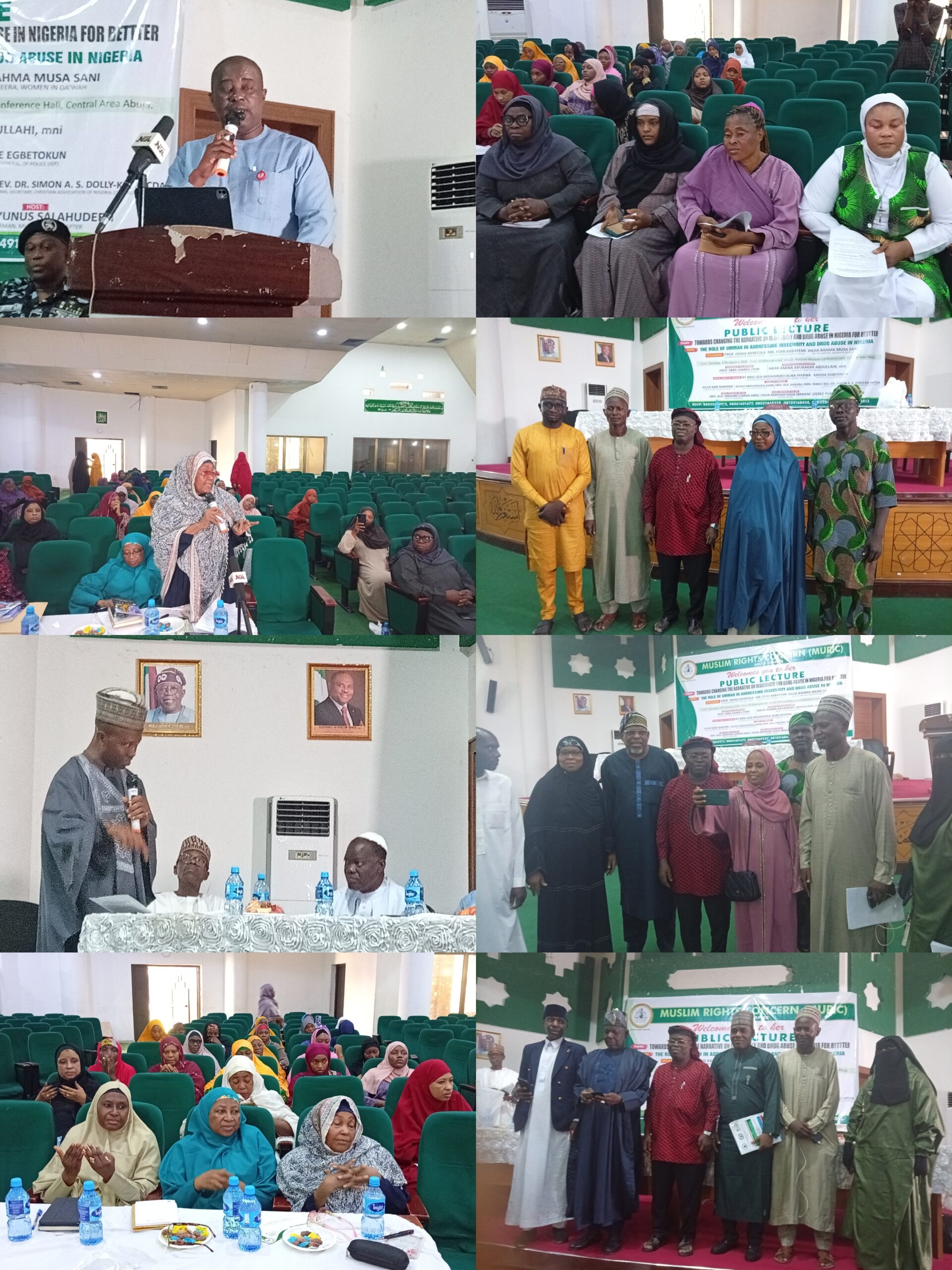
Prof. Akintola urged Muslim youths to embrace education, moral responsibility, and modern digital approaches in promoting peace and Islamic values, stressing that Islam should influence public conduct beyond the mosque.
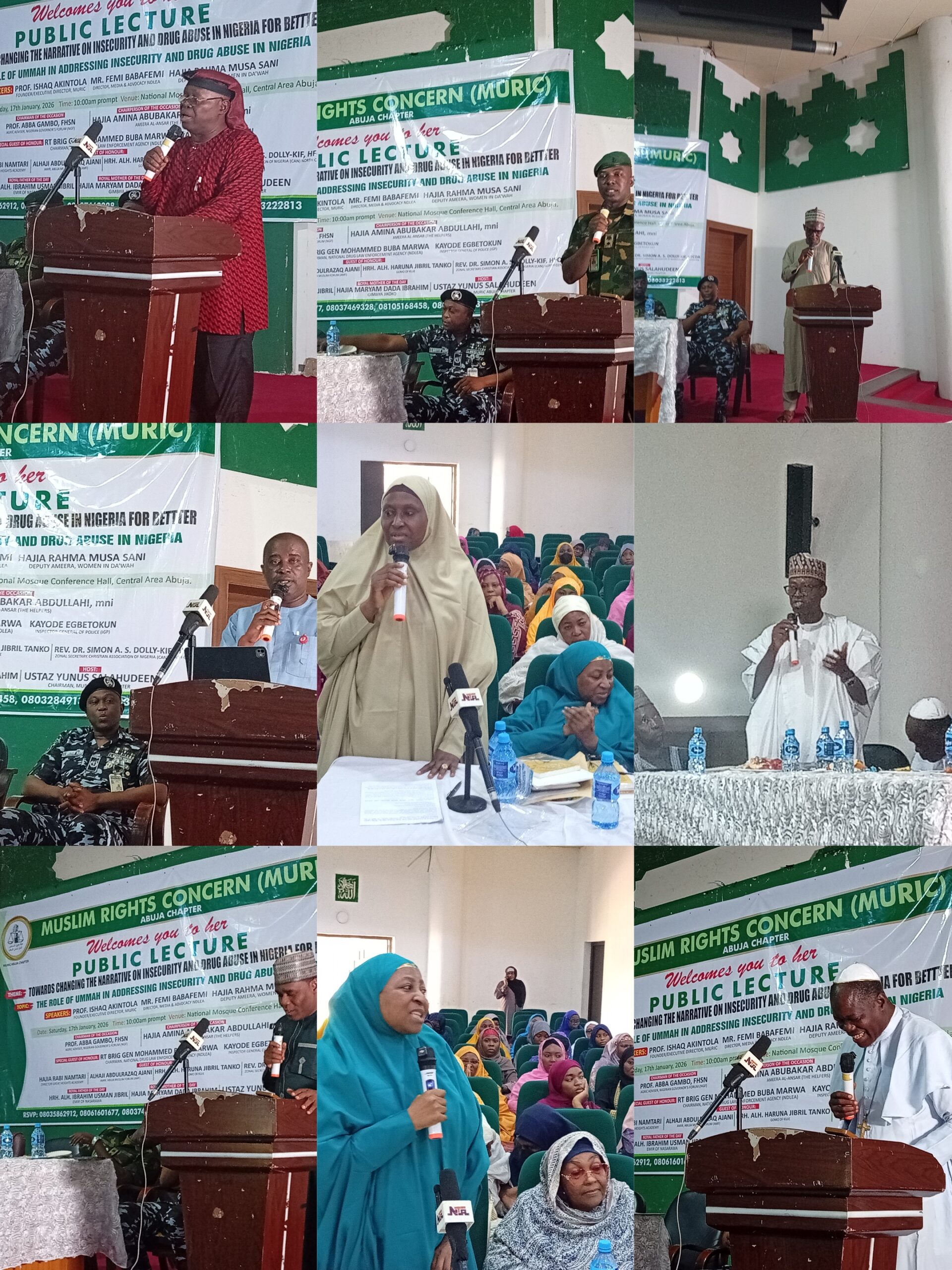
Earlier, Ustaz Yunus Salahudeen, Chairman of MURIC Abuja Chapter, in his welcome address, said the lecture was intended to mobilise the Ummah against insecurity and substance abuse. He announced plans to extend MURIC’s enlightenment campaign to the six area councils of the Federal Capital Territory, in collaboration with government agencies, schools, mosques, churches, and rehabilitation programmes.
One of the Guest Speakers ,Mr. Femi Babafemi, Director of Media and Advocacy, NDLEA, who also represented the agency’s Chairman Brig. Gen. Mohammad Buba Marwa (rtd), said drug abuse is directly linked to criminality and insecurity, urging faith-based organisations to collaborate with NDLEA to educate, rehabilitate, and guide youths away from harmful behaviours.
Representing the Chief of Army Staff, Lt. Gen. W. A. Shaibu, Lt. Col. A. A. Daurawa highlighted the Army’s efforts to curb drug abuse, noted that moral conduct is now integrated into promotion and discipline policies. He also cited progress against Boko Haram, ISWAP, banditry, and kidnapping, stressing the need for continuous collaboration with organisations like MURIC.
The Chief Imam of the National Defence College, representing Rear Admiral Abdullahi Ahmad, called on religious leaders to confront misinformation and guide communities, while condemning terror groups falsely claiming to represent Islam.
Also speaking, the Inspector-General of Police, IGP Kayode Egbetokun, represented by ACP (Dr.) Hassan Yagba, commended MURIC for complementing police efforts in promoting community policing, religious tolerance, and national security.
The Christian Association of Nigeria (CAN), North Central Zone, represented by Bishop Edward Williams Chanomi, stressed interfaith collaboration as critical in addressing insecurity and substance abuse.
The lecture concluded with a call for sustained collaboration among faith-based organisations, security agencies, and communities to protect youths, restore moral values, and change the narrative on insecurity and drug abuse nationwide.