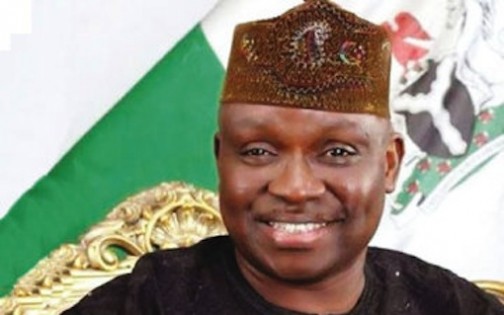
A Federal High Court sitting in Lagos on Tuesday discharged and acquitted former Ekiti State Governor, Mr. Ayodele Fayose, of all charges brought against him by the Economic and Financial Crimes Commission (EFCC) in a high-profile money laundering and fraud case that lasted nearly a decade.
Justice Chukwujekwu Aneke upheld a no-case submission filed by Fayose, ruling that the prosecution failed to establish a prima facie case to justify calling the former governor to enter a defence. The court found that the evidence presented by the EFCC was insufficient, speculative, and failed to directly connect the defendant to the alleged offences.
The charges dated back to 2016, when the EFCC launched investigations into the $2.1 billion arms procurement scandal under the administration of former President Goodluck Jonathan. The anti-graft agency alleged that Fayose received N1.2 billion from the diverted funds through former Minister of State for Defence, Senator Musiliu Obanikoro, and his aide, Abiodun Agbele, to finance his 2014 governorship election. The funds were allegedly disbursed from the Office of the National Security Adviser under Col. Sambo Dasuki (rtd).
Prosecutors claimed Fayose received the funds in cash, laundered portions through bank accounts linked to fictitious companies, and used the proceeds to acquire real estate and business interests in violation of Nigeria’s money laundering laws.
He was arraigned on October 22, 2018, before the Federal High Court in Lagos on an 11-count charge bordering on conspiracy and money laundering. He pleaded not guilty and was granted bail. The trial spanned several years, with numerous witnesses called by the prosecution, including bank officials and EFCC operatives.
Fayose, throughout the trial, maintained that he was innocent and the charges were politically motivated. His legal team argued that the prosecution’s case was riddled with inconsistencies and lacked credible, admissible evidence. On that basis, they filed a no-case submission asking the court to dismiss the charges.
Delivering judgment, the court agreed with the defence, stating that the EFCC failed to prove the allegations beyond reasonable doubt. Justice Aneke held that while suspicions may have been raised, no legally admissible evidence had been presented to sustain the charges.
Speaking shortly after the judgment, Fayose expressed appreciation to God, his legal team, and his supporters. He reiterated that his trial was a political witch-hunt and said the judgment reaffirmed his faith in the judiciary.
“This judgment reaffirms my belief in the Nigerian judiciary. I have always maintained that I did no wrong, and today, I have been vindicated. I thank everyone who stood by me,” Fayose said.
Reacting to the ruling, the EFCC said it would study the judgment and consider its next line of action. The Commission in statement, described the development as a setback but stressed that the EFCC remained committed to its mandate to fight corruption. The statement stated that the commission would review the court’s decision and explore the possibility of filing an appeal.
Fayose’s acquittal marks a major development in Nigeria’s anti-corruption efforts and highlighted the difficulties faced in prosecuting politically exposed persons. The outcome has also reignited public debate over the investigative and prosecutorial capacity of the EFCC in complex financial crime cases.