
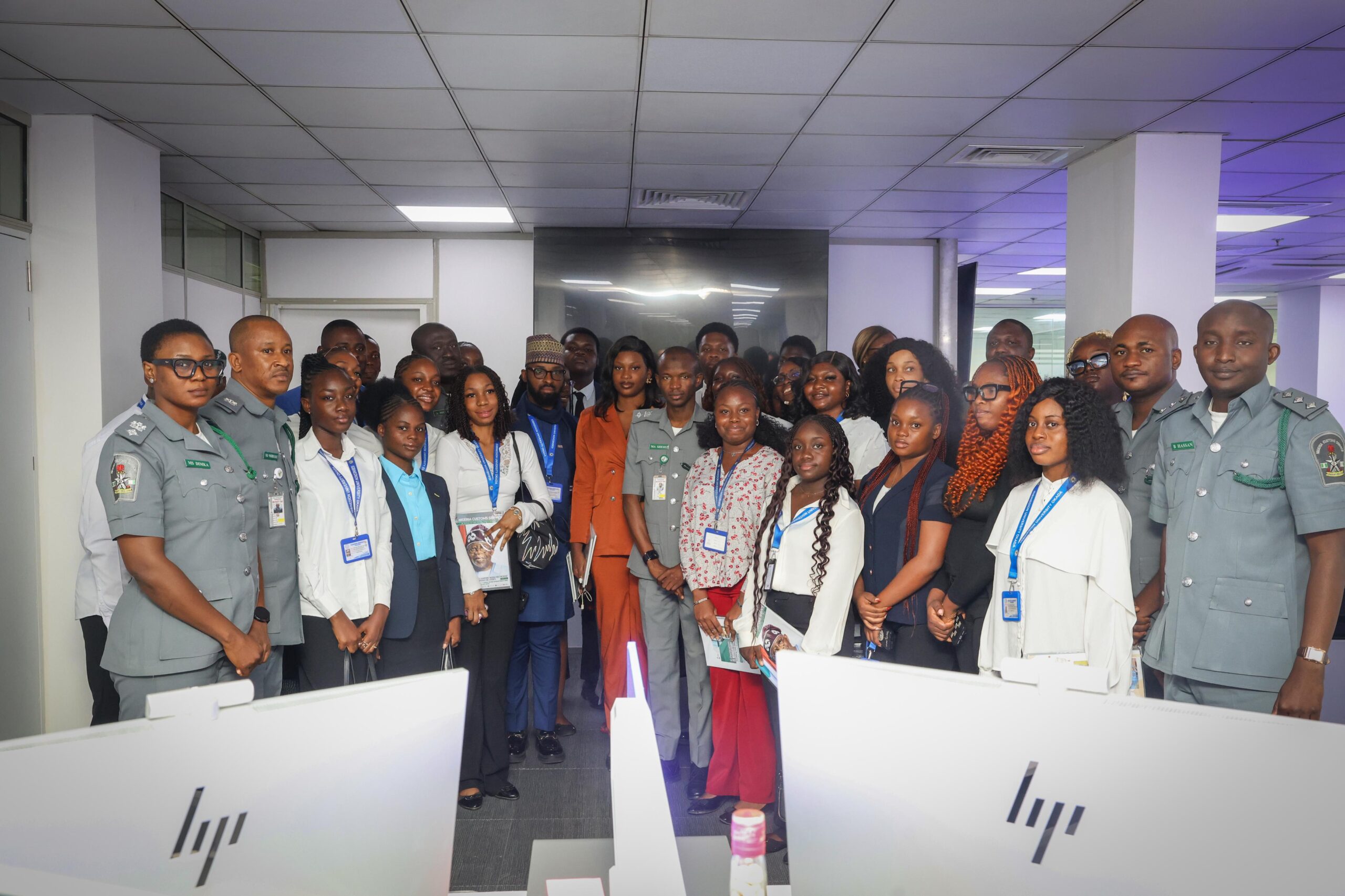
The Nigeria Customs Service (NCS) recently hosted students of International Relations from Igbinedion University, Okada, on an educational excursion to its headquarters in Abuja. Organized by the Service’s Public Relations Unit, the visit provided students with a rare opportunity to gain firsthand knowledge of Customs operations, structure, and strategic contributions to international trade and border security.
Welcoming the students on behalf of the Comptroller-General of Customs, Adewale Adeniyi, the National Public Relations Officer, Assistant Comptroller Abdullahi Maiwada, delivered an in-depth briefing on the NCS’s statutory roles, including revenue generation, anti-smuggling enforcement, and trade facilitation.
Maiwada emphasized the importance of such academic interactions in shaping informed perspectives and future leadership.
“The Nigeria Customs Service remains committed to knowledge sharing and building public trust,” he stated. “Engaging with students of international relations is critical, as the future of customs and global trade lies in well-informed, cross-sector partnerships.”
The session highlighted NCS’s alignment with global standards, particularly through its collaboration with the World Customs Organization (WCO), and stressed the role of inter-agency cooperation and Customs diplomacy in global trade governance.
An interactive session enabled students to connect theory with practice, especially in areas like the implementation of the Authorised Economic Operator (AEO) programme—Nigeria’s flagship trade facilitation initiative promoting supply chain security and compliance.
Led by Deputy National Public Relations Officer, Chief Superintendent of Customs Titus Omajali, the students were taken on a guided tour of key departments and units within the Customs Headquarters. They were introduced to modern digital systems and tools used to boost operational efficiency, transparency, and international cooperation.
The Nigeria Customs Service reiterated its commitment to fostering academic partnerships and deepening stakeholder engagement through initiatives that bridge the gap between policy and academia.