

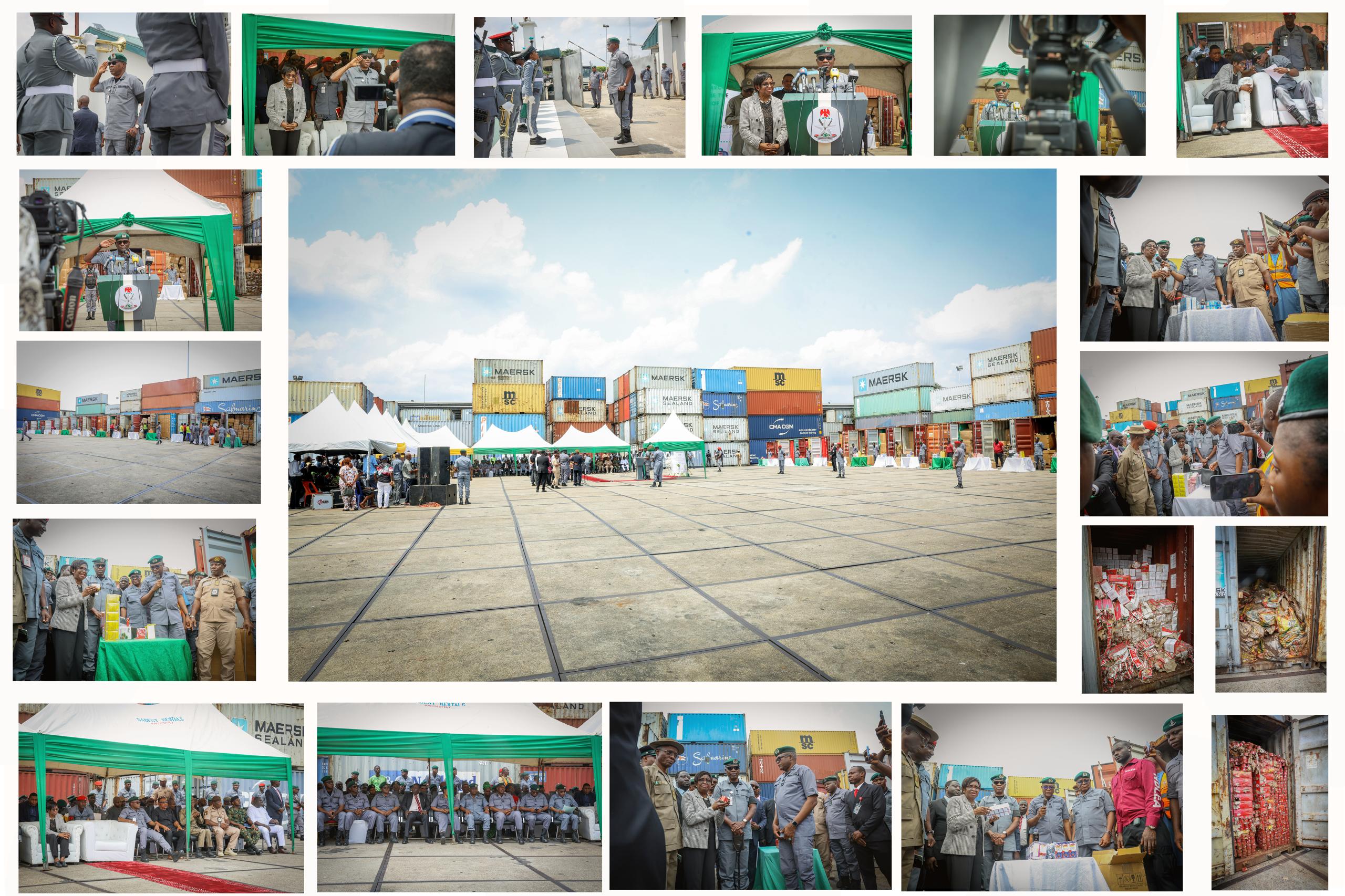
In a major breakthrough that underscores the power of inter-agency cooperation, the Nigeria Customs Service (NCS), in partnership with the National Agency for Food and Drug Administration and Control (NAFDAC), has intercepted 16 containers filled with illicit pharmaceutical products valued at over ₦20.5 billion at the Port Harcourt II Area Command, Onne, Rivers State.
The significant seizure comes just weeks after both agencies inaugurated a joint implementation committee following the signing of a 2024 Memorandum of Understanding (MoU) designed to enhance regulatory synergy and intelligence sharing.
Addressing journalists at the Command headquarters in Onne on Friday, July 18, 2025, the Comptroller-General of Customs, Bashir Adewale Adeniyi, attributed the success to intelligence-led enforcement and the reinvigorated collaboration among national regulatory and security outfits.
“Our anti-smuggling operations are strategically aligned with President Bola Ahmed Tinubu’s administration’s policies on border security, public health, and national safety. We are committed to ensuring Nigeria’s borders are not exploited by criminal networks,” the CGC stated.
According to CGC Adeniyi, the smugglers deployed sophisticated concealment tactics, falsely declaring the illicit goods as legitimate imports, including tomato paste, ceiling fans, and plumbing materials, to evade detection.
Among the seized items were:
1.3 million bottles of Codeine syrup (100ml each),
9.3 million tablets of Really Extra Diclofenac,
12.6 million tablets of Royal Tramadol (225mg),
Other unregistered and dangerous pharmaceuticals such as Trodol, Hyergra, Bisoveu, and Bassuka.
“This seizure sends a strong warning to criminal cartels: the Nigeria Customs Service, working closely with enforcement and regulatory agencies, maintains a zero-tolerance stance on smuggling. We will not relent in using the full weight of the law against offenders,” Adeniyi warned.
The seized containers were formally handed over to the Director-General of NAFDAC, Professor Mojisola Adeyeye, for further regulatory action in accordance with due process.
In her remarks, Professor Adeyeye lauded the vigilance and professionalism of the Customs Service and other partner agencies, noting that the intercepted drugs posed a grave threat to public health.
“Frankly, it was shocking. These products are lethal. Codeine, Tramadol, and fake painkillers kill people slowly. Concealing them in tomato paste is not only deceitful it’s criminal. This isn’t business; it’s mass murder for profit,” she said.
She affirmed that all confiscated items would be subjected to comprehensive procedures, including laboratory testing, documentation, and destruction, in line with World Health Organization (WHO) standards.
“We are WHO-certified and operate international-standard laboratories with well-trained professionals. These deadly drugs will never make it into the Nigerian market,” Professor Adeyeye assured.
She also issued a strong warning to importers and traffickers of falsified medicines, branding them “merchants of death,” and reiterated that Nigeria would not tolerate the dumping of unapproved and substandard pharmaceuticals.
In his welcome address, the Customs Area Controller of PH II Onne Command, Comptroller Muhammed Babandede, described the event as brief but historic. He highlighted the pivotal role played by collaborative intelligence and enforcement, especially from the NDLEA, the Department of State Services (DSS), and the Office of the National Security Adviser (ONSA).
“The seizure included eleven 40-foot containers of illicit pharmaceuticals, four micro containers of bottled water, and one container of salt. This accomplishment speaks to the strength of institutional collaboration and aligns with the Service’s guiding principles of unity, cooperation, consolidation, and innovation,” Babandede noted.
The Onne seizure comes on the heels of a similar major operation at Apapa Port just a week earlier, where 25 containers of substandard medical devices were intercepted.
All agencies involved in the latest operation reaffirmed their commitment to deepening collaboration through intelligence-sharing, surveillance, and enforcement efforts in line with national security objectives and global best practices.