The Minister of Foreign Affairs, Ambassador Yusuf Maitama Tuggar, has called for a more strategic and deliberate media approach to combating disinformation and promoting Nigeria’s diplomatic and security objectives.
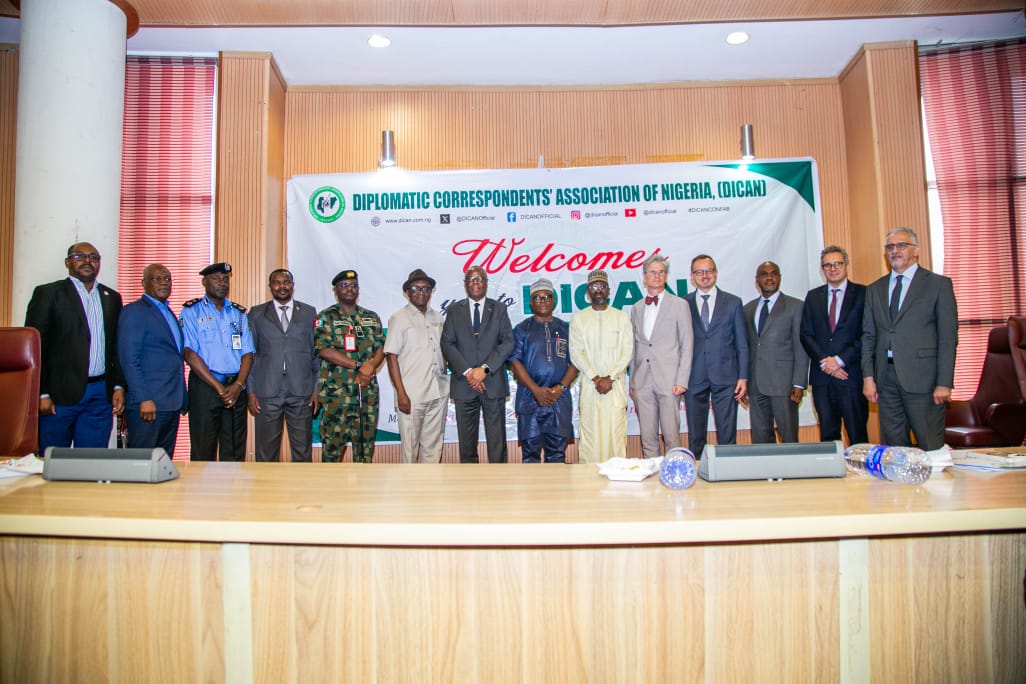
Ambassador Tuggar made this known in Abuja while declaring open the maiden edition of the Diplomatic and Security International Conference, organized by the Diplomatic Correspondents Association of Nigeria (DICAN). The conference brought together diplomats, security experts, media professionals, and academics to discuss ways to strengthen diplomacy, intelligence, and media collaboration in an age dominated by strategic misperceptions and disinformation.
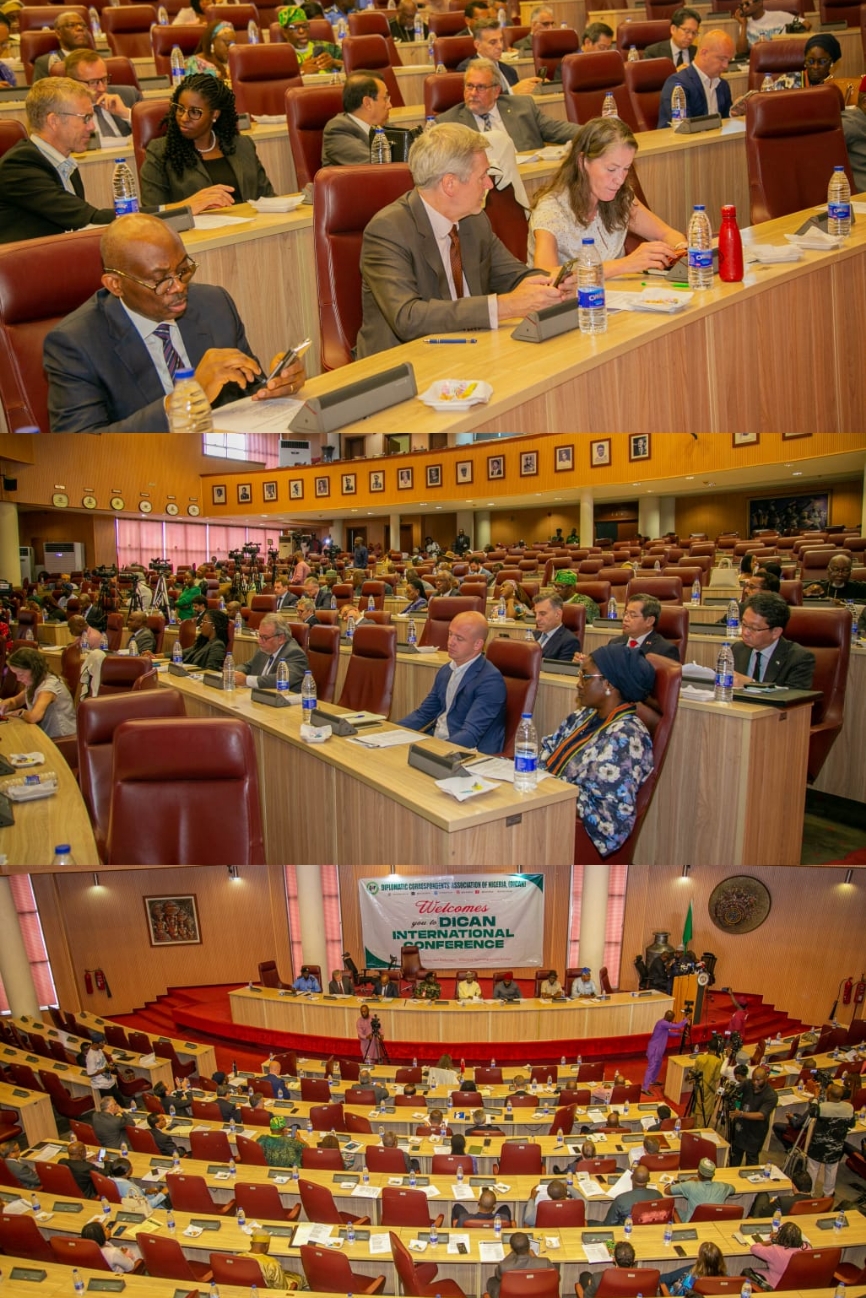
Represented by his Special Assistant on Media and Strategy, Alkassim Abdulkadir, the Minister emphasized that the era of reactive communication is over, noting that the media must evolve to effectively confront the spread of falsehoods and geopolitical propaganda.
“Nigeria remains committed to supporting all meaningful initiatives that seek to combat disinformation and enhance the integrity of the information space,” Tuggar stated. “The Ministry recognizes the crucial role of the media in shaping perceptions and advancing the country’s diplomatic objectives.”
Tuggar reaffirmed the Ministry’s readiness to partner with DICAN in promoting factual reporting, professionalism, and capacity building among journalists covering the diplomatic and security beats.
President of DICAN, Mr. Idehai Frederick, in his welcome address, called for stronger strategic engagement between the media and stakeholders in the diplomatic and security sectors. He stressed that collaboration is key to tackling global threats such as misinformation and propaganda, which continue to undermine peace and security.
“A stronger relationship between the diplomatic corps and the media is essential to counter propaganda that undermines diplomacy and national security,” he said.
The Chief of Defence Staff, represented by Rear Admiral I.M. Haruna, echoed the need for deliberate cooperation between diplomats and journalists. He noted that the Nigerian Armed Forces remain committed to addressing transborder crimes and the country’s multi-dimensional security challenges, but achieving this requires unified messaging and trust-building through the media.
The Chairman of the Nigerians in Diaspora Commission (NIDCOM), Hon Dr. Abike Dabiri-Erewa, represented by Director of Media, Public Relations and Protocols Unit, Mr. Abdulrahman Balogun, urged the media to maintain professionalism and lead efforts to counter false information. He emphasized the need for DICAN to help educate Nigerians abroad about the limits and responsibilities of government institutions.
“Our National Diaspora Policy is available on our website, yet we still receive complaints from Nigerians in the UK about school fees—something that falls outside NIDCOM’s mandate,” he said. “This highlights the need for public education and strategic communication.”
Deputy Commissioner of Police Kabiru Abdullahi, who represented the Inspector General of Police, pointed out that the spread of fake news and disinformation constitutes a criminal offence. He urged journalists to be guided by ethics, credibility, and national interest when reporting sensitive diplomatic and security issues.
A major highlight of the conference was the keynote address by Professor Sheriff Ghali Ibrahim, Head of the Department of Political Science and International Relations at the University of Abuja. Delivering a paper titled “The Role of Diplomacy, Intelligence, and Media in Shaping National and Global Stability,” Prof. Ghali traced the evolution of international diplomacy from post-World War I treaties to current global security dynamics.
He described diplomacy as the foundation of global peace, stating:
“By facilitating dialogue, mediation, and confidence-building measures, diplomacy prevents the escalation of disputes and shapes global norms. Strong diplomatic relations also boost investment, trade, and national stability.”
Prof. Ghali also highlighted the silent but powerful role of intelligence in anticipating and managing conflict, while describing the media as a “double-edged sword” capable of either promoting peace or fueling unrest depending on how it is used.
“A free and responsible media acts as a watchdog and civic educator. But biased reporting, propaganda, and sensationalism can deepen divisions and incite violence,” he warned.
He called for ethical journalism, stronger media literacy, and the creation of a robust regulatory framework to curb the negative influence of misinformation in today’s digital society.
The conference concluded with a resounding call for the institutionalization of media-diplomatic engagement platforms, joint capacity-building programmes, and the establishment of a fact-checking task force to curb the weaponization of information.
Held under the theme:“Nigeria’s 4D Foreign Policy Strategy Amidst Global Security Challenges, Strategic Misperceptions, and the Age of Disinformation: The Role of Diplomacy, Intelligence, and Media in Shaping National and Global Stability,”
the conference marked a significant step toward fostering synergy among key actors in Nigeria’s foreign policy and national security architecture.