
President of the Senate, Godswill Akpabio, has declared that Nigeria’s newly amended Electoral Act 2026 will eliminate result manipulation and strengthen public confidence in the country’s electoral process.
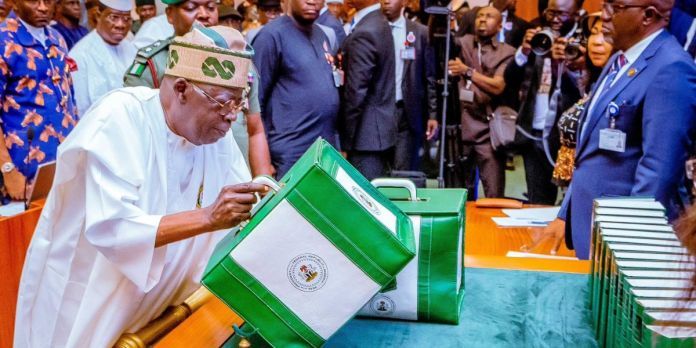
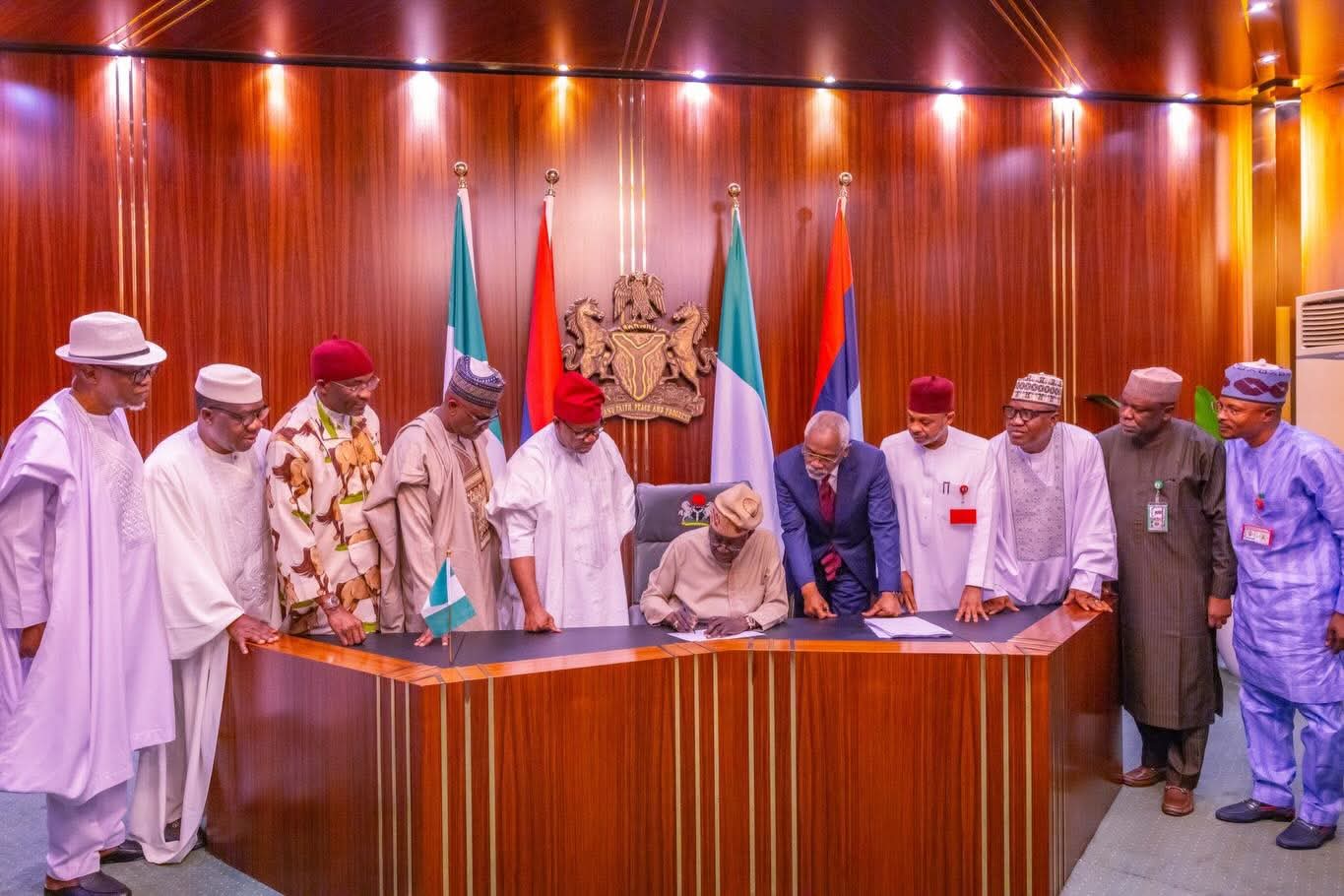
Akpabio made the remarks while speaking with journalists at the State House, Abuja, shortly after President Bola Ahmed Tinubu signed the Electoral Act 2026 (Amendment) into law in the presence of leaders of the National Assembly.
According to the Senate President, the new legislation directly addresses one of Nigeria’s longstanding electoral challenges the alteration of results between polling units and collation centres through stronger provisions for electronic transmission of election results.
He explained that results from polling units must now be uploaded directly to the results portal of the Independent National Electoral Commission (INEC), enabling Nigerians to independently verify figures at every stage of collation and quickly detect discrepancies where they occur.
Akpabio noted that the law also make provisions for areas with weak telecommunications coverage, allowing physical result sheets to temporarily serve as primary records until electronic transmission become possible, thereby ensuring that no community is disenfranchised due to technological limitations.
Key Reforms
Beyond electronic transmission, the amended Electoral Act introduced several major reforms aimed at improving internal party democracy and strengthening electoral credibility.
Among the key provisions are:
Direct primaries, giving political party members greater participation in selecting candidates.
Fresh elections in cases where a declared winner is later disqualified, rather than automatically awarding victory to the runner-up.
Enhanced transparency mechanisms throughout the collation and verification process.
Speaker of the House of Representatives, Tajudeen Abbas, also disclosed that the law reduces the election notice period from 360 days to 300 days. The adjustment, he said, could allow future elections to be scheduled earlier and help avoid clashes with major religious observances such as Ramadan.
Akpabio dismissed suggestions that the amendment was driven by political pressure, insisting that lawmakers worked through their legislative recess to deliver reforms reflecting Nigerians’ long-standing demand for credible, transparent and accountable elections.
He expressed confidence that the new legal framework would significantly strengthen Nigeria’s democracy by ensuring that electoral outcomes truly reflect the will of the people.