

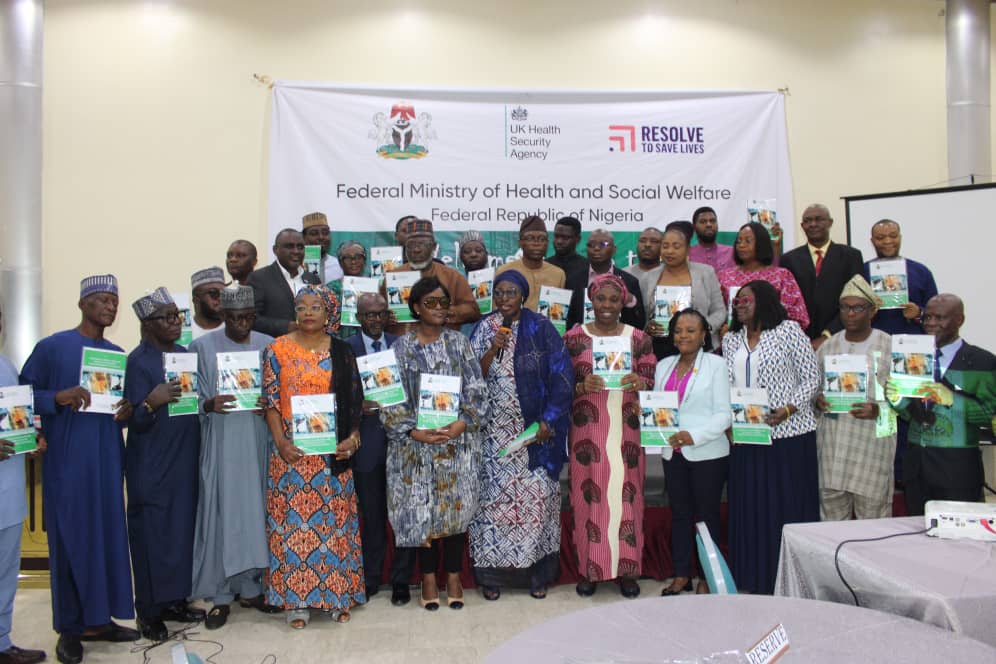
The Federal Government has officially launched the National Guidelines for Chemical Event Surveillance, a strategic initiative aimed at strengthening Nigeria’s public health system and enhancing environmental safety in response to growing chemical-related threats.
The launch event, held in Abuja and organised by the Federal Ministry of Health and Social Welfare, mark a significant step toward aligning Nigeria with global standards in chemical safety and surveillance.
Speaking on behalf of the Coordinating Minister of Health and Social Welfare, Professor Muhammad Ali Pate, the Permanent Secretary of the Ministry, Daju Kachollom, described the document as a “bold step forward” in safeguarding Nigerians from chemical hazards. She explained that Nigeria’s poor rating in the 2023 Joint External Evaluation (JEE), which categorized the country as having “limited capacity” in detecting and managing chemical events, necessitated a structured response.
According to Kachollom, the newly launched guidelines provided a robust framework for detection, reporting, response, and mitigation of chemical incidents. They complement existing systems like the Integrated Disease Surveillance and Response (IDSR), the National Environmental Health Surveillance System, and SORMAS, and are in line with the One Health approach.
In her welcome address, Pharm. Olubunmi Aribeana, Director of the Food and Drug Services Department at the Ministry, described the launch as both timely and historic. She stated that the document represents more than a technical manual it is a national call to action to close critical gaps in chemical surveillance, foster inter-agency collaboration, and protect Nigerians from the hidden dangers of chemical exposure.
Representatives from key ministries and agencies present at the event emphasized the need for urgent action. The Ministry of Environment expressed concern about increasing pollution from industrial discharges and poor waste management practices, noting that these contribute significantly to air, water, and soil contamination, all of which directly affect human health.
The Ministry of Agriculture and Food Security highlighted the dangers of unregulated chemical use in farming and public health settings, while the Ministry of Livestock Development reinforced the importance of integrating animal, environmental, and human health efforts under the One Health strategy.
The guidelines were developed through a broad consultative process led by the Federal Ministry of Health’s Chemicals Management Programme, with support from the United Kingdom Health Security Agency (UKHSA), Resolve to Save Lives, and the National Committee on Chemical Surveillance and Emergency System.
Stakeholders at the launch reaffirmed their commitment to the full implementation of the guidelines, stressing that chemical safety is a shared responsibility that requires sustained collaboration across sectors.