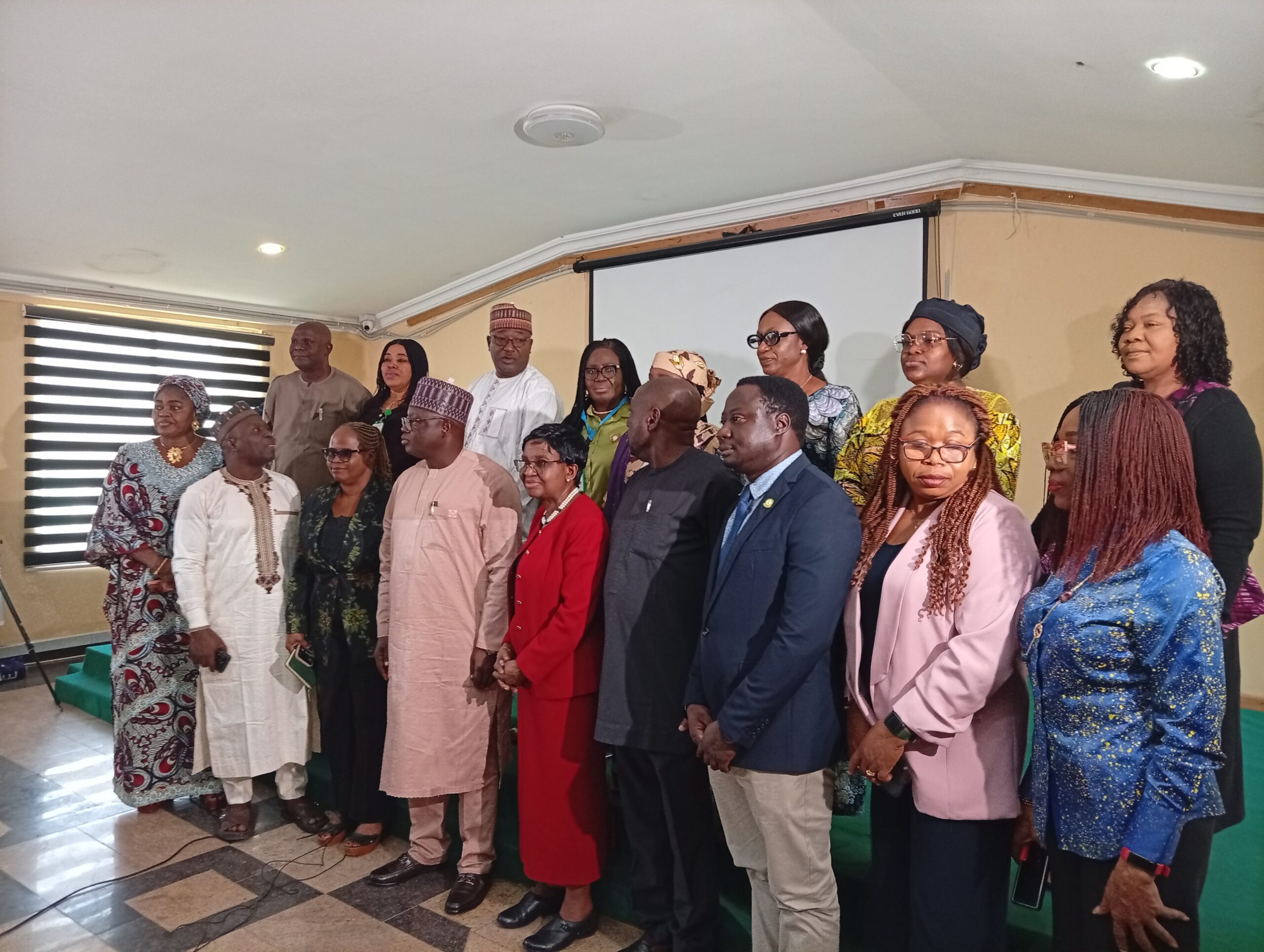
The National Orientation Agency (NOA), in partnership with the National Agency for Food and Drug Administration and Control (NAFDAC) and the Federal Competition and Consumer Protection Commission (FCCPC), has officially flagged off a Joint Nationwide Campaign to enforce the Federal Government’s ban on sachet alcoholic drinks and alcohol packaged in bottles below 200 millilitres.


The campaign was launched on Tuesday at the NOA Headquarters in Abuja during a joint press briefing addressed by the Director-General of NOA, Mallam Lanre Issa-Onilu, and the Director-General of NAFDAC, Mojisola Christianah Adeyeye. The Executive Vice Chairman/Chief Executive Officer of FCCPC, Mr. Tunji Bello, who was represented at the event.
Speaking at the briefing, Mallam Issa-Onilu described the initiative as a decisive national response to mounting public health concerns linked to the widespread availability of high-concentration alcohol in small, easily concealable packages. He noted that the Federal Government, through NAFDAC, banned the production and sale of alcohol in sachets and in PET or glass bottles below 200ml with effect from January 1, 2026, as part of efforts to curb underage access and harmful consumption patterns.
According to him, the collaboration harmonises regulation, consumer protection and public enlightenment to ensure the policy delivers measurable impact. He stressed that the measure is not designed to stifle legitimate business but to protect vulnerable populations, particularly children and young people.
The NOA Director-General stated that the agency would spearhead the behavioural change component of the campaign through its 818 offices nationwide and operational presence across all 774 Local Government Areas. He said Community Orientation and Mobilisation Officers would engage stakeholders at the grassroots level including youth groups, transport unions, market associations, schools and faith-based organisations — using culturally relevant platforms and local languages.
He added that the campaign would be reinforced through sustained media engagement, digital advocacy and the deployment of the NOA CLHEEAN App to enable citizens report violations and support enforcement efforts.
In her remarks, Prof. Adeyeye dismissed reports alleging that a House Committee had suspended the policy in 2024 or 2025, describing the claims as “fake news.” She maintained that the decision to enforce the ban was grounded in empirical research and supported by legislative resolutions.
The NAFDAC DG referenced a 2021 national survey conducted in collaboration with the Distillers and Blenders Association of Nigeria, which revealed troubling trends in underage access to alcohol. The study, which sampled 1,788 respondents across six states representing the six geo-political zones, found that more than half of minors and underaged persons obtained alcohol by themselves, with a significant proportion purchasing sachet and small PET bottle products. The findings also showed notable levels of occasional and daily consumption among underaged respondents, alongside reported cases of binge drinking.
Prof. Adeyeye emphasised that early exposure to alcohol increases the risk of addiction, mental health disorders and long-term health complications, while also contributing to social challenges such as violence, accidents and poor academic performance. She noted that the Senate, on November 6, 2025, passed resolutions urging strict enforcement of the ban and intensified nationwide sensitisation.
The agencies collectively called on parents, guardians, community leaders, retailers and distributors to support the enforcement drive and ensure full compliance with the directive. They reiterated that consumer protection is inseparable from public protection and affirmed their commitment to sustained enforcement in the interest of national health and safety.
The joint campaign, the heads of the agencies said, reflects a unified governance approach aimed at safeguarding Nigeria’s youth and promoting a healthier, safer and more responsible society.