
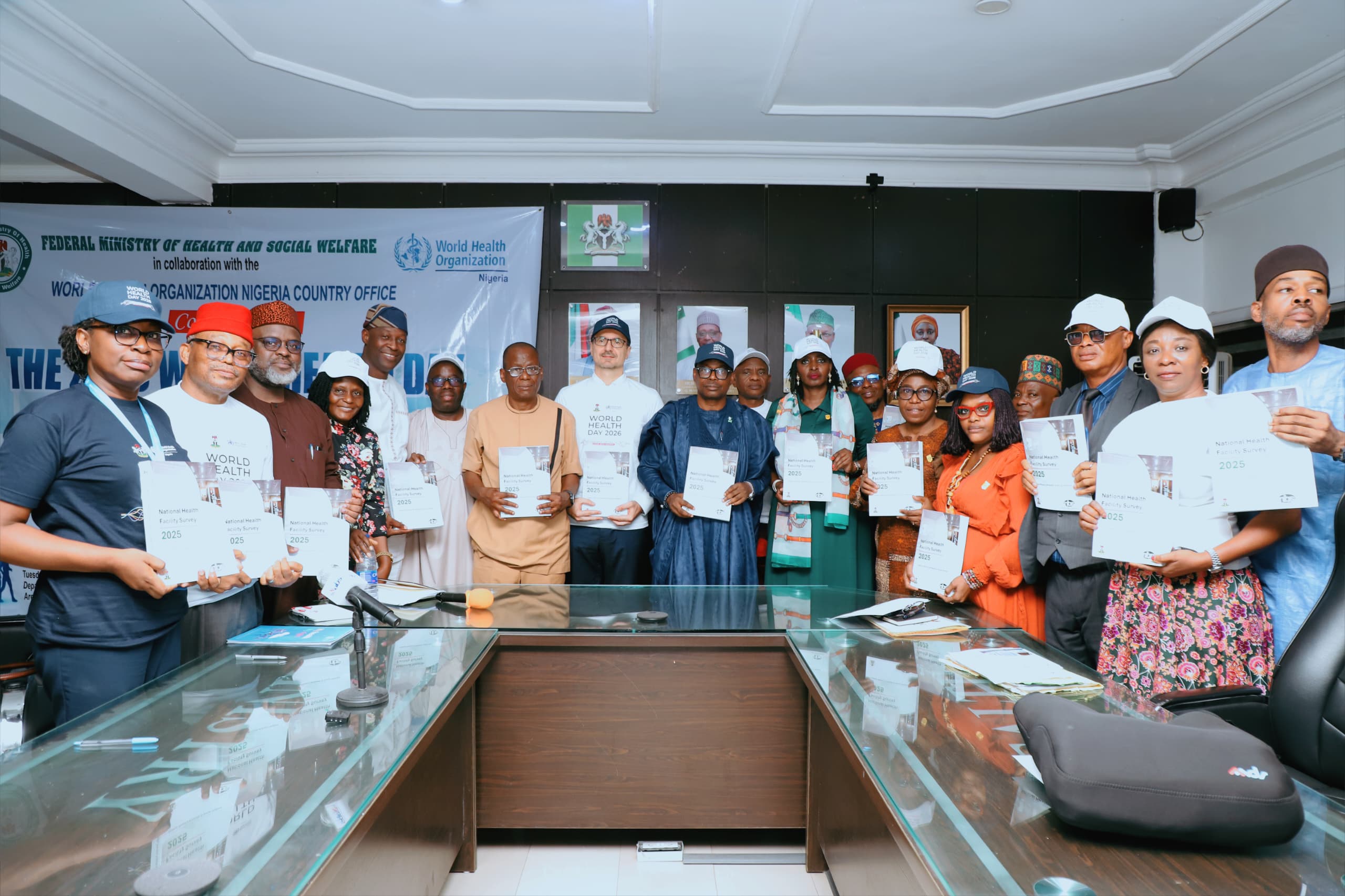
The Federal Government has reaffirmed its unwavering commitment to improving the health and wellbeing of Nigerians, unveiling the 2025 National Health Facility Survey as part of efforts to strengthen data-driven reforms in the health sector.
The Honourable Minister of State for Health and Social Welfare, Dr. Iziaq Adekunle Salako, made this known during a ministerial press briefing in Abuja to mark the 2026 World Health Day, themed “Together for Health: Stand with Science.”
Dr. Salako said the theme underscored the importance of evidence-based decision-making in healthcare, stressed that the Tinubu administration, under the Renewed Hope Agenda, has placed health at the centre of national development.
According to him, science remained the backbone of public health progress, noting that innovations such as vaccines, diagnostics, and digital health systems continue to save millions of lives globally.
He further emphasized Nigeria’s adoption of the One Health approach, which integrates human, animal, and environmental health, assured that the Federal Government will continue to strengthen intersectoral collaboration to detect and respond to emerging health threats.
The Minister also highlighted ongoing partnerships with the World Health Organisation (WHO), which he said have significantly contributed to strengthening disease surveillance, immunisation, and emergency response systems in Nigeria.
Dr. Salako noted that the government is addressing longstanding structural challenges in the health sector through reforms under the Nigeria Health Sector Renewal Investment Initiative, with a focus on ensuring equitable access to quality healthcare.
He revealed notable progress in primary healthcare utilisation, which increased from about 10 million visits in early 2024 to approximately 45 million by mid-2025, describing the development as evidence of growing public confidence in the system.
On immunisation, he disclosed that over 14 million girls aged 9–14 years have received the HPV vaccine, while more than 102 million children aged 9 months to 15 years have been reached with the measles-rubella vaccine, representing about 99% coverage.
He also highlighted efforts to reduce maternal mortality through the Maternal Mortality Reduction Innovation Initiative (MAMII), noting a 17% reduction in maternal deaths in participating facilities.
On health insurance, Dr. Salako said over 21.7 million Nigerians are now covered under various schemes, representing significant progress toward achieving universal health coverage.
Earlier, the Permanent Secretary of the Ministry, Daju Kachollom, described health as the foundation of national development, emphasizing ongoing reforms aimed at improving access to affordable and equitable healthcare.
In their remarks, development partners, including representatives from the World Health Organisation and UNFPA, commended Nigeria’s progress, stressing the importance of continued investment in science, data, and collaboration to sustain gains in health outcomes.
The Statistician-General of the Federation, represented by Mr. David Babalola, also announced that the newly launched 2025 National Health Facility Survey indicates that 70% of public health facilities now provide child delivery and antenatal services, highlighting improved access to maternal healthcare.
The event brought together stakeholders from government, development partners, and civil society, reaffirmed a collective commitment to building a stronger, more resilient health system for all Nigerians.