
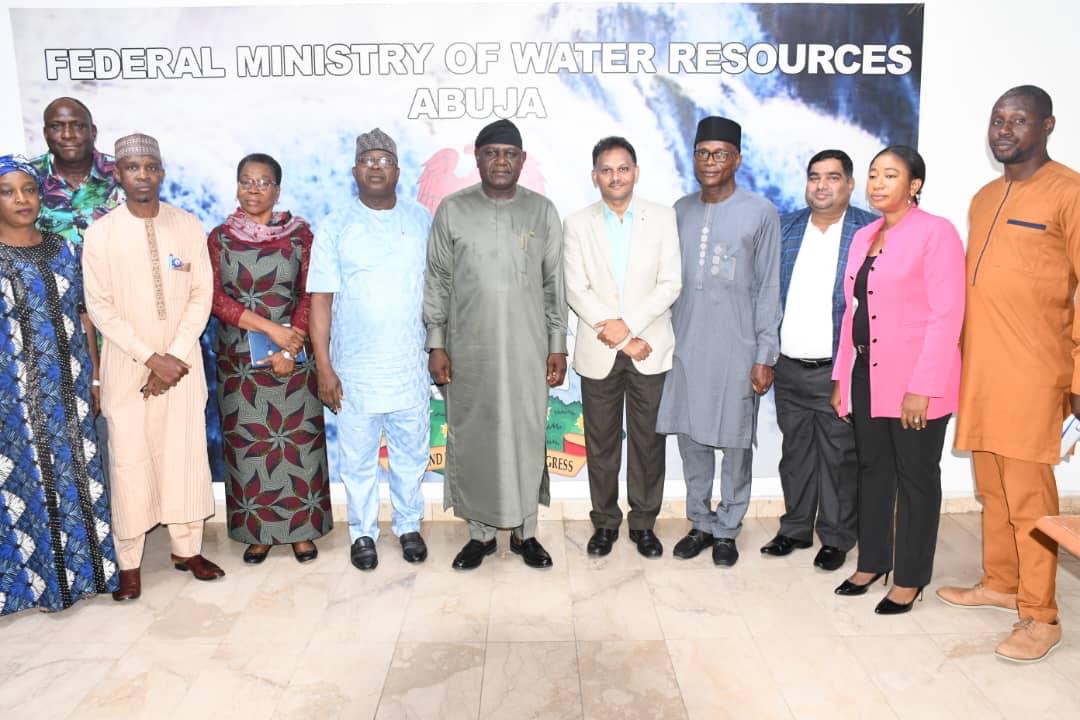
The Federal Ministry of Water Resources and Sanitation has inaugurated a National Technical Working Group (NTWG) on Sustainability of Rural Water Supply Systems to strengthen the long-term functionality of water facilities and improve access to clean water in rural communities.
Speaking at the ceremony in Abuja, the Permanent Secretary, Mr. Richard Phellangwah, described the initiative as a critical step towards advancing national development goals through sustainable water supply.
“Access to clean and safe water is a basic human right and a key driver of socio-economic growth. Sustaining rural water facilities requires deliberate investment, effective maintenance, and strong collaboration among government, partners, the private sector, and communities,” he said.
Mr. Phellangwah commended development partners including UNICEF, Self-Help Africa, and other stakeholders for their support, urged the Working Group to unite in developing practical solutions to Nigeria’s rural water challenges.
Chairman of the NTWG and Director of Water Supply, Mr. Babarinde Mukaila, explained that the Group would harmonize approaches, strengthen partnerships, and improve service coverage. He added that the initiative would ensure safer water quality, boost institutional capacity, and secure financial sustainability of rural water systems, thereby supporting Nigeria’s drive to meet Sustainable Development Goals (SDGs).
There were goodwill messages from Mrs. Elizabeth Ugo, Director of Water Quality Control and Sanitation, as well as representatives of UNICEF, World Bank, WaterAid, NEWSAN, and the Tulsi Chanrai Foundation, who all stressed the importance of collective action and community involvement.
The Terms of Reference for the NTWG, presented by Mrs. Zuliat Mohammed of the Ministry’s Water Supply Department, highlighted its role as a multi-stakeholder platform for policy guidance, knowledge sharing, and coordination of operations and maintenance activities.
The Group, chaired by Mr. Mukaila, comprised representatives from the Ministry, UNICEF, World Bank, National Water Resources Institute, Green Habitat Initiative, WaterAid, NEWSAN, Self-Help Africa, Tulsi Chanrai Foundation, FCDO, EU, AfDB, TASTE, and other civil society actors in the WASH sector.