
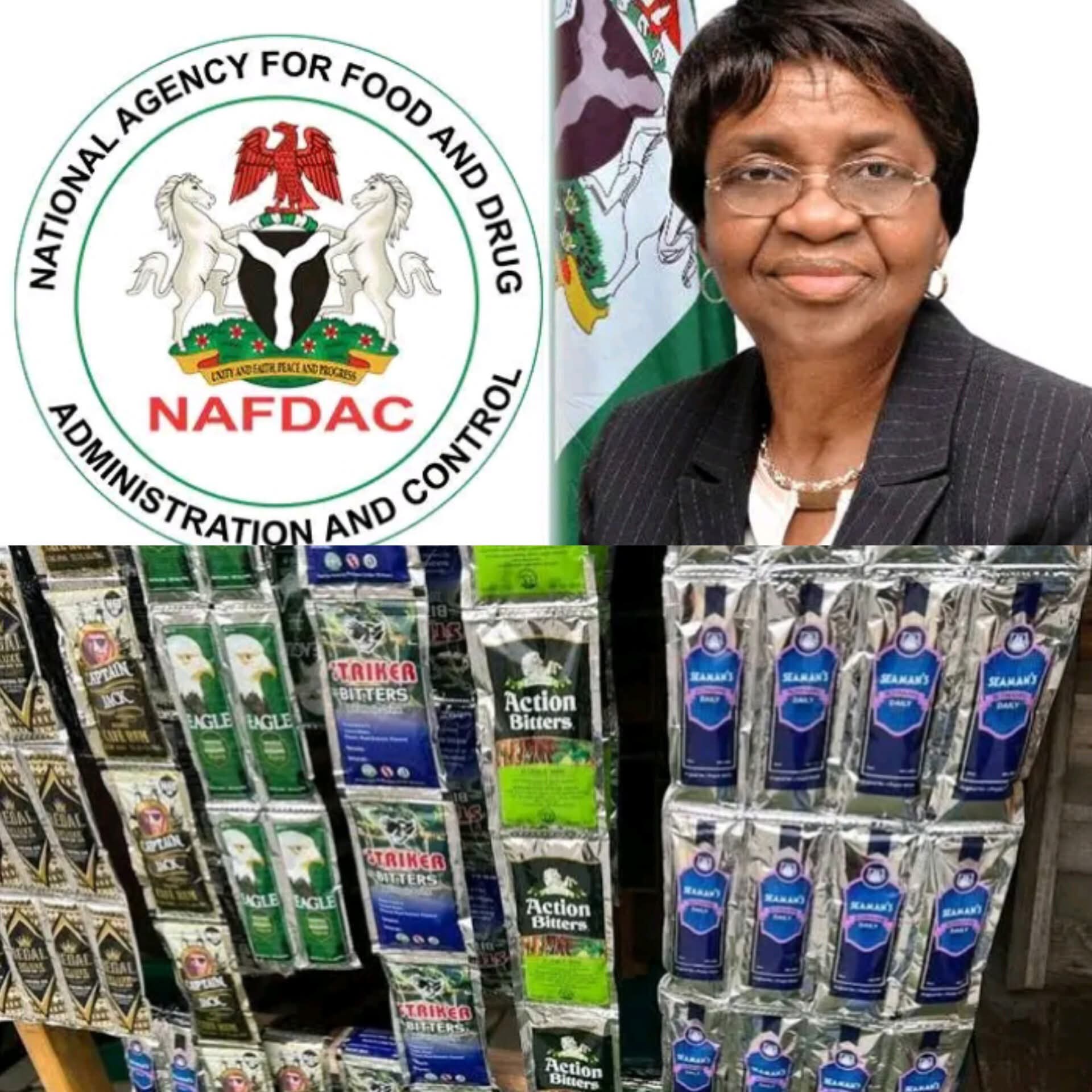
The Federal Government has reaffirmed the suspension of all enforcement actions relating to the proposed ban on sachet alcohol and 200ml PET bottle alcoholic products, directed the National Agency for Food and Drug Administration and Control (NAFDAC) to immediately cease factory shutdowns, warehouse sealing, and public enforcement campaigns.
This directive followed a joint intervention by the Office of the Secretary to the Government of the Federation (OSGF) and the Office of the National Security Adviser (NSA), which highlighted the potential security risks of continued enforcement in the absence of a fully implemented National Alcohol Policy.
According to the OSGF and NSA, the policy has been signed by the Federal Ministry of Health in line with President Bola Ahmed Tinubu’s directive. However, enforcement is to remain suspended until the policy is fully operationalized and further instructions are issued by the Office of the SGF.
The agencies warned that ongoing closures and de facto bans on sachet alcohol are causing economic disruption, threatening jobs, and impacting informal distribution networks nationwide. The move reinforces a prior directive issued by the OSGF in December 2025, which temporarily suspended all ban-related actions pending consultations and a final government decision.
Terrence Kuanum, Special Adviser on Public Affairs to the SGF, noted that the OSGF is reviewing legislative resolutions, public health considerations, and economic and national security implications. He emphasized that any enforcement by NAFDAC without clearance from the SGF is invalid and should be disregarded by the public.
With the NSA’s intervention, the Federal Government has elevated the matter beyond regulatory concerns, warning that premature enforcement could destabilize communities, exacerbate unemployment, and create avoidable security challenges.
The Federal Government assured Nigerians and industry stakeholders that a final, balanced decision will be communicated in due course, following comprehensive consultations to safeguard public health, economic stability, and national security.