The Federal Government has approved the disbursement of ₦32.9 billion under a revised framework of the Basic Health Care Provision Fund (BHCPF) to strengthen access to quality primary healthcare services and enhance accountability in fund management across Nigeria.
The announcement was made on Wednesday during the 12th Ministerial Oversight Committee (MOC) meeting of the Federal Ministry of Health and Social Welfare (FMOHSW) in Abuja.
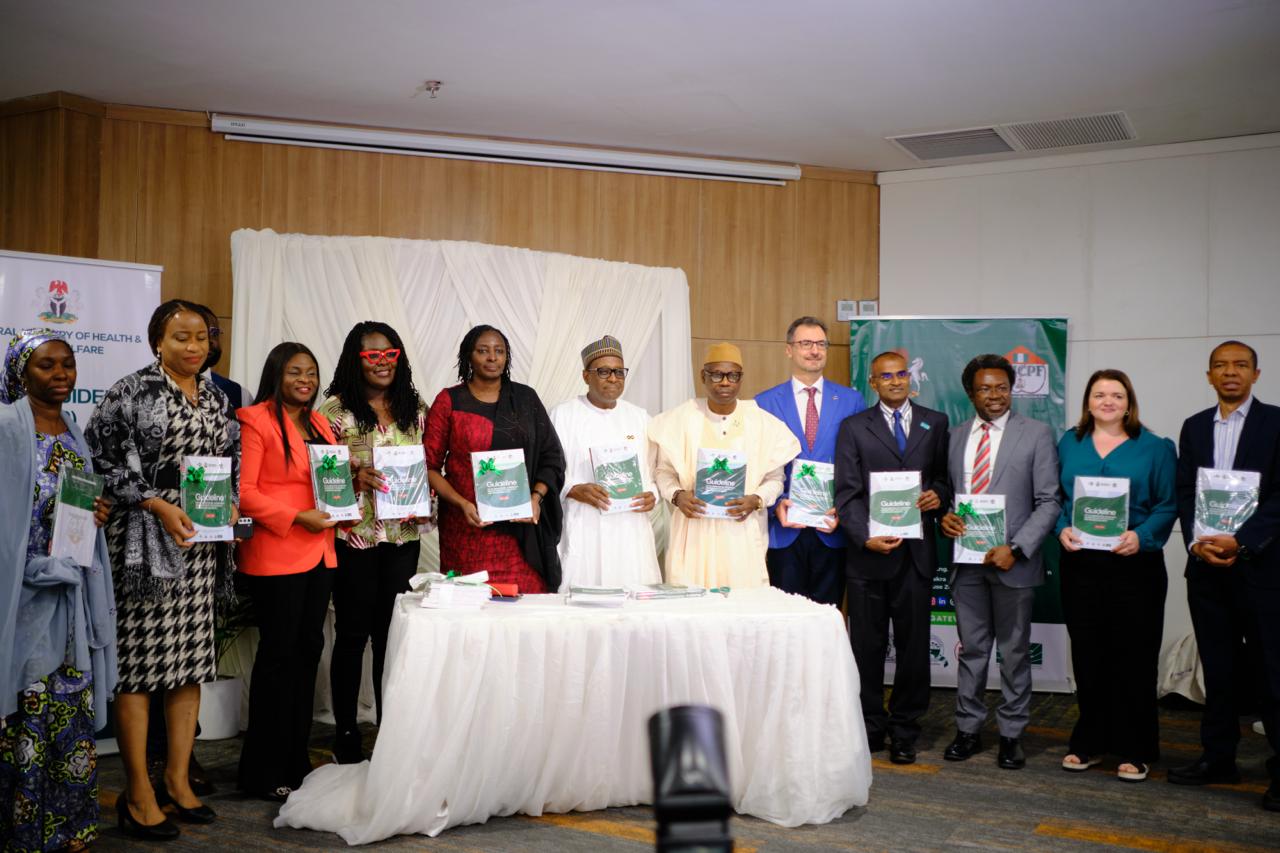
Coordinating Minister of Health and Social Welfare, Professor Muhammad Ali Pate, who chaired the meeting, also launched the BHCPF 2.0 Revised Guideline, describing it as a policy instrument designed to ensure equitable, efficient, and transparent delivery of essential health services nationwide.
According to Pate, the ₦32.9 billion disbursement to be completed before the end of October will support more than 8,000 primary health centres (PHCs) nationwide, with expansion planned for up to 13,000 facilities under the new phase of the programme.
He explained that the revised guideline increases quarterly allocations to PHCs to cover operational costs, staff incentives, emergency services, and essential drugs. To strengthen transparency, the government has introduced stricter public interest and conflict-of-interest protocols and activated a joint task force with the ICPC to monitor fund utilisation at the grassroots.
The minister also announced a digital transformation initiative to improve service delivery and data tracking. An end-to-end digital platform for the National Emergency Medical Treatment Committee (NEMTC) is expected to go live within two weeks, while state health insurance agencies will now be required to deploy claims tracking systems and submit quarterly progress reports.
On data governance, Pate said the ministry is institutionalising Data Quality Assessments (DQAs) and directed states to submit lists of beneficiaries with verified National Identification Numbers (NINs) to the National Health Insurance Authority (NHIA) by December 2025.
Highlighting progress achieved through the BHCPF so far, Pate revealed that Nigeria recorded a fourfold increase in primary healthcare utilisation, with over 80 million patient visits in the first two quarters of 2025. More than 21 million Nigerians have accessed services under the Vulnerable Groups Health Insurance Fund, and over 15,000 women have benefited from emergency obstetric care reimbursements.
He added that maternal mortality at health facilities has declined by 12 per cent since the introduction of BHCPF reforms, while immunisation coverage in northern states has reached 92 per cent under the ongoing integrated measles, rubella, and polio campaign.
Minister of State for Health, Dr Iziaq Adekunle Salako, said recent assessments show that BHCPF-supported facilities outperform those without access to the fund, underscoring the need for wider coverage. He also pledged federal collaboration with the National Assembly to expand investments in primary healthcare.
Commending the reforms, Dr Tomi Coker, Ogun State Commissioner for Health, said integrating NIN as a unique patient identifier has improved data quality and accountability. She noted that states now receive enhanced technical support to ensure value for money.
Development partners also expressed confidence in the revised BHCPF framework. WHO Country Representative, Dr Pavel Ursu, praised the evidence-based approach and accountability mechanisms driving Nigeria’s progress, while UNICEF reaffirmed its commitment to supporting BHCPF programmes that target women and children.
Similarly, Dr Muyi Aina, Executive Director of the National Primary Health Care Development Agency (NPHCDA), disclosed that ₦14 billion had been disbursed in the last two quarters to 8,304 PHCs, with an additional 5,212 facilities to be added soon in partnership with states.
In his remarks, Dr Ismaila Musa Jibrin, Chairman of NEMTC, said the BHCPF has boosted Nigeria’s emergency response systems, with over 11,000 emergency patients, including pregnant women and newborns, transported to health facilities in the last quarter through the Rural Emergency Transport Scheme, now operational in more than 150 LGAs.
The meeting brought together federal and state officials, development partners, and civil society organisations, who pledged continued collaboration to accelerate Nigeria’s march toward Universal Health Coverage (UHC).