
The Federal Government has announced a bold plan to provide universal access to clean water and sanitation by 2030, unveiling new projects and programmes designed to fast-track Nigeria’s progress on Sustainable Development Goal 6 (SDG-6).
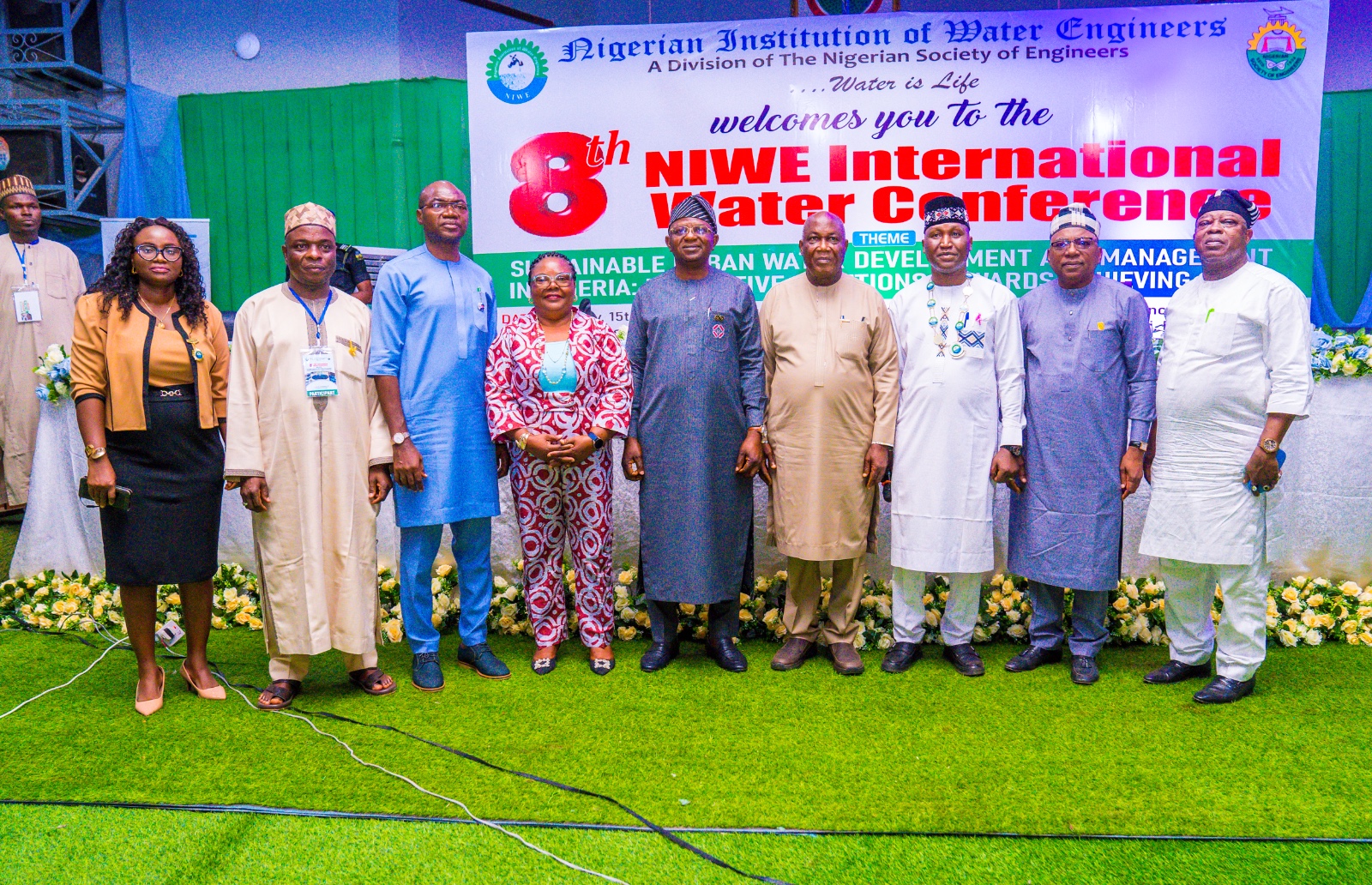
Minister of Water Resources and Sanitation, Engr. Prof. Joseph Terlumun Utsev, made the disclosure on Tuesday at the opening of the 8th International Water Conference of the Nigerian Institution of Water Engineers (NIWE) in Makurdi, Benue State. The conference is themed: “Sustainable Urban Water Development and Management in Nigeria: Innovative Solutions Towards Achieving SDG 6.”
Highlighting key initiatives under President Bola Ahmed Tinubu’s Renewed Hope Agenda, the Minister listed major projects including the 460 MW Katsina-Ala Dam, the 186 MW Bawarku Dam on the Benue River, as well as the concessioning of the Datsin Hausa Dam in Adamawa and the Itisi Dam in Kaduna. He explained that the projects are designed to boost irrigation, hydropower generation, water supply, food security, tourism, and job creation.
Utsev also pointed to flagship programmes such as the World Bank-supported SURWASH Project, the Partnership for Expanded Water Supply, Sanitation and Hygiene (PEWASH), and the Clean Nigeria Campaign, which aims to eliminate open defecation by 2030. He commended Nigerian engineers for their innovation and urged stakeholders to leverage the conference for new ideas, policy input, and stronger partnerships.
Representing Benue State Governor, Rev. Fr. Hyacinth Alia, the Chief of Staff, Barr. Moses Atagher, pledged the state’s support for federal water initiatives, describing access to water as a basic human right.
In his remarks, NIWE National Chairman, Engr. Joshua Titus Sanga, called for urgent innovative solutions to meet the country’s growing urban water demand, while the President of the Nigerian Society of Engineers (NSE), represented by Engr. Dr. Elizabeth Eterigho, underscored the role of engineers in driving climate-resilient and data-driven solutions for sustainable water management.
The three-day conference featured technical sessions, exhibitions, and panel discussions, with participants expected to outline actionable strategies that will accelerate Nigeria’s journey to universal clean water and sanitation.