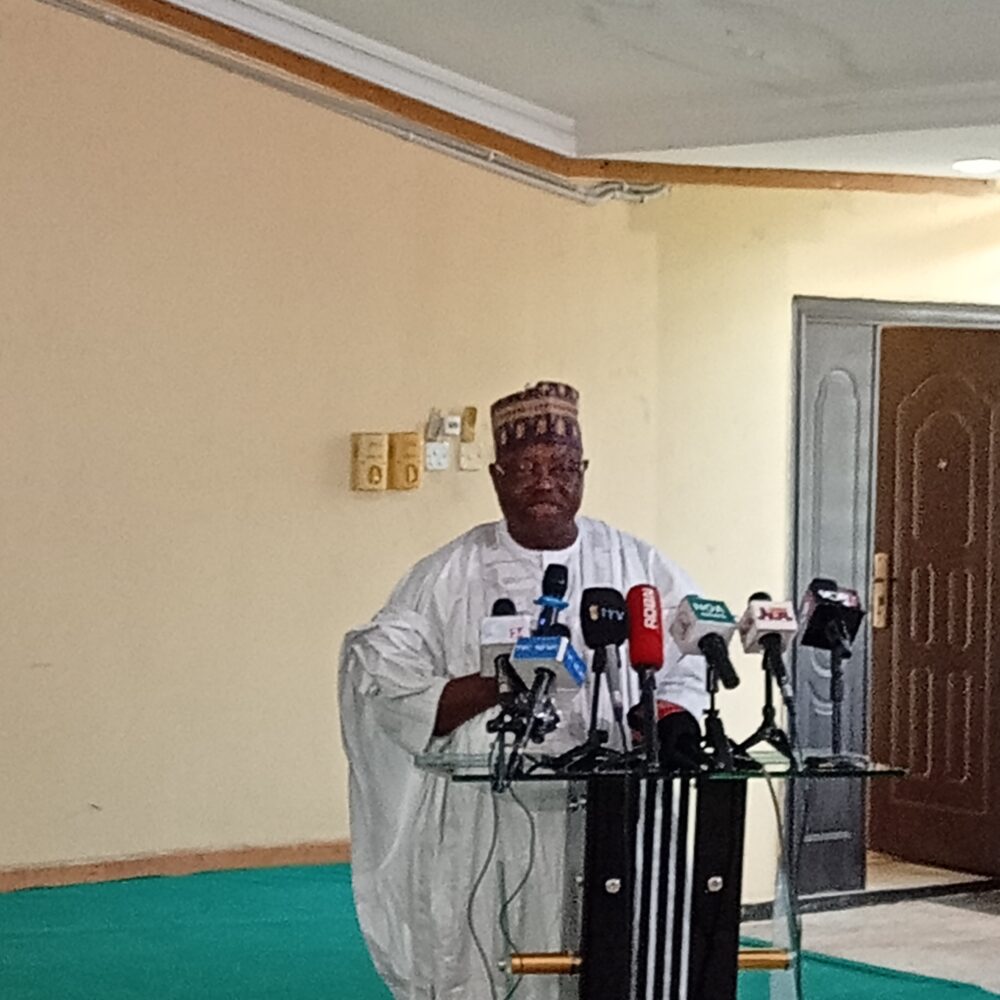
The Federal Government on Friday strengthened its regional security strategy and modernised national identity management with the launch of the ECOWAS National Biometric Identity Card (ENBIC), a digital credential designed to curb cross-border crimes, irregular migration and document falsification across West Africa.
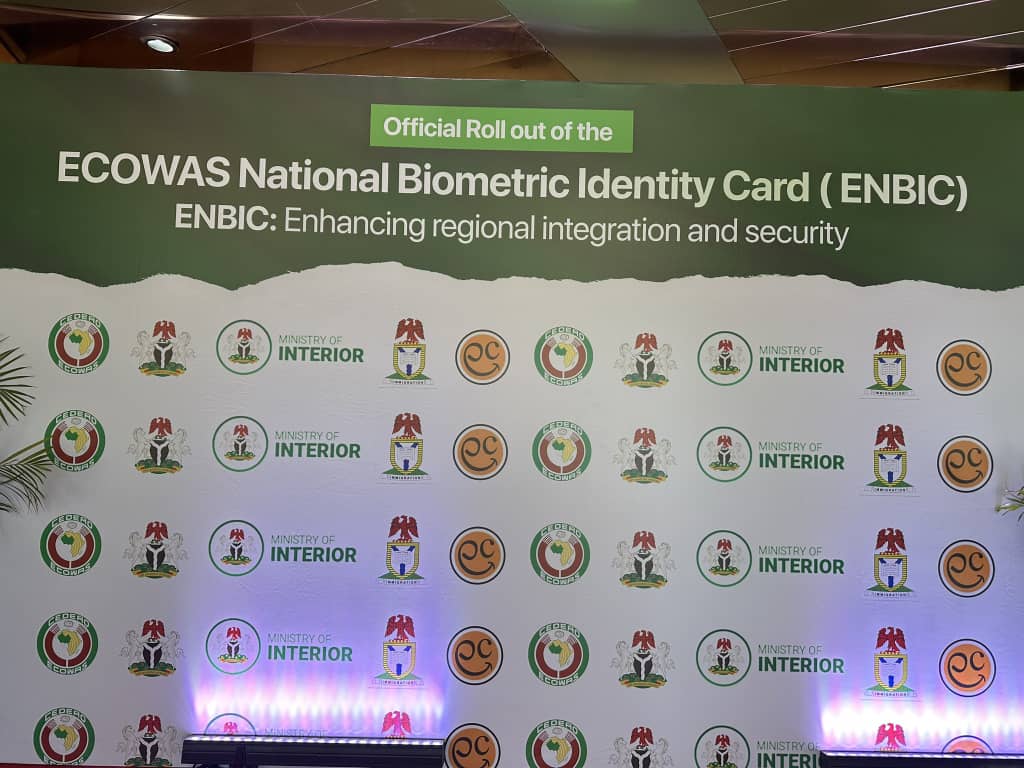
With the rollout, Nigeria becomes the seventh ECOWAS member to adopt the innovative identity system an initiative conceived more than a decade ago but revived under what officials described as President Bola Ahmed Tinubu’s results-driven leadership.
Speaking at the unveiling, the Minister of Interior, Dr. Olubunmi Tunji-Ojo, said the activation of the card mark “a powerful new beginning” for secure mobility and regional cooperation. He noted that although the project had been delayed for years, President Tinubu’s insistence on timely delivery ensured its completion.
“It is unlike the Nigerian standard, which is why this delay was unusual,” he said. “The good news is that President Tinubu pushed for action, and today the promise has become reality. This is what leadership looks like not talk, but delivery.”
Tunji-Ojo described ENBIC as a major boost to Nigeria’s evolving security and identity framework, explained that the card aligned with international public key infrastructures, including ICAO protocols. He added that the biometric card will ease pressure on passport issuance by serving as a valid travel document within West Africa.
“If you are travelling only within ECOWAS, you no longer need a passport. This card is sufficient for all regional travel,” he said.
He linked the launch to broader reforms in Nigeria’s travel and border systems, including the deployment of the UN-mandated Advanced Passenger Information System (APIS) in 2024, which enables early visibility of incoming travellers. He also announced that the Nigeria Immigration Service will introduce the Single Travel Emergency Passport (STEP) in January to support stranded Nigerians.
Representing the Secretary to the Government of the Federation, Senator George Akume, Permanent Secretary Mohammed Sanusi Danjuma situated the rollout within Nigeria’s long-standing commitment to regional integration. He recalled that the technical blueprint for ENBIC was adopted at an ECOWAS Summit held in Abuja in 2014.
He said the card goes beyond identity to symbolise hope and dignity.
“In our hands is a simple card, but in our hearts lies a profound hope,” he said. “A tool of dignity for migrant women, an enabler for traders, and a promise of a West Africa where borders become bridges of opportunity rather than barriers.”
Akume urged member states to expedite the deployment of ENBIC and harmonise national databases toward a unified regional identity system. He also called on fintech innovators and the private sector to build services atop the new platform.
The Comptroller-General of Immigration, Kemi Nandap, said the new credential replaces the old paper-based travel certificate and is built on advanced biometric and cryptographic features that meet ECOWAS and ICAO standards.
“Its biometric core anchored on high quality facial and fingerprint data provides a secure link between the holder and the credential,” she said. “It will improve verification, reduce document fraud and disrupt cross-border criminal networks.”
Beyond security, Nandap highlighted the economic value of the initiative, saying it will boost commerce, enhance labour mobility, deepen tourism and speed up border checks across the region.
In a message delivered on his behalf, ECOWAS Commission President Dr. Omar Touray praised Nigeria for demonstrating leadership at a defining moment for the region. He revealed that ECOWAS forces are currently deployed in Guinea-Bissau to stabilise the situation and commended Nigeria’s longstanding role in regional peace and development.
He projected that Nigeria is on course to become one of the world’s top five economies by the end of the century, adding that ENBIC is “only the beginning” of a much larger biometric identity ecosystem planned for the sub-region.
Also speaking, the Chief of Mission of the International Organization for Migration (IOM), Dimanche Sharon, described the launch as “a strategic step toward secure mobility” that will greatly strengthen migration management and identity verification across West Africa.