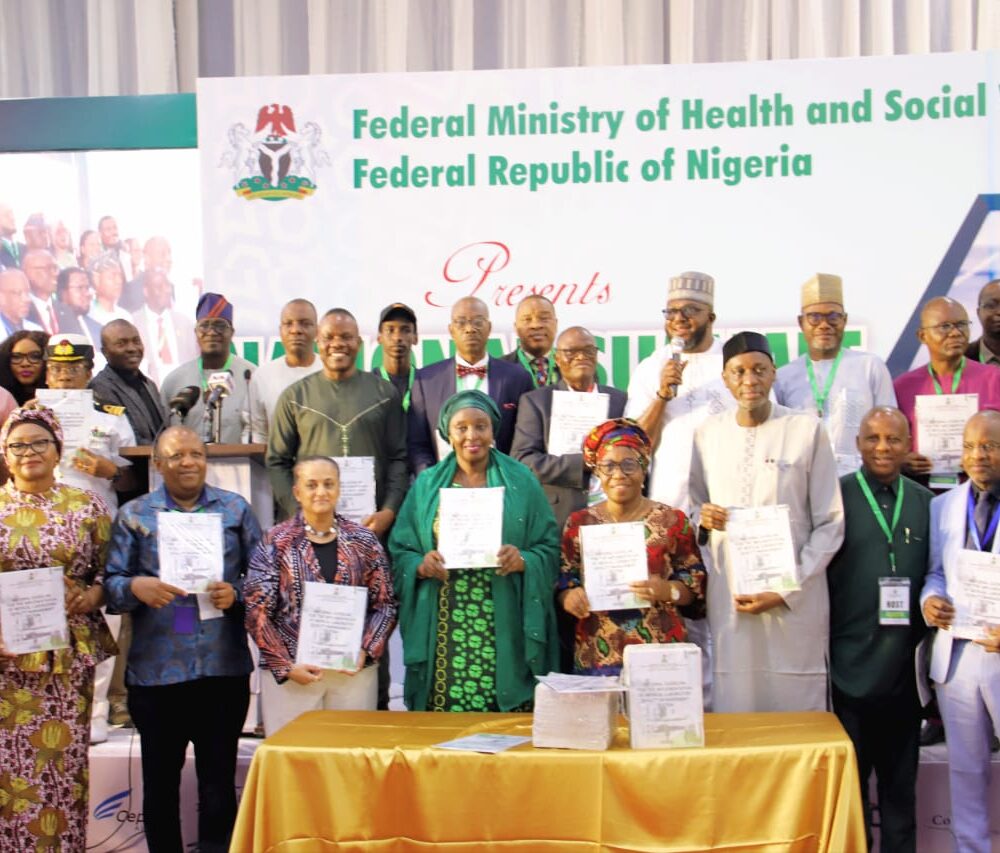


The Federal Government of Nigeria, through the Federal Ministry of Health and Social Welfare, has launched a national campaign tagged Project 365 to eliminate hepatitis B and C as public health threats by the year 2030.

The initiative was formally announced at a ministerial press briefing on Monday in Abuja to commemorate the 2025 World Hepatitis Day, themed “Hepatitis: Let’s Break It Down.”
In his keynote address, the Coordinating Minister of Health and Social Welfare, Professor Muhammad Ali Pate, represented by Dr. Godwin Ntadom, Director of the Public Health Department, disclosed that over 20 million Nigerians are currently living with hepatitis B and C. He said approximately 18.2 million people are affected by hepatitis B and 2.5 million by hepatitis C, with over 90 percent of cases undiagnosed. Many of the infected, he noted, unknowingly transmit the virus, often misdiagnosed as malaria, leading to around 4,252 deaths from liver cancer annually and economic losses estimated between ₦13.3 trillion and ₦17.9 trillion.
Professor Pate explained that Project 365 is designed as a year-round nationwide campaign that will intensify screening, diagnosis, vaccination, and treatment, especially in rural and underserved communities. He said the project aligns with efforts to eliminate mother-to-child transmission of HIV, viral hepatitis, and other sexually transmitted infections through integrated public health systems.

To support the elimination agenda, the Minister announced that the government has initiated structural and financial reforms. These include the establishment of a Viral Elimination Fund, increased budgetary support for hepatitis programs, and policy reforms aimed at encouraging local vaccine and drug manufacturing. He also emphasized the need for legislative backing to expand diagnostic and treatment services nationwide. According to him, these steps are vital to making hepatitis medications more affordable and accessible, while laying the foundation for sustainable domestic pharmaceutical production.
Speaking further, the Director and National Coordinator of the National AIDS/HIV, Viral Hepatitis and STIs Control Programme (NASCP), Dr. Adebobola Bashorun, said the campaign will employ community-led strategies to increase awareness and access to care. These strategies involve mass testing, vaccination of hepatitis B-negative individuals, treatment rollout for hepatitis C patients, and continuous advocacy on preventive measures such as safe sex and improved hygiene. He also urged adults above 21 years old who may have missed hepatitis B vaccination during infancy to undergo testing and take the vaccine if found negative.
Dr. Bashorun described the year’s theme as a call to dismantle both social and structural barriers to lifesaving services, emphasizing the implementation of a national framework in alignment with Sustainable Development Goal 3 and the Global Health Sector Strategy on Hepatitis.
Also speaking at the event, the representative of the Director-General of the National Orientation Agency (NOA), Mrs. Adaugo Ngwu, pledged the agency’s commitment to supporting the hepatitis elimination campaign. She assured that the NOA, as the government’s citizen engagement arm, will work closely with the Health Ministry and civil society groups to sensitize the public, especially at the grassroots level, on the importance of testing, vaccination, and treatment.
International development partners present at the event also declared their support. Dr. Mya Sapal Ngon, a representative of the World Health Organization (WHO), commended Nigeria for prioritizing hepatitis and integrating services with broader health programs such as HIV and maternal health. She praised the government’s focus on domestic financing, stigma reduction, and improved treatment access. Similarly, Mr. Chukwuemeka Agwuocha of the Clinton Health Access Initiative (CHAI) acknowledged Nigeria’s leadership and its adoption of a public health model that places hepatitis services within existing health systems and community networks.
With the launch of Project 365, Nigeria has signaled its determination to eliminate hepatitis and to ensure that access to care, protection, and dignity becomes the right of every citizen, not a privilege.