
The Federal Government has called for a unified and coordinated national response to effectively combat human trafficking in Nigeria, described it as a complex and highly organised criminal enterprise that cannot be tackled in isolation.
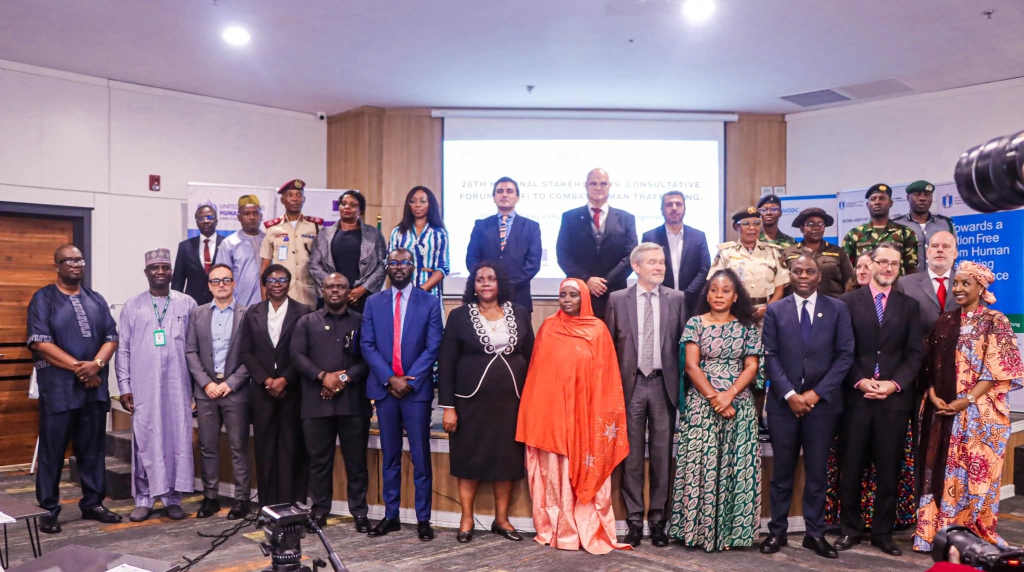
The Attorney General of the Federation (AGF) and Minister of Justice, Mr. Lateef Fagbemi, SAN, made the call on Wednesday in Abuja at the 28th National Stakeholders’ Consultative Forum on Trafficking in Persons, held to commemorate the 2025 International Day Against Human Trafficking.
The AGF, who was represented at the event by Mrs. Victoria Ojogbane, Director of Research and Project Development at the Federal Ministry of Justice, stressed the urgent need for collaboration across all levels of government federal, state, and local as well as with civil society and international development partners.
“Human trafficking is no longer a crime that can be tackled by one agency or sector alone. It demands a united front and reinforced partnerships,” he stated.
Citing the International Labour Organisation (ILO) 2023 report, Fagbemi revealed that human trafficking operations generate over $245 billion annually $169.9 billion from sexual exploitation and $75.9 billion from forced labour, including domestic servitude. He described the crime as a grave threat to national security and emphasized that Nigeria remains a source, transit, and destination country for trafficked persons.
He also reaffirmed Nigeria’s commitment to international and regional legal instruments, including the United Nations Convention Against Transnational Organised Crime (UNTOC) and its Protocol to Prevent, Suppress and Punish Trafficking in Persons, especially Women and Children.
The AGF noted that the Tinubu-led administration had rolled out key reforms aimed at addressing the root causes of trafficking. These reforms, he said, include expanded social investment initiatives such as conditional cash transfers, youth employment schemes, and vocational training programmes. He also highlighted ongoing justice sector reforms and enhanced mutual legal assistance frameworks to support cross-border prosecution of traffickers.
Speaking at the forum, the Director-General of the National Agency for the Prohibition of Trafficking in Persons (NAPTIP), Hajia Binta Adamu-Bello, announced the launch of two key tools — a revised National Data Collection System and a new National Dashboard on Human Trafficking — aimed at enhancing data-driven decision-making and accountability in the anti-trafficking response.
“These tools are part of a broader data ecosystem that improves reporting, analysis, and evidence-based policymaking,” Adamu-Bello explained.
She also disclosed that Nigeria had adopted the ECOWAS Trafficking in Persons (TIP) Strategy, which reinforces existing structures and enhances regional cooperation. According to her, the strategy is being domesticated in partnership with the International Centre for Migration Policy Development (ICMPD) and ECOWAS.
Adamu-Bello stressed the need for early planning for a successor framework to the National Action Plan on Human Trafficking (2022–2026), which is nearing its end. She emphasized the importance of integrating anti-trafficking efforts with broader national agendas on gender-based violence, irregular migration, and human exploitation.
Also speaking, Mr. Cheikh Toure, Nigeria Country Representative of the United Nations Office on Drugs and Crime (UNODC), noted that trafficking thrives in vulnerable communities where recruitment often begins. He urged the Federal Government to adopt a whole-of-government approach and ensure adequate funding for state task forces and local focal points.
“The battleground is the community. Prevention remains our strongest weapon,” Toure remarked. He also called for consistent enforcement and domestication of anti-trafficking laws.
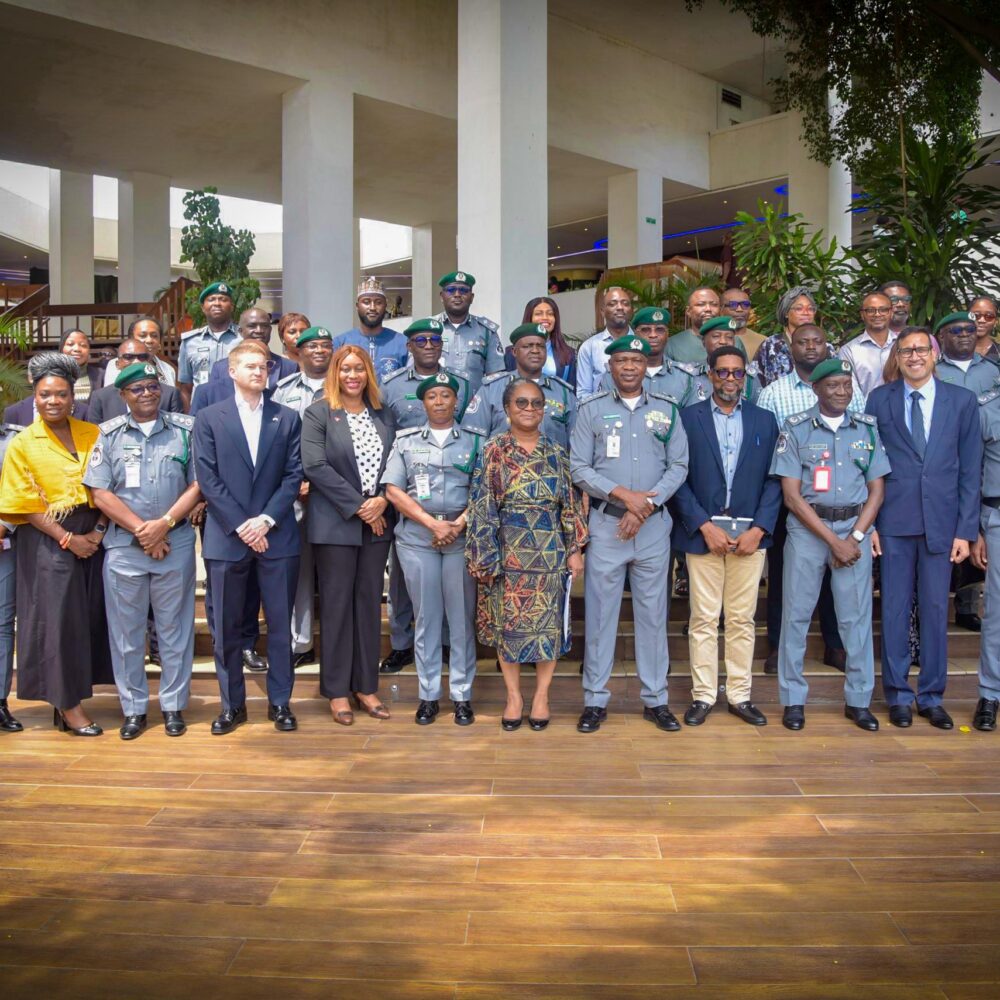
The forum brought together key stakeholders from government ministries, law enforcement, civil society, international agencies, and the private sector to discuss practical solutions and reinforce collective commitment to end human trafficking in Nigeria.