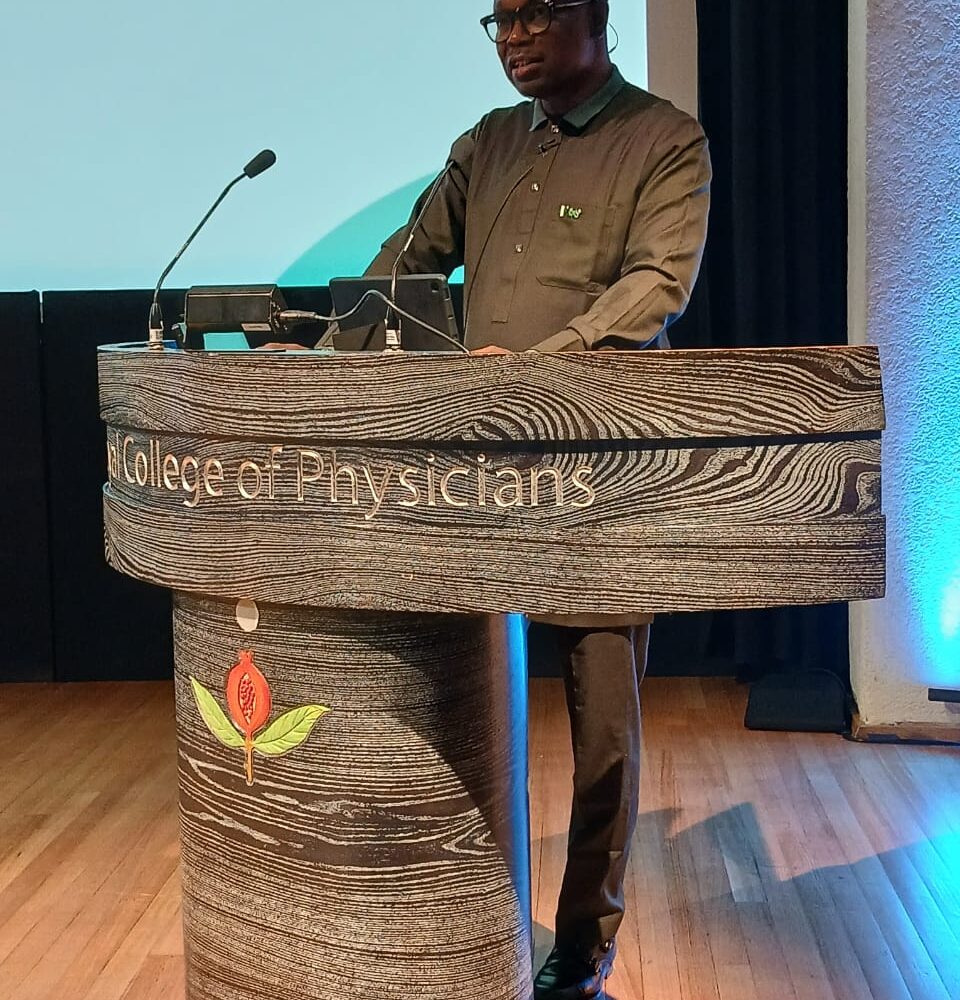
The Federal Government has called on stakeholders across the health sector to renew their commitment toward building a resilient and inclusive healthcare system capable of meeting the needs of all Nigerians.
The Honourable Minister of State for Health and Social Welfare, Iziaq Adekunle Salako, made the call while delivering his address at the APC Medical Council Health Roundtable Conference held on Wednesday, February 25, 2026, at the State Banquet Hall in Abuja.
Salako emphasized that achieving a resilient health system requires collective action, noting that collaboration among government institutions, development partners, civil society, and communities remains critical to strengthening healthcare delivery nationwide.
He described the envisioned health system as one where every Nigerian, regardless of income level or location, can access quality healthcare without financial hardship, while health workers are adequately motivated, equipped, and fairly remunerated. According to him, functional health facilities, reliable data-driven decision-making, active community participation, and innovation-driven self-reliance are central to achieving this goal.
The minister acknowledged that although notable progress has been recorded, significant gaps persist in the sector. He observed that improvements are not occurring at a pace sufficient to meet the healthcare needs of Nigeria’s growing population, stressing that maternal and child mortality, rising healthcare costs, and the migration of skilled health professionals remain major concerns.
Salako noted that President Bola Ahmed Tinubu is fully aware of these challenges, adding that the administration has implemented coordinated programmes over the past 30 months in line with the Renewed Hope Agenda to accelerate reforms in the health sector.
“We are fully conscious of the issues at stake and have rolled out coordinated interventions aimed at achieving a resilient health system for Nigeria,” he said.
He urged participants at the conference to recommit themselves to strengthening healthcare systems, expressing optimism that the current period could mark a turning point toward universal health coverage and improved national health outcomes.
The minister also stressed the importance of responsible leadership and accountability in health sector governance, assured that the Federal Government would continue to promote transparency and judicious utilization of health resources at both federal and state levels through multi-stakeholder coordination platforms.
Highlighting key achievements, Salako said the Basic Healthcare Provision Fund (BHCPF) has expanded access to quality healthcare for millions of Nigerians, while immunization coverage has improved significantly. He added that several states are advancing innovative health insurance schemes, supported by substantial investments from development partners in Nigeria’s health security architecture.
He further outlined progress under the Nigerian Health Sector Renewal Investment Initiative (NHSRII), including implementation of a sector-wide approach and strengthened programmes under agencies such as the National Health Insurance Authority, the National Primary Health Care Development Agency, malaria elimination initiatives, tuberculosis control programmes, immunization campaigns, and reproductive, maternal, newborn, and child health interventions.
On human resource development, the minister disclosed that more than 37,000 health workers have been employed since 2023, with over 75 percent belonging to clinical cadres.
To address the migration of healthcare professionals, he said the government has developed a health workforce migration policy aimed at improving retention while enabling diaspora professionals to contribute more effectively to Nigeria’s health sector.
He added that initiatives such as the Health Workforce Registry, expanded training quotas, on-the-job training for over 70,000 health workers, deployment of Community Health Extension Workers, the Health Fellows Programme, the National Rapid Response Team for disease surveillance, and expanded staffing across 130 laboratories are strengthening manpower capacity and improving epidemic preparedness.
The minister reaffirmed the government’s commitment to sustaining reforms that will enhance health security and ensure equitable healthcare access for all Nigerians.