
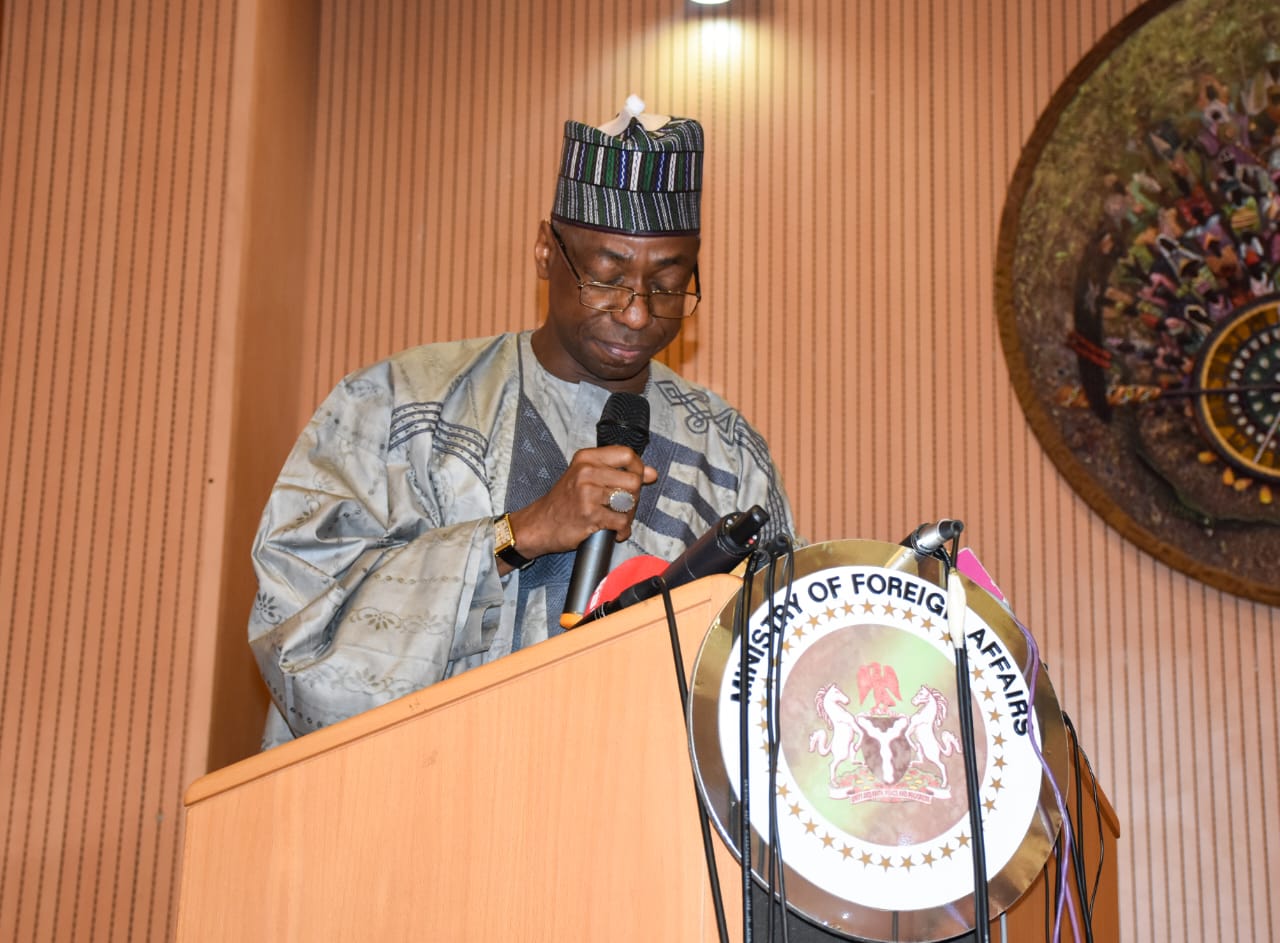
The Permanent Secretary, Ministry of Foreign Affairs, Ambassador Dunoma Umar Ahmed, on Wednesday, briefed members of the Diplomatic Corps at Tafawa Balewa House, Abuja, on the far-reaching reforms and developmental strides of the administration of President Bola Ahmed Tinubu.
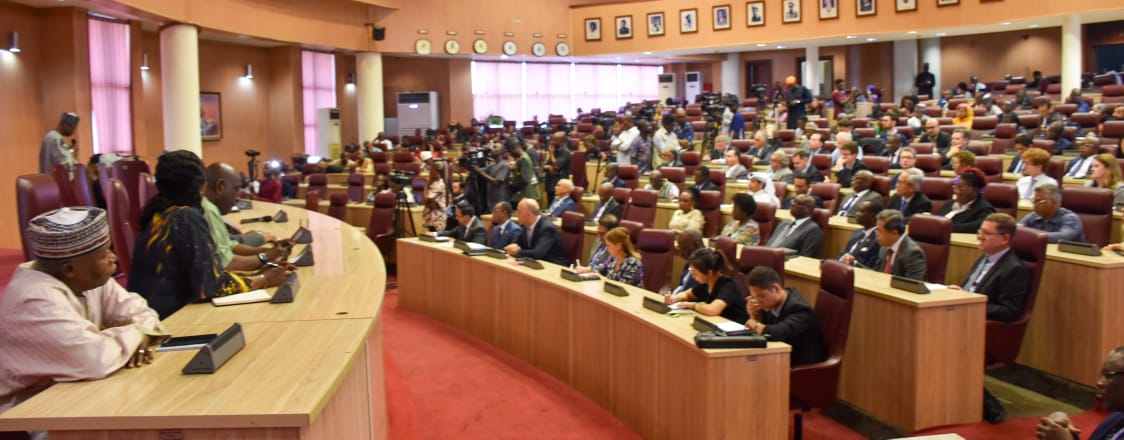
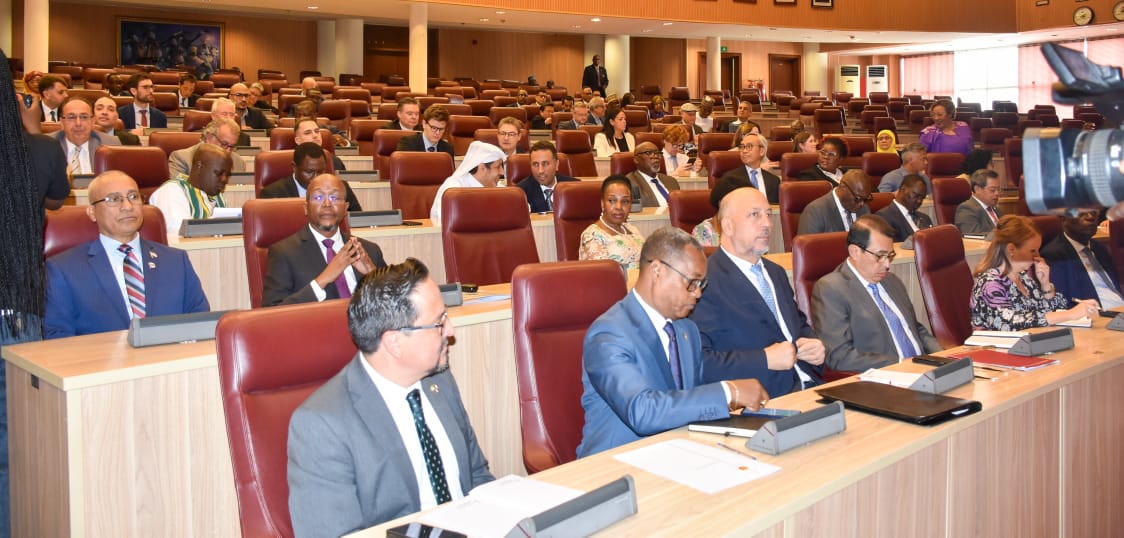
Speaking on behalf of the Honourable Minister of Foreign Affairs, Ambassador Yusuf Maitama Tuggar, Ambassador Ahmed expressed appreciation to the envoys for their continued partnership and sustained diplomatic engagements with Nigeria. He reiterated the government’s commitment to strengthening bilateral and multilateral relations for mutual growth and global stability.
He noted that since the last diplomatic briefing in August 2024, the administration has made significant progress across economic, security, and social development fronts, guided by the Renewed Hope Agenda.
According to him, the government has undertaken bold and transformative reforms aimed at restoring macroeconomic stability, stimulating inclusive growth, and enhancing investor confidence. These include the unification of multiple foreign exchange windows into a single transparent market-driven rate, the removal of fuel subsidies, and prudent fiscal and monetary measures that have stabilised the naira and improved investor sentiment.
Ambassador Ahmed highlighted that the removal of fuel subsidies has freed over N4 trillion annually, funds now redirected to social investments, infrastructure development, and education. He also noted the impact of the Infrastructure Support Fund (ISF) for states, the Renewed Hope Conditional Cash Transfer Scheme, and other targeted welfare programmes designed to cushion short-term effects and ensure long-term economic benefits for citizens.
On the energy front, he reported that Nigeria’s crude oil production has risen above 1.6 million barrels per day following renewed investor confidence and improved security in oil-producing areas. The phased operation of the Dangote Refinery, alongside the ongoing rehabilitation of the Port Harcourt, Warri, and Kaduna refineries, he said, is expected to significantly reduce fuel import dependence and enhance trade balance.
He further emphasised Nigeria’s efforts to diversify its economy through tax reforms, expansion of the digital economy, and agricultural modernisation. The Presidential Committee on Fiscal Policy and Tax Reforms, he noted, aim to raise Nigeria’s tax-to-GDP ratio from under 10 percent to 18 percent by 2026.
Ambassador Ahmed added that the country’s digital ecosystem driven by fintech, e-commerce, and creative industries continue to attract global investment, while agricultural initiatives such as the National Agricultural Growth Scheme and Special Agro-Processing Zones are improving food security and creating rural employment.
On social development, he cited the implementation of the Student Loan (Access to Higher Education) Act, which provides interest-free loans to students in public tertiary institutions through the Nigerian Education Loan Fund (NELFUND). He also mentioned ongoing efforts to revitalise vocational and technical education to reduce youth unemployment.
The Permanent Secretary reaffirmed Nigeria’s commitment to transparency, accountability, and sustainable development, assuring members of the Diplomatic Corps that the administration remained focused on deepening reforms that will position Nigeria as a globally competitive and resilient economy.
He thanked the envoys for their continued support and assured them of the Ministry’s readiness to collaborate closely in advancing shared goals of peace, prosperity, and sustainable development.