The Ministry of Foreign Affairs (MFA) and the Nigerian Air Force (NAF) have reaffirmed their commitment to closer institutional coordination and strengthened strategic communication following a familiarisation and synergy visit in Abuja.
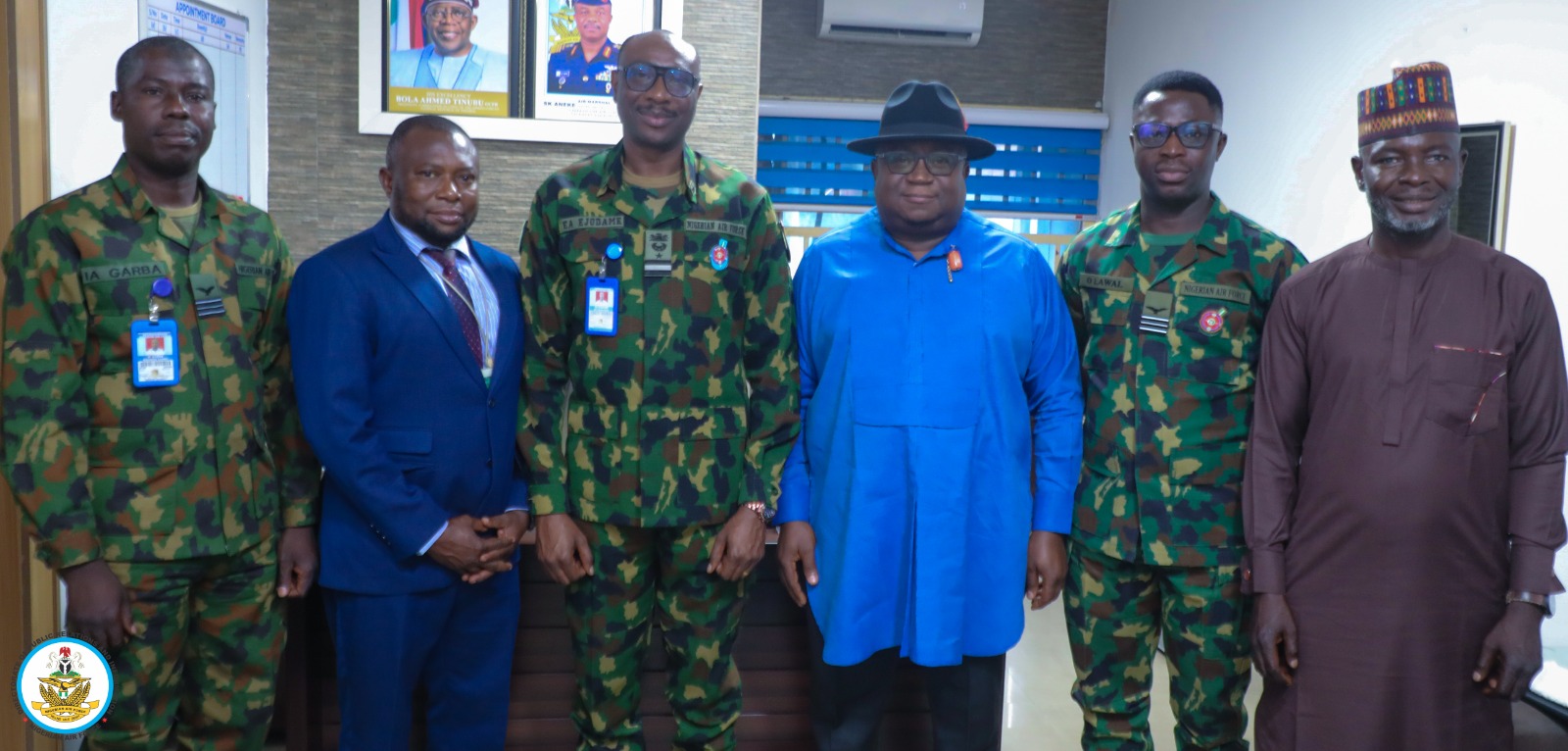
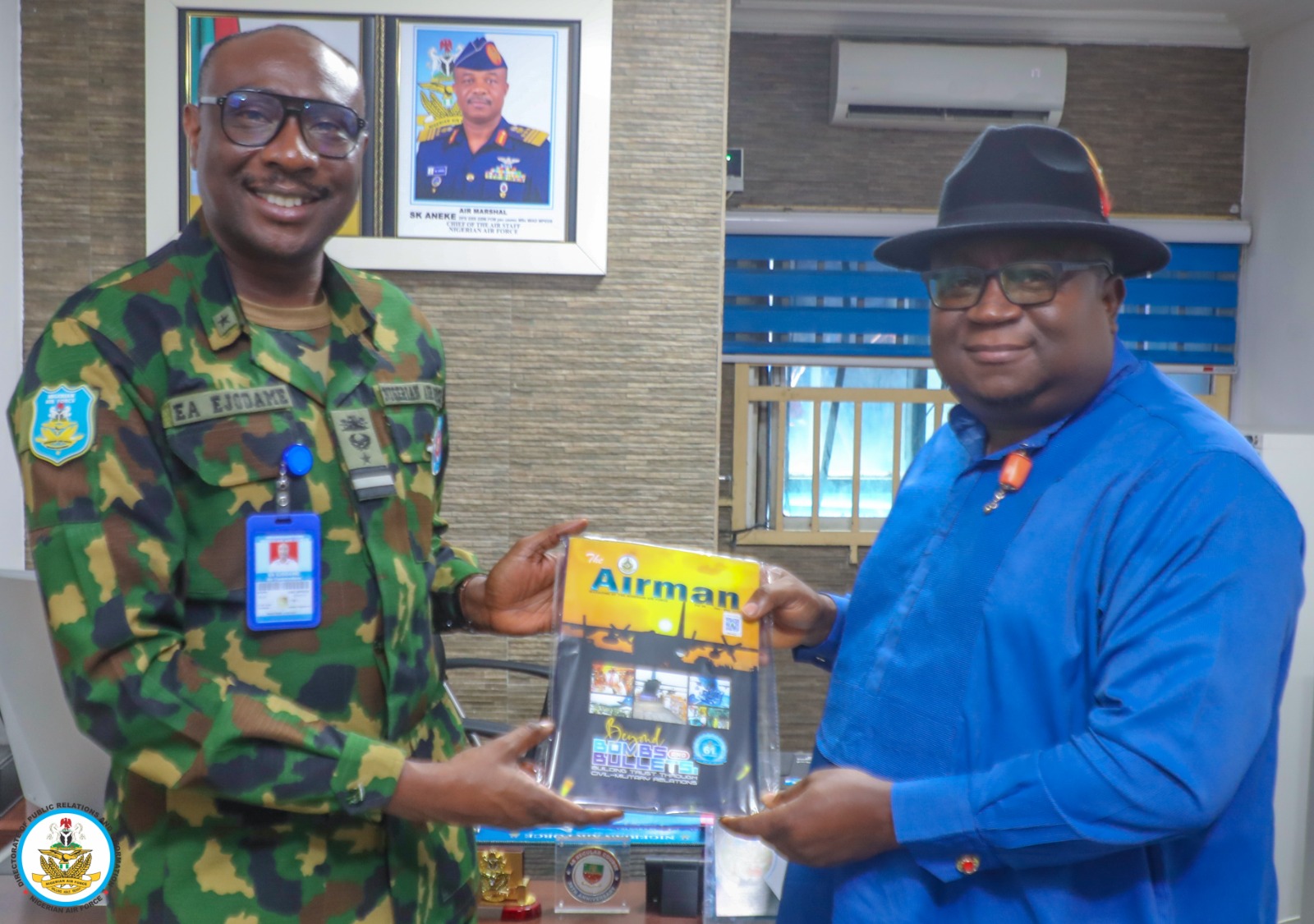
The visit, which took place on Monday, December 29, 2025, saw the Spokesperson of the Ministry of Foreign Affairs, Kimiebi Imomotimi Ebienfa, engage the Director of Public Relations and Information of the Nigerian Air Force, Air Commodore Ehimen Ejodame, at the NAF Headquarters.
Both parties held extensive discussions on the intersection between diplomatic communication and military public information, particularly in the context of Nigeria’s evolving security landscape and increasing international media attention. They agreed that modern security challenges, especially asymmetric and non-conventional warfare, require not only operational responses but also carefully coordinated messaging that protects national interests, safeguards sovereignty and sustains public confidence.
Air Commodore Ejodame explained that Nigeria’s security environment is largely shaped by asymmetric threats, where hostile elements often operate within civilian populations. According to him, this reality complicates military operations and public communication, as information must be managed carefully to avoid endangering missions, personnel and intelligence assets.
From the diplomatic standpoint, Ebienfa stressed the importance of calibrated and coordinated public messaging, particularly in situations with potential international implications. He noted that uncoordinated or premature statements during crises could escalate operational matters into diplomatic challenges, recalling past instances where gaps in inter-agency communication fuelled media speculation, public anxiety and avoidable diplomatic pressure.
Both spokespersons acknowledged that while certain operational details cannot be disclosed for security reasons, delayed or insufficient communication can create information vacuums that are often exploited by misinformation and hostile narratives. They emphasized that information warfare has become a critical dimension of modern conflict and that Nigeria must remain proactive in protecting the credibility and professionalism of its Armed Forces.
The discussions also touched on geopolitical sensitivities, including public perceptions of foreign counterterrorism partnerships, the risk of mischaracterising cooperation as dependency, and the need for evidence-based communication following major security incidents. They agreed that religious, regional and political sensitivities must be carefully considered in national security messaging.
The engagement concluded with a shared resolve to sustain institutional synergy between the MFA and NAF through early consultation, aligned messaging and continuous professional interaction. Both sides also agreed to explore capacity-building initiatives such as joint media-response simulations to enhance whole-of-government coherence in crisis communication.
Describing the visit as timely and forward-looking, the two institutions underscored that coordinated strategic communication remains a vital asset in safeguarding Nigeria’s sovereignty, maintaining public trust and strengthening the country’s international standing.