
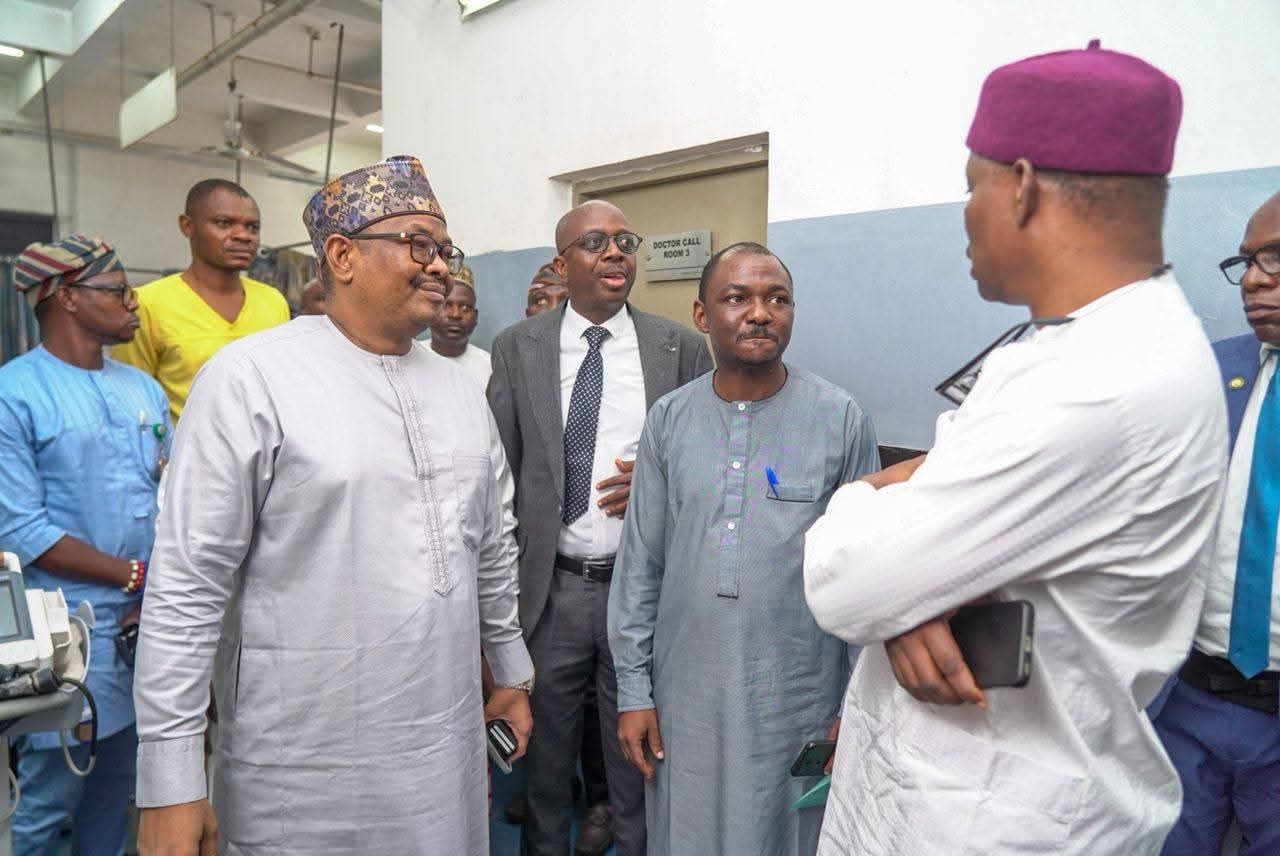
Minister of State for Health and Social Welfare, Dr. Iziaq Adekunle Salako, on Saturday paid a surprise visit to the Federal Medical Centre (FMC), Abuja, following the outcome of an investigative panel report prompted by a viral video that exposed lapses in the hospital’s emergency response.
The video, which sparked widespread outrage, showed an accident victim brought in by a good Samaritan but reportedly faced delays and apparent neglect at the emergency unit.
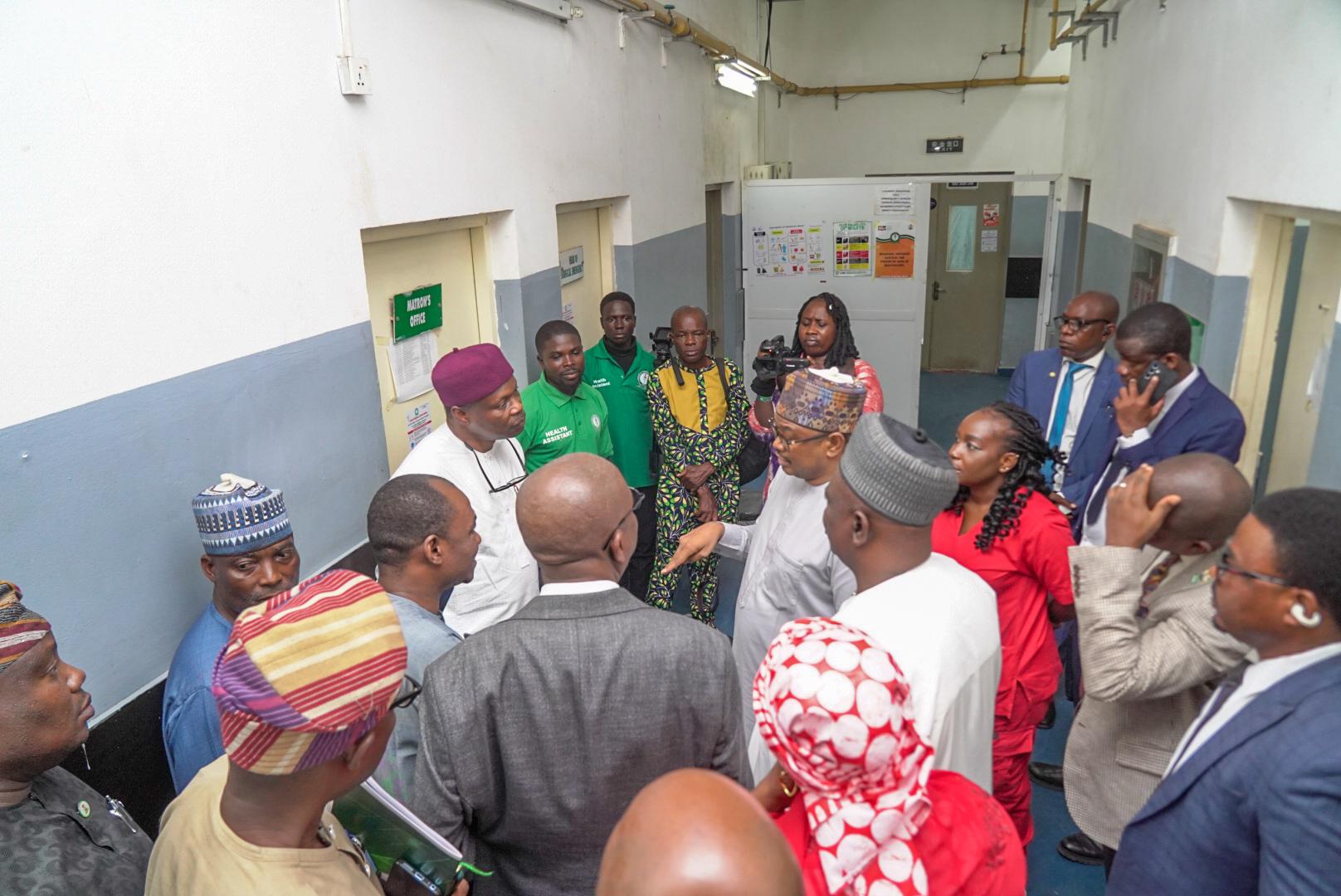
Dr. Salako’s unannounced visit was aimed at assessing the state of emergency care and engaging frontline medical personnel to chart a path forward. The Minister interacted with healthcare workers and the Chief Medical Director, asked probing questions about the hospital’s preparedness, infrastructure, and workforce capacity in handling emergencies.
“You are in the eye of the storm, being responsible for saving lives. Even if you’ve done one million things right, one wrong move is what the public will remember. You must get it right every time,” the Minister told the staff.
During an interactive session with the Head of Medical Emergency, Dr. Timothy Sama’ila, a consultant neurosurgeon, Dr. Salako was briefed on challenges including limited space, inconsistent staffing, and the pressure of Abuja’s large patient population.
In response, the Minister ordered an immediate review of staffing in the emergency unit, recommended an increase in the number of casualty officers per shift from two to at least four. He also directed that newly recruited health assistants be integrated swiftly to support clinical services.
Dr. Salako acknowledged some progress in infrastructure, particularly with electricity and water supply, but highlighted areas of the emergency ward that still require urgent upgrades and better organization. He insisted that improvements must be continuous and responsive to patient needs.
Security and crowd control at the emergency wing also came under review. The hospital management disclosed existing partnerships with private security guards and the Nigeria Security and Civil Defence Corps (NSCDC) to secure the emergency area and facilitate smooth ambulance movement. The Minister recommended enhancing surveillance systems, citing previous cases where CCTV footage aided investigations.
Dr. Salako further announced a federal initiative to launch cross-country emergency care training for health workers. The program, he said, is designed to unify and elevate emergency care standards across public hospitals nationwide.
“Everyone is watching you now,” the Minister said. “Use this opportunity to demonstrate what competent and compassionate emergency healthcare delivery should be.”
The visit underscored the Federal Government’s renewed commitment to ensuring that no Nigerian is denied quality and timely emergency care when it matters most.