
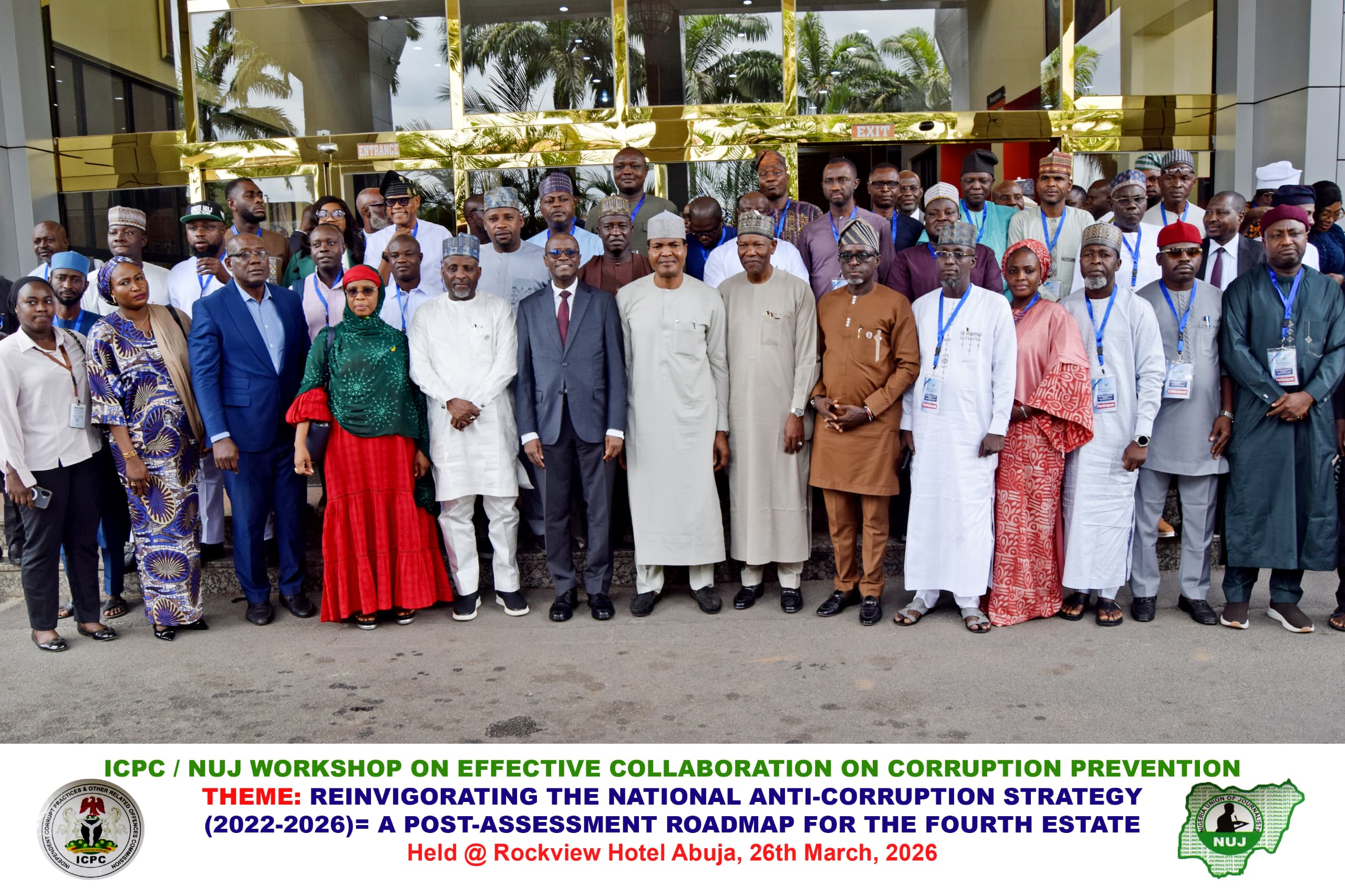
A renewed push to strengthen the role of the media in Nigeria’s anti-corruption fight took centre stage at a one-day stakeholders’ workshop convened to assess the progress of the National Anti-Corruption Strategy (NACS) 2022–2026.
The workshop, organised by the Independent Corrupt Practices and Other Related Offences Commission in collaboration with the Nigeria Union of Journalists, brought together key actors from anti-corruption agencies, civil society organisations, and the media across the federation. Deliberations focused on redefining the role of the Fourth Estate as a proactive partner in preventing corruption rather than merely reporting it.
Discussions at the forum underscored a growing consensus that corruption in Nigeria cannot be effectively addressed through prosecution alone. Participants stressed the importance of strengthening institutions, promoting ethical standards, and entrenching transparency in public and private conduct. While acknowledging that the NACS provides a comprehensive policy framework, stakeholders noted a persistent gap between its implementation and public perception, attributed to weak inter-agency coordination, limited public awareness, political interference, and delays within the judicial system.
A major concern raised was the underutilisation of the media in the prevention pillar of the strategy. Participants observed that coverage often tilts toward sensational reporting of arrests and prosecutions, with insufficient attention paid to systemic vulnerabilities that enable corrupt practices. They also highlighted the untapped potential of digital forensic tools and artificial intelligence in advancing investigative journalism and strengthening accountability mechanisms.
In charting a way forward, the workshop emphasised the need for structured collaboration between anti-corruption agencies, the media, and civil society. Central to this approach is the creation of institutional channels that will allow journalists access to timely and credible information, thereby promoting transparency and evidence-based reporting. Stakeholders further stressed that journalists must be empowered through targeted training and protected by stronger legal frameworks, particularly in relation to whistleblower protection.
The deliberations also called for a shift in media practice toward preventive and solutions-oriented reporting. By focusing on exposing loopholes in governance systems and highlighting reforms before abuses occur, the media is expected to play a more decisive role in making corruption increasingly difficult to perpetrate.
Participants commended the leadership of the Independent Corrupt Practices and Other Related Offences Commission for its commitment to advancing anti-corruption initiatives and fostering media engagement. They also urged the Federal Government to provide adequate funding to sustain the operations of anti-corruption agencies and prevent institutional setbacks.
The communiqué was jointly signed by the Chairman of the ICPC, Musa Adamu Aliyu, and the President of the NUJ, Alhassan Yahya Abdullahi, reflecting a shared commitment to deepening collaboration between the media and anti-corruption institutions.
The workshop concluded with a strong affirmation that a reinvigorated, independent, and well-equipped media sector remains indispensable to the success of the National Anti-Corruption Strategy and the broader goal of building a transparent and accountable society.