

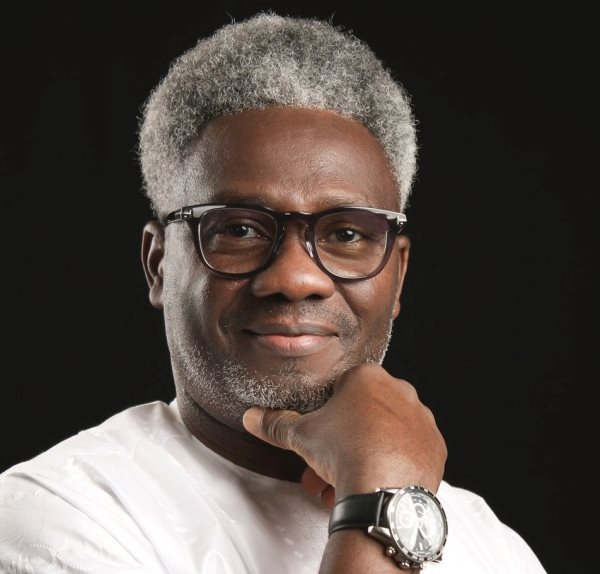
Lest I forget to spotlight the significance of a memory. On Monday, 24th of November 2025, the Centre for Crisis Communication – a non-governmental organisation established 10 years ago to provide crisis information and communication management on national crisis, and offer knowledge-sharing services to the Nigerian security sector agencies – invited me to speak on “Strengthening Institutional and Media Capacity for Digital Crisis Communication”. The event took place at the National Defence College, Abuja.
The focus was to swivel discourses on leveraging emerging technologies to transform crisis communication but we needed to rethink what’s conflating our republic and like Alice in the Wonderland defend our identity given the realities of the ecology of emergent communication culture.
So, we took a keynote paper from Dr. Inuwa Kashifu Abdullahi, the Director General of National Information Technology Development Agency (NITDA). Abdullahi did his job with passion, honour and the precision of a surgeon armed with a well-made scalpel. I was on the main panel that discoursed all aspects of the symposium theme. Other eminent persons on the panel are Musikilu Mojeed, Editor-in-Chief of Premium Times; Adaobi Nwankwo, Head of Innovation at the Nigeria Data Protection Commission; and Jubrin Baba Ndace, the Director General of Voice of Nigeria.
To defend our republic, we examined some paradoxes. The first has to do with surveillance, inescapable reality of the emergent information-industrial complex and the need for clarity of responsibilities on technological governance between governments and technology companies, and the implications for national security.
Nigeria is a Republic and that means no one operating within the Nigerian space – individuals, corporations and governmental entities – should have unaccountable powers. Thus, no entity should operate in Nigeria without respecting Nigerian laws. We were emphatic that the laws that govern physical territories should apply to the online spaces where security governance has been complicated, from inappropriate mining of citizens’ personal data to throwing all kinds of content that undermine security and sovereignty of nations.
Another paradox was striking a balance between free speech and hate speech. We assessed whether what Nigeria did to halt the operation of Twitter (now X) on its territory, was legitimate given that free speech seemed to have been taken too far and was undermining Nigeria’s security.
The third contradiction was the need to draw the line between truth and falsity – what is real and truthful and what is falsehood and AI-generated. There is no doubt that truth and trust have been undermined by the way some of us deploy digital technology and such actions have implications for national security.
Panellists and participants also reasoned on the paradox of political polarisation in our relational offerings with friends, families and others. We raised questions as part of our search for solutions to our poor social cohesion by exploring how to reduce the spectrum and frequency of disruptions and polarisations arising from basic or hyper connectivity. We should be able to have healthy conversations in our often-controversial national debates without being insolent and cast slurs along our major fault lines of religion, ethnicity, regional loyalties and other divisive realities of our national existence.
We reflected on the concept of democracy and authoritarianism. Hitherto, Nigeria seemed not to have a say in user agreements bandied by tech companies (an instance of unaccountable power). So, as a Republic, Nigeria made Twitter and subsequently Meta and others to submit to a modicum of accountability.
How do we regulate Artificial Intelligence and digital social media (there is no unbridled liberty anywhere). So, halting Twitter’s terror created an opportunity to co-create and co-design rules of engagement by bringing all stakeholders on board for meaning-sharing and accountability.
Prior to the Twitter saga, there was no fair, objective, real conversation between Africa and technology companies sprouting from the West or Northern Hemisphere. We applaud Nigeria’s exercise of her sovereignty and the clear statement that whatever is illegal offline must be illegal online among ourselves and between us and technology companies. So, it was gratifying that Nigeria made tech companies to know and comply with her laws, requested that account deactivation method, content removal method and content reinstatement method to be instituted. The account reinstatement method was to strike a balance between overzealousness of security personnel and citizens’ right.
Today, tech companies file reports and pay taxes, among other regulatory measures, including complaint resolution mechanisms. The data governance in Nigeria has also shaped up well. Soon, a more robust framework for online safety will be emplaced to ensure no one has or exercise unaccountable powers. In 2024/2025 over 28 million deactivations took place in the digital space. Over 9 million accounts used for online frauds were deactivated by Google. LinkedIn removed 16 million accounts and 2,303,920 were yanked off TikTok. Indeed, in a July 2025 report by NITDA, content removed with or without notice or court orders were 50,113,273; 234,584; and 8,561,255 from Google, LinkedIn and TikTok respectively. And after reviews and appropriate complaint management process, over 420,000 content were reinstated – 4,717 on Google, 637 on LinkedIn, and 415,085 on TikTok respectively.
One reason these actions are necessary is because terrorists, bandits, kidnappers and other criminal elements are increasingly using digital platforms for recruitment, to amplify their messages and expand the nest of victims. So, we need to take down content that are offensive, including the use of pictures from other countries and contexts to trigger or worsen crises. As I had noted in an earlier post, “NOT ALL MEDIA IS JOURNALISM: Professional and Ethical Imperatives of Good Journalism in AI Era”, we can use professional and ethical journalists to tackle poverty of trust and truth in the digital age because technology is not really the issue but the inappropriate weaponization of technological tools.
At the symposium, we noted that security is central to Nigeria’s prosperity and needs to be taken seriously, honestly, sincerely and diligently. Both the faculty and participants agreed that the digital public communication culture has fundamentally disrupted how information is produced, shared and consumed. The implication is that those who handle official communication need to be alive to their responsibilities and share meaning with stakeholders through clear, concise, complete and compelling messaging in a honest and timely manner to prevent speculations and reduce the spectrum of mistrust and distrust (trust deficit continued to be the major challenge to successful governance and national cohesion). We also stressed the need to balance out messaging through cross-media and multimedia systems of communication to ensure that no stakeholder or citizen is left out of the communication process.
Considering the role journalism and communication management play in security governance, the symposium considered that journalism requires a new understanding of conflict reporting, especially the capacity to verify information, the discernment to report without jeopardising the safety of security personnel and citizens requiring protection, the need to do fact-checking even of pictures using Reversed Image Check and other digital tools, and also the professional and ethical demand on journalists to demonstrate deeper ability to interpret national security issues by invoking journalistic license to black out irresponsible comments by public officials. These gatekeeping and individual reporter selectivity roles help to minimise harm to the society. Why should a news media report a statement by a minister informing that soldiers are already mobilised to a location to tackle banditry?
Within the framework of data protection, we agreed that data trust is important and data controllers should understand they have obligations to secure information in their custody. For all of us, the imperative of data minimisation was emphasised. This means you give only required information and, on the need-to-know basis. It is a central principle of data management. We also stressed the need for transparency, that is, focusing on what you set out to use information for. Within, WhatsApp Groups and other dark socials, there is so much abuse of transparency. So, before releasing information to the public, it is important to undertake Data Protection Impact Assessment. A look at Sections 24-40 of the Nigeria Data Protection Act will help us to glean some basic principles of data protection and management principles. WhatsApp groups are private facing social media but they are inherently public because of their sociality. For a better understanding of social media classifications and characteristics, please read OP Ibietan’s CYBER POLITICS: Social Media, Social Demography and Voting Behaviour in Nigeria (2023). It is a book published by Premium Times Books.
A key recommendation of the symposium demands that Nigeria emplaces locally designed apps that report crisis real-time, and to explore merging citizens report with social media monitoring, AI and other automated responses. It is time we had an app that offers reports on what is happening on major and other routes and places, with the capacity to upload pieces of information that are verifiable. Indeed, digital innovation is no longer optional or a luxury, it is a necessity.
Conclusively, I remember emphasising the need for media and information literacy for all of us. We need to be able to interpret all we consumed as media and digital diets. Basic education should enable us to know if a story or report is true or not and the possible motive of those sharing such information. This is one way to manage misinformation, disinformation and malinformation. I particularly recommended that civic education that focuses on media literacy be introduced into Nigeria education curricula at all levels and should be made a compulsory and core course that all must pass as part of requirements for award of certificates. Humanity has got to a juncture where the disruptions of digital culture should compel us learn how to interpret and use deluge of informational resources thrown at us daily. Never again should the human agency, especially in Africa, act as if it is programmed for destruction by believing all that is read, heard and seen with unquestioning obedience.
Written by Omoniyi Ibietan, PhD, fnipr,
Secretary General, APRA; Faculty Member, RBSN; Journalist, Writer, Author, Activist-Scholar, Media & Communication Strategist.