
The Minister of Interior, Dr. Olubunmi Tunji-Ojo, has reaffirmed the Ministry’s commitment to strengthening welfare systems, financial security, and long-term wellbeing for officers and personnel across all Interior Ministry agencies.
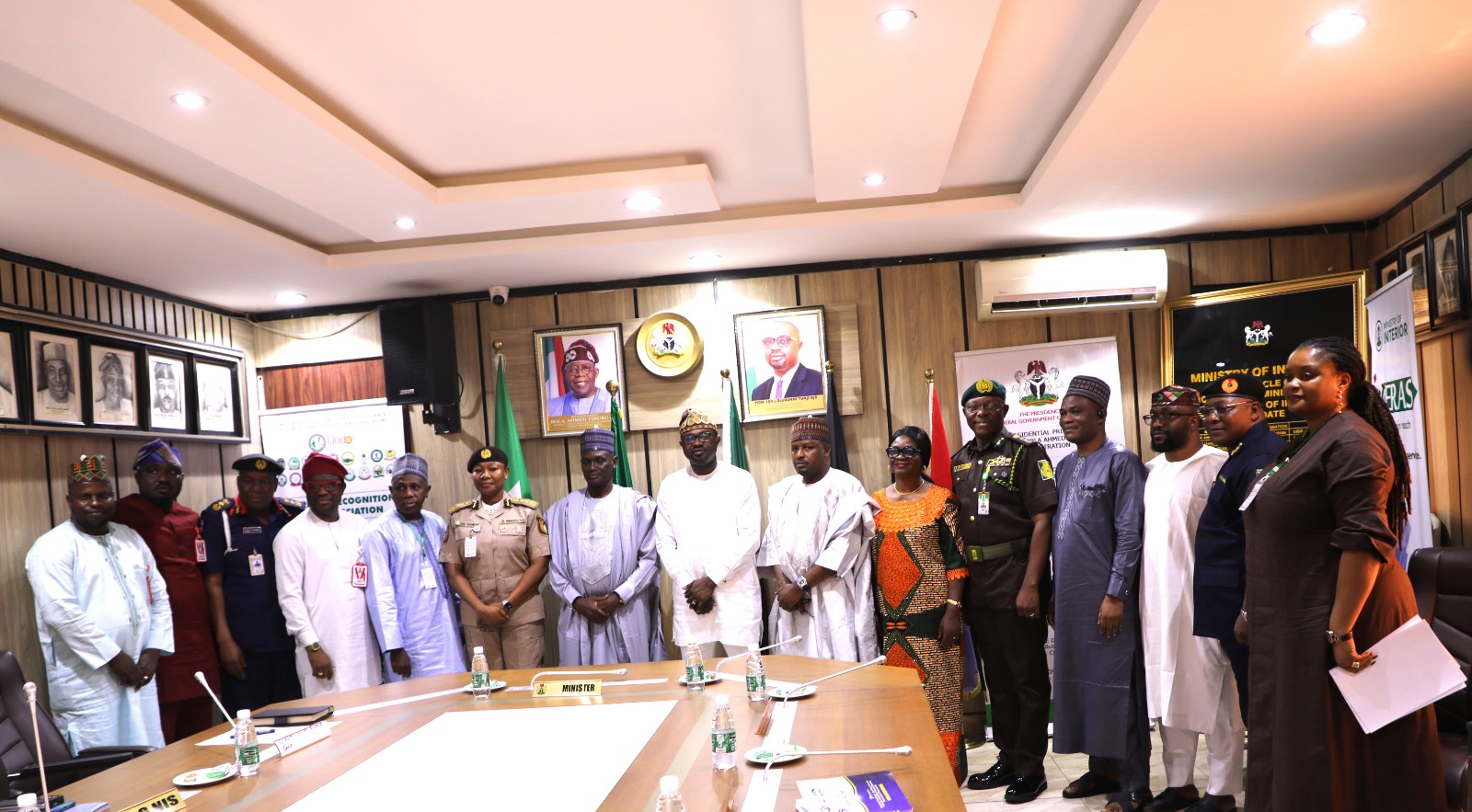
He made this known in Abuja during a courtesy visit led by the Chief Executive Officer of the Nigeria Incentive-Based Risk Sharing System for Agricultural Lending (NIRSAL), Abubakar Abdullahi Kure.
Dr. Tunji-Ojo, while appreciating the visit and ongoing collaboration with NIRSAL, stressed the need to design innovative, sustainable support structures that will help personnel build stable livelihoods both during active service and after retirement.
The Minister expressed concern that many public officers only begin preparing for life after service towards the end of their career, leaving them vulnerable to financial hardship.
“Our officers should not retire into austerity. It is concerning that many begin to think about life after service only in their final years. We need a paradigm shift. Retirement should not mean suffering,” he said.
He called for agency-specific financial packages including accessible credit facilities, cooperative investment opportunities, and special schemes in housing, agriculture, entrepreneurship and other legitimate ventures allowed under public service regulations.
Dr. Tunji-Ojo clarified that officers are permitted to invest their personal resources responsibly, provided such ventures do not interfere with official duties or involve misuse of government facilities.
“You can buy shares, invest, or run legitimate family businesses. The law only forbids using government time or resources for personal gain. Proper education on these matters will protect our officers from unnecessary hardship,” he added.
He encouraged paramilitary agencies to form strategic partnerships with reputable institutions to create custom programs with low interest rates, flexible repayment plans, and structured support systems to help officers plan early for post-service life.
“We must go beyond asking officers to give their best; we must also create programmes they can subscribe to—programmes that secure their future,” he said.
Earlier, NIRSAL CEO Abubakar Abdullahi Kure reiterated the organisation’s commitment to deepening collaboration with the Ministry. He said the visit was aimed at strengthening service delivery, supporting government operations, and exploring how NIRSAL’s financial and technological expertise—demonstrated through over ₦600 billion in transactions across multiple industries—could enhance the Ministry’s effectiveness.
Kure added that NIRSAL’s network of more than 150 branches nationwide, equipped with experienced personnel and robust systems, positions the institution to support the Ministry’s vendors, contractors, and staff through tailored financial solutions.