

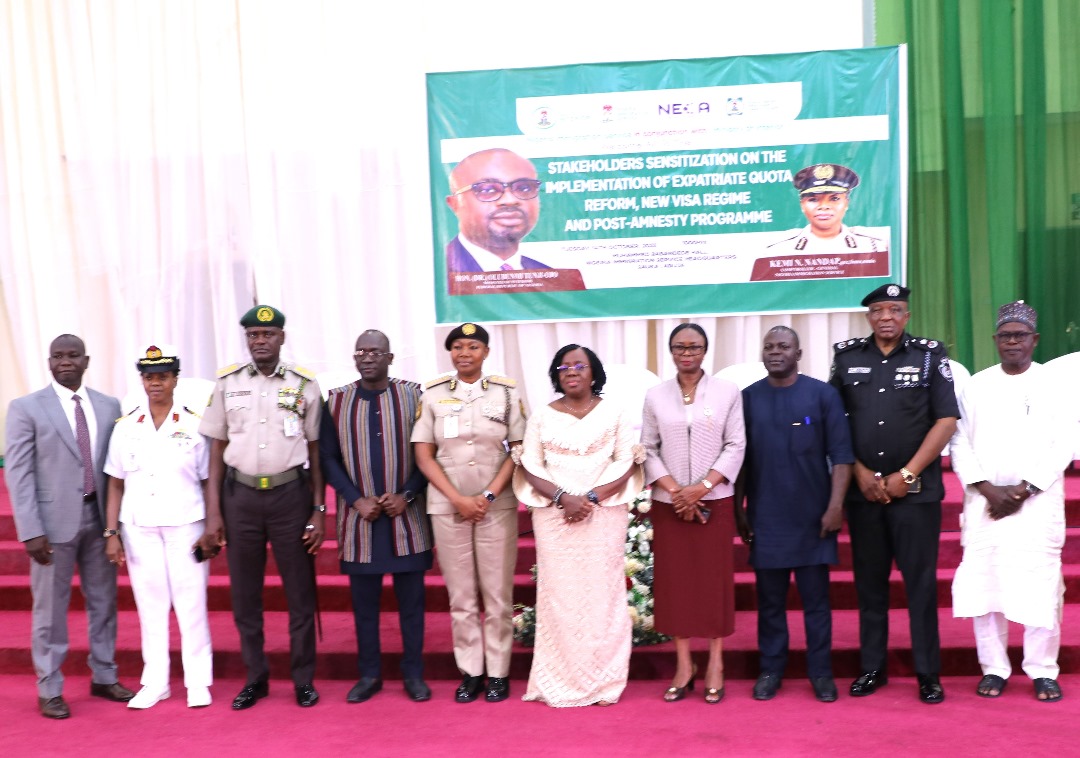
The Ministry of Interior has formally addressed the evolving framework surrounding the Expatriate Quota Policy, underscoring the importance of prioritizing local talent while allowing for the strategic recruitment of foreign expertise where necessary. Dr. Magdalena Ajani, Permanent Secretary of the Ministry, provided detailed insights during a high-level stakeholder engagement focused on the Expatriate Quota Reform, New Visa Guidelines, and the Post-Amnesty Program.
During the session, held yesterday in Abuja, Dr. Ajani emphasized that while the Ministry is not opposed to the hiring of expatriates, it is critical for companies to demonstrate the need for foreign professionals. “It is not sufficient for companies to simply bring in expatriates on the grounds of convenience. They must show that the skills required for specific roles are not available within Nigeria,” she stated, calling for a more robust and transparent approach to foreign workforce integration.
A key concern raised by Dr. Ajani was the recurring practice by some companies to rely on expatriates for a wide range of projects despite having long-established operations in Nigeria. She stressed the Ministry’s commitment to fostering the growth of local talent and ensuring that Nigerian professionals are given the first opportunity to fill roles suited to their expertise. “The Ministry is resolutely focused on empowering Nigerian professionals, and we expect that companies will do the same,” Dr. Ajani added.
In response to suggestions that the Ministry granted amnesty for companies found in violation of expatriate quota regulations, Dr. Ajani made it clear that such amnesty will not be granted. “We will not entertain any form of leniency for non-compliance,” she asserted. “Companies must adhere to the regulations that govern expatriate employment, and we are committed to holding them accountable.”
The session also featured remarks from Kemi Nanna Nandap, the Comptroller General of the Nigeria Immigration Service (NIS), who highlighted the ongoing reforms aimed at modernizing the country’s migration systems. Nandap reiterated the Ministry’s focus on leveraging technology, enhancing collaboration, and adopting people-centered policies. “Leadership in migration management is about more than just systems—it’s about inspiring meaningful change and ensuring that reforms contribute to national security while enhancing the dignity of our people,” she explained.
The event was attended by key representatives from the Nigerian Employers Consultative Association (NECA) and the Nigeria Export Processing Zones Authority (NEPZA), both of whom expressed strong support for the Ministry’s reform initiatives. The stakeholders lauded the efforts of Dr. Olubunmi Tunji-Ojo, the Minister of Interior, in driving the modernization of the Ministry’s operations, particularly in the face of numerous challenges.
As the Ministry of Interior continue to refine its expatriate quota policies, it is clear that there is a strong focus on striking a balance between attracting necessary foreign expertise and prioritizing the development of Nigeria’s local workforce. This strategic approach is expected to not only enhance the country’s economic prospects but also contribute to the long-term growth and empowerment of Nigerian professionals.