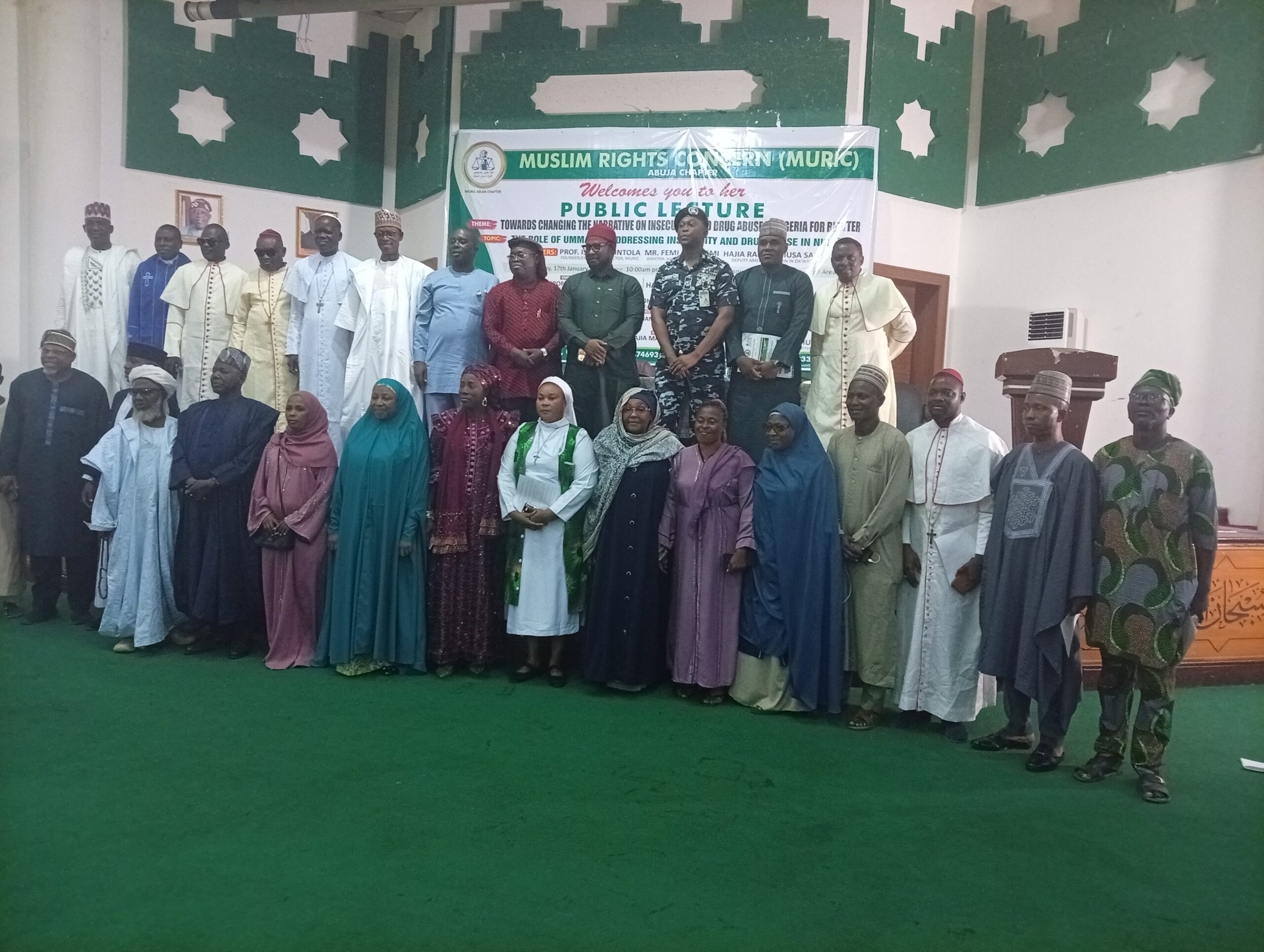
The Muslim Rights Concern (MURIC), Abuja Chapter, has urged religious leaders, security agencies, and communities to join forces against rising insecurity and drug abuse in Nigeria, highlighting that these twin crises threaten the nation’s moral, social, and economic stability. The call came during a public lecture held on Saturday at the National Mosque Conference Hall, Abuja, titled “The Role of the Ummah in Addressing Insecurity and Drug Abuse in Nigeria.” The event drew a broad audience, including religious leaders, students, academics, civil society groups, and faith-based organizations, reflecting widespread concern over the issues.
Hajiya Amina Abubakar Abdullahi, Chairperson of the occasion and Ameera of Al-Ansar, emphasized the critical role of women in addressing societal challenges, particularly in guiding the youth and safeguarding families against the destructive effects of drugs and insecurity. She described substance abuse including alcohol, cannabis, and cocaine as a threat not only to individuals’ health and faith but also to family and community cohesion.
“Drug abuse destroys families, weakens communities, and disconnects individuals from the worship of Allah. No rational person engages in violence or crime without being under the influence of drugs, which is why Islam strictly forbids intoxicants,” she said. She also highlighted the importance of community involvement and parental responsibility in preventing youth from falling prey to substance abuse and criminality.
In her lecture, Hajiya Maryam Sadiya Ibrahim, Royal Mother of the Day and Gimbiya Jikoko, commended MURIC’s efforts in social advocacy and justice, while stressing the need for families and communities to take active responsibility for protecting children from drugs, banditry, and insurgency. She recalled the trauma suffered by women and families affected by Boko Haram and banditry, emphasizing that societal transformation must begin at home and within neighborhoods.
Prof. Abba Gambo, Agricultural Adviser to the Nigeria Governors’ Forum and Chairman of the Occasion, in his opening remarks, underscored the importance of proactive leadership and community responsibility in addressing insecurity and drug abuse. He highlighted the broader socio-economic context of the crises, noting that mismanagement, corruption, and weak governance exacerbate the challenges faced by communities.
“Our nation cannot overcome insecurity and substance abuse without moral reform, effective governance, and the active engagement of every citizen. Leadership at all levels must demonstrate integrity and accountability, while citizens must work collectively to protect our youth and communities,” Prof. Gambo said. He commended MURIC’s efforts in mobilizing religious and civil society actors, noting that such initiatives complement governmental and security efforts in promoting stability and development.
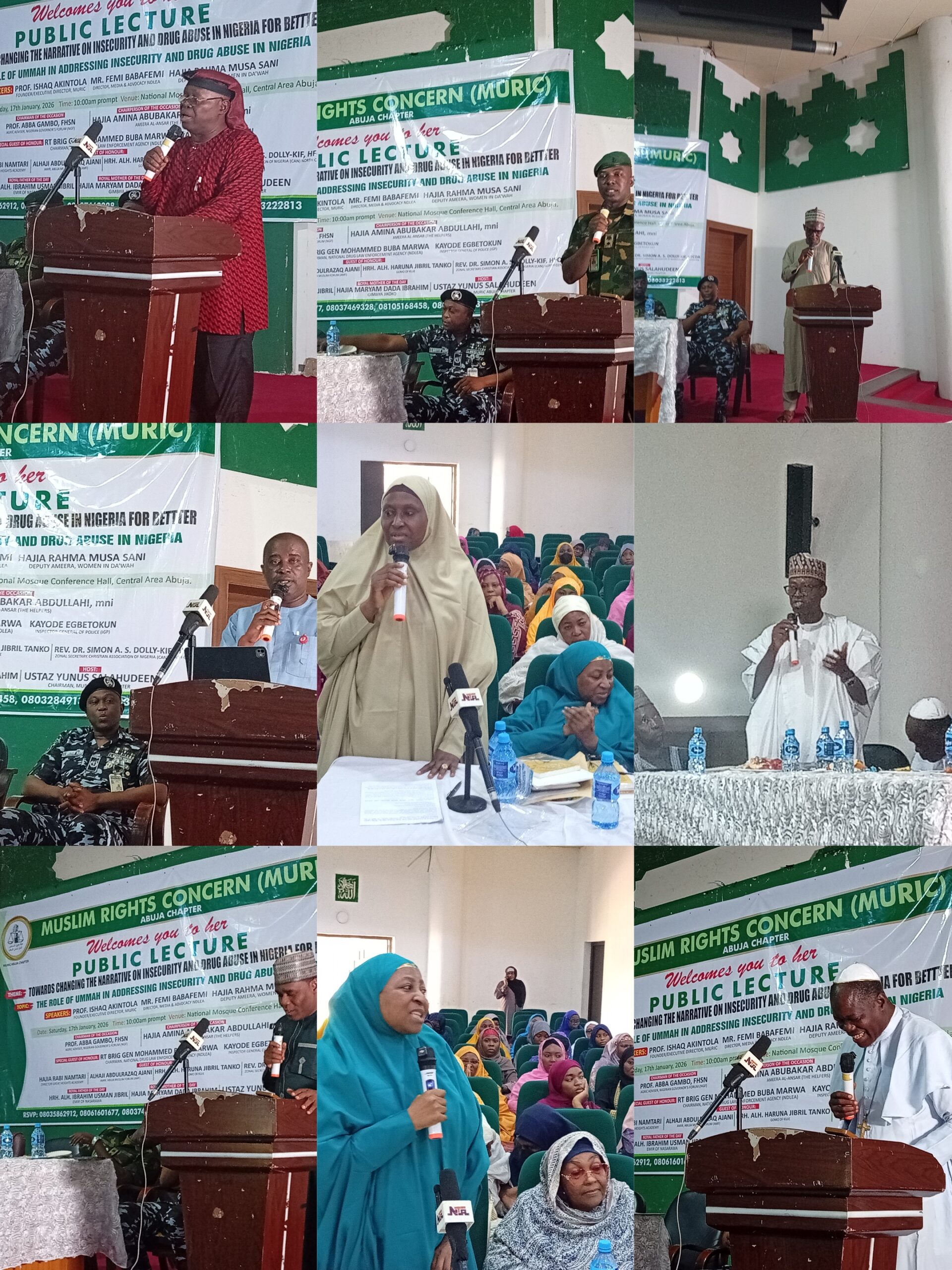
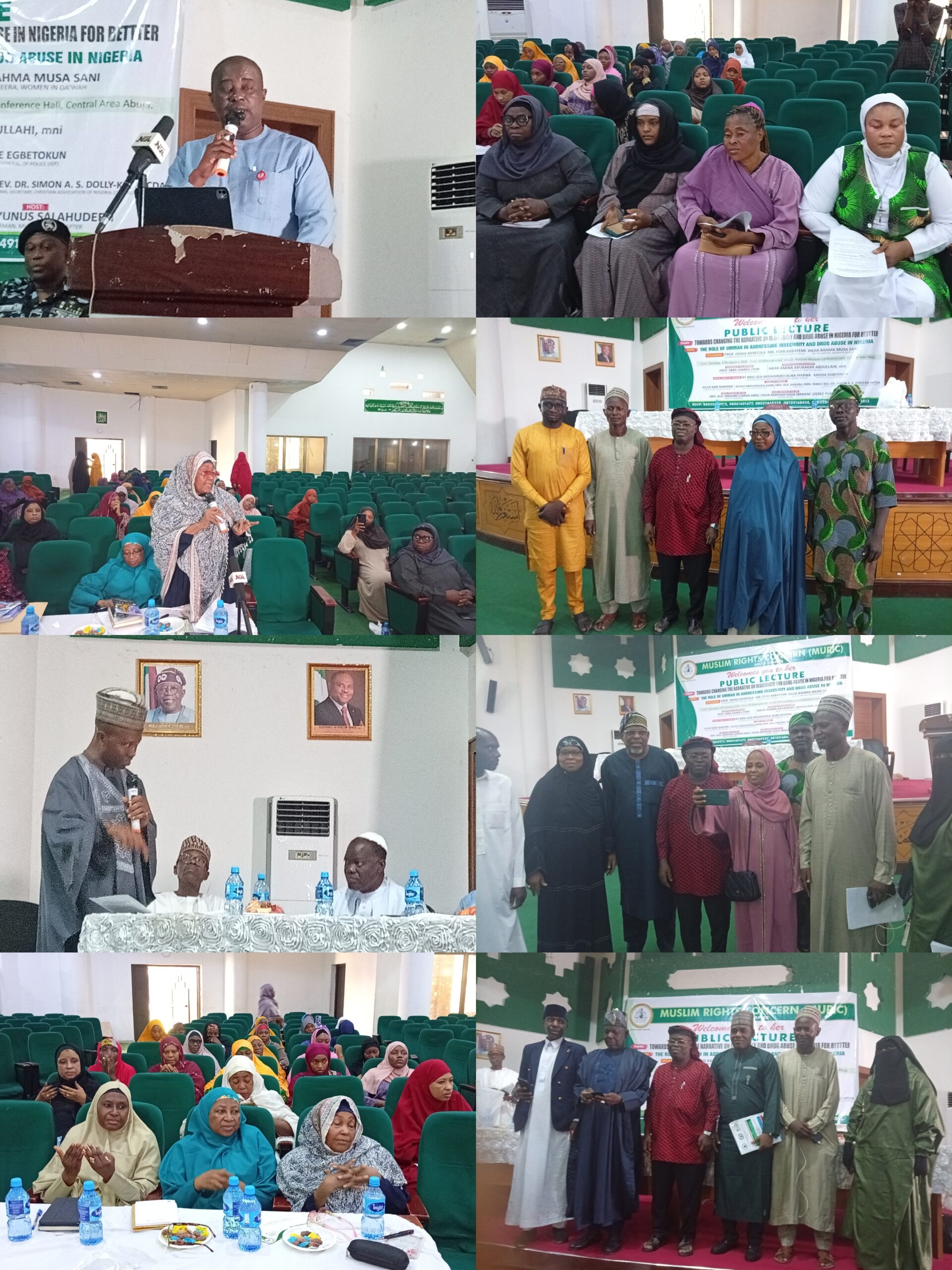
Earlier,Ustaz Yunus Salahudeen, Chairman of MURIC Abuja Chapter, delivered a welcome address stressed the urgent need to engage the Ummah in tackling insecurity and drug abuse. He described the lecture as a conversation and reflection, aimed at mobilizing proactive action, reshaping harmful narratives, and extending the Enlightenment Campaign to six area councils in Abuja. The initiative, he explained, would collaborate with government agencies, schools, mosques, churches, and rehabilitation programs to reach a wider audience and support youth at risk.
Prof. Ishaq Akintola, Founder and Executive Director of MURIC, delivered a lecture highlighting the connection between corruption, political mismanagement, and insecurity. He recalled the diversion of $2.1 billion intended for the Nigerian armed forces under former President Goodluck Jonathan, which was allegedly misappropriated by politicians ahead of elections, creating opportunities for the expansion of Boko Haram and other terrorist groups.
“If those funds had been properly used to equip the armed forces, Boko Haram and other terrorist elements might have been eradicated. The consequences of corruption and political mismanagement are now evident in insecurity across the country,” Prof. Akintola said. He further cited instances of extravagant spending by public officials, linking wasteful use of national resources to persistent poverty, vulnerability of youth, and social instability.
Hajiya Amina Abubakar Abdullahi reflected on the gendered impact of insurgency, noting that women often bear the brunt of violence while left to care for families. She recounted experiences from conflict-affected regions and international contexts, emphasizing that every Nigerian has a duty to act: “Nobody can come from outside to solve our problems. It must start with us.” She called for continuous action, urging MURIC’s campaign to extend beyond Abuja to other parts of the country.
Mr. Femi Babafemi, Director of Media and Advocacy, NDLEA,who also represented NDLEA Chairman,Brig General Mohammad Buba Marwa (rtd)in a key address linked drug abuse directly to criminality and insecurity, urging faith-based organizations to collaborate with government agencies to educate, rehabilitate, and guide youth away from harmful behaviors.
Representatives of the Nigerian Army and other security agencies pledged their support. Lt. Col. A. A. Daurawa, representing Chief of Army Staff Lt. Gen. W. A. Shaibu, highlighted the Army’s commitment to combating drug abuse, noting that moral conduct is now integrated into promotion and discipline policies. He stressed that reducing substance abuse is essential for curbing crime and insecurity. He added that the Army had made significant progress in countering Boko Haram, ISWAP insurgency, banditry, and kidnapping, and called for continuous collaboration with organizations like MURIC to consolidate gains.
Similarly, the Chief Imam of the National Defence College, representing the Commandant,Rear Admiral Abdullahi Ahmad, urged religious leaders to be proactive in correcting misinformation, confronting wrongdoing, and guiding communities. The Chief of Defence Staff, through the Defence Headquarters Chief Imam, condemned Boko Haram and other terror groups for falsely claiming to represent Islam, reiterating that such actors do not reflect the teachings of the faith.
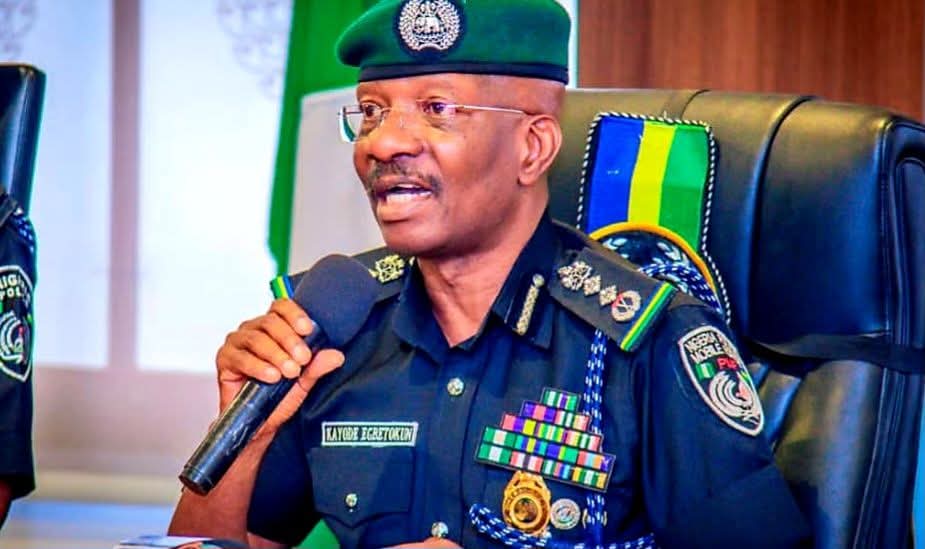
In his goodwill message ,the Inspector General of Police IGP Kayode Egbetokun represented by ACP (Dr.) Hassan Yagba, also commended MURIC for complementing their work in promoting national security, human rights, religious tolerance, and intercommunal peace. They highlighted the critical role of faith-based organizations in fostering community policing, reporting suspicious activities, supporting victims, and addressing root causes of crime through education and economic empowerment.
The CAN Zonal Secretary North Central,Rev Simon Dolly represented by Bishop Edward Williams Chanomi(VIA) ,addressed participants, emphasized the importance of interfaith collaboration in combating insecurity and substance abuse. He lauded MURIC’s leadership in promoting peace, unity, and cooperation between religious communities and security agencies, noting that moral guidance, community engagement, and education are critical to addressing the root causes of insecurity and crime.
In a statement underscored the critical partnership between faith-based organizations and law enforcement, the Nigeria Police Force commended MURIC for complementing their work in promoting security and countering extremism. They praised MURIC’s initiatives in promoting human rights, religious tolerance, peace, and Islamic values, noting that community policing, education, and economic empowerment directly support the root causes of insecurity.
Throughout the session, participants stressed the need for collaboration, moral reform, and civic responsibility. The lecture concluded with a unified commitment to extend MURIC’s campaigns nationwide, focusing on interfaith collaboration, community engagement, and sustained advocacy to restore moral values, protect the youth, and secure the nation.
MURIC reaffirmed its dedication to promoting social justice, enlightenment, and proactive leadership within the Ummah, emphasizing that meaningful change required community action, parental responsibility, and perseverance, supported by prayer and moral conviction.
In a closing remarks , Lukman Laleye Babalola, Public Relations Officer of MURIC Abuja Branch, thanked all dignitaries, speakers, participants, and security agencies for their support and engagement. He reaffirmed MURIC’s commitment to proactive advocacy, community engagement, and moral guidance, emphasizing that meaningful change requires collective responsibility.
“Throughout this lecture, we have seen the critical role of religious and community leaders in guiding the youth, promoting moral values, and addressing insecurity and drug abuse. MURIC will continue to lead efforts to educate, mobilize, and empower the Ummah, ensuring that initiatives extend beyond Abuja to reach every community. Together, with prayer, action, and collaboration, we can build a safer, more peaceful, and prosperous Nigeria,” he concluded.