
The Federal Ministry of Solid Minerals Development came under legislative review on Monday as the National Assembly Joint Committee on Solid Minerals Development called for the sector to be placed on first-line charge to guarantee sustainable funding, even as lawmakers commended the Ministry for its ongoing reforms and performance.

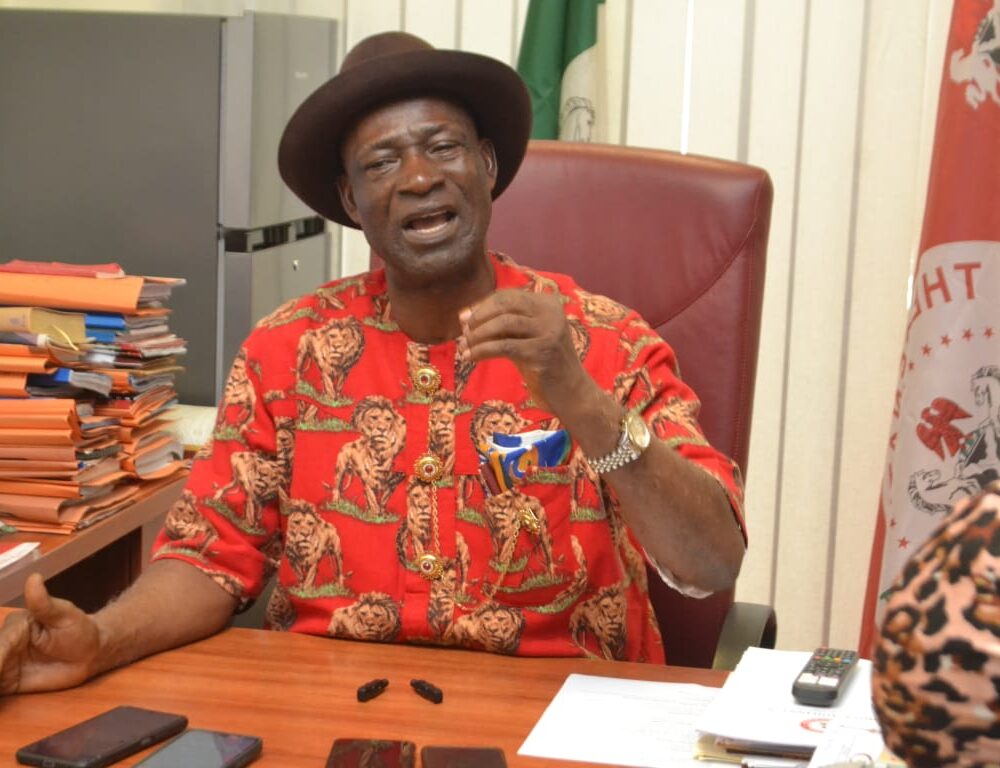
Minister of Solid Minerals Development, Henry Dele Alake, appeared before the joint committee to present the Ministry’s 2024 budget performance and projections for the 2026 fiscal year. The session, co-chaired by Senator Ekong Sampson and Hon. Jonathan Gaza Gbefwi, evolved beyond a routine budget defence into a broader discussion on funding stability and the strategic importance of the mining sector to Nigeria’s economic diversification agenda.
Committee members expressed concern that zero capital releases were undermining implementation despite ambitious plans, including the Federal Government’s ₦1 trillion mining intervention initiative. Lawmakers argued that placing the Ministry on first-line charge granting it priority funding status similar to critical national obligations would protect the sector from inconsistent treasury releases.
Describing mining as a sensitive and strategic sector, the committee questioned how meaningful development could be achieved without reliable capital funding, warning that continued funding uncertainty could weaken investor confidence.
Despite these concerns, lawmakers commended the Ministry for measurable progress recorded within existing constraints. They acknowledged improvements in revenue generation, regulatory enforcement, and efforts to sanitize the sector, noted that the Ministry’s reforms were already attracting investor attention at international mining forums.
Responding, Minister Alake welcomed the proposal for first-line charge status, describing it as “a sweet song in my ears,” and urged the legislature to take the necessary steps to actualize it.
He stressed that achieving the Ministry’s mandate including sustainable mineral resource development, environmental management, and global competitiveness required sustained investment, particularly in internationally certified geological data.
According to the Minister, recent geological data acquisition has strengthened Nigeria’s profile among global mining investors and positioned the country for increased exploration activities.
Highlighting performance indicators for 2024, Alake disclosed that about 81 per cent of the Ministry’s ₦31.24 billion appropriation was released and fully utilised. He added that the Ministry surpassed its ₦11.8 billion revenue target by generating over ₦28 billion, representing a 139 per cent increase above projections.
The Minister further revealed that intensified enforcement operations led to the arrest of more than 350 illegal miners, with over 150 prosecutions secured through strengthened Mine Marshals activities. He also noted progress in formalising artisanal miners through cooperative structures aimed at improving regulation, enhancing access to financing, and increasing royalty and tax collections.
Alake added that Nigeria’s artisanal mining model is attracting continental interest, with an African minister expected to visit the country to understudy the framework.
While applauding these achievements, lawmakers warned that inconsistent capital releases could slow ongoing reforms and limit the Ministry’s ability to expand geological mapping, reclaim abandoned mine sites, and deepen sectoral transformation.
They emphasized that granting first-line charge status would enhance investor confidence and signal stronger government commitment to unlocking Nigeria’s vast mineral resources.
With the 2026 budget largely mirroring 2025 figures, the Minister appealed for clearer service-wide provisions and legislative support to ensure timely treasury releases.
As deliberations continue, the proposal to prioritise funding for the Solid Minerals Ministry is emerging as a key policy discussion that could shape the future of Nigeria’s mining sector and its role in driving economic growth.