
The Joint Committee of the National Assembly on Youth Development has officially commenced the 2026 budget defence session for the Federal Ministry of Youth Development, a key step in the legislative scrutiny of the 2026 Appropriation Bill.
The 2026 budget proposal was submitted to the National Assembly in December 2025 by President Bola Ahmed Tinubu, after which sectoral committees began detailed assessments of allocations in line with their constitutional oversight responsibilities.
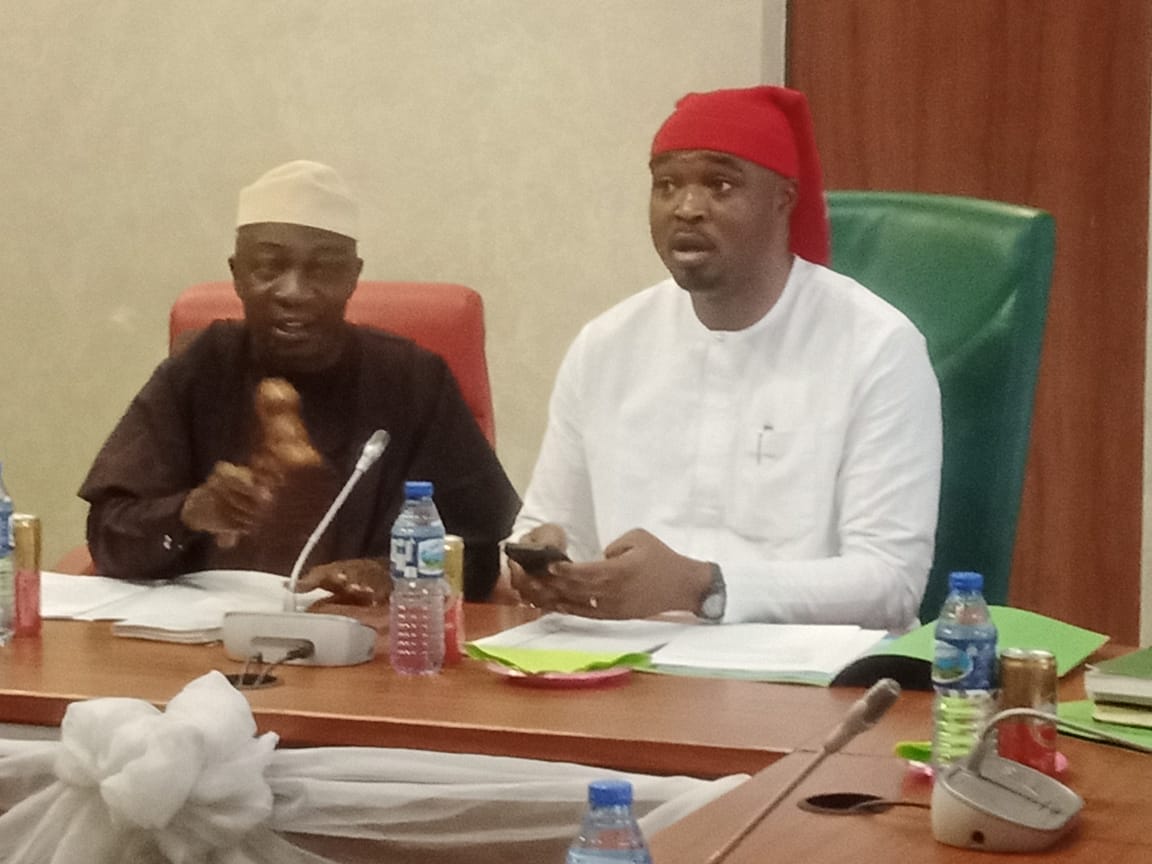
Opening the session, the Chairman of the House Committee on Youth Development, Hon. Martins Esin Etim, emphasized that the exercise goes beyond reviewing numbers. He described it as an opportunity to evaluate the Ministry’s strategic priorities, programme effectiveness, and operational capacity, stressed that youth development remained pivotal to Nigeria’s socio-economic growth and national stability.
“While some provisions in the 2026 Appropriation Bill are carryovers from the previous fiscal year, our committee is committed to ensuring allocations address the urgent need of Nigerian youth and strengthen the Ministry’s ability to deliver measurable outcomes,” he said.
The Committee had earlier conducted defence sessions with departments and agencies under the Ministry, and the current engagement seek to consolidate submissions, ensuring coherence, accountability, and effective implementation.
In his presentation, the Minister of Youth Development, Engr. Ayodele Olawande, thanked the legislature for its support and highlighted the importance of executive-legislative collaboration in advancing youth-focused programmes nationwide.
Reviewing the Ministry’s performance under the 2025 budget, the Minister detailed expenditures across personnel, overheads, and capital components, noting that capital allocations targeted infrastructure development and programme expansion. Key achievements include the expansion of the Nigerian Youth Academy under the One Youth, Two Skills initiative, the launch of the Nigerian Youth Gig Programme to equip young people for global digital employment, and the Nigerian Youth Startup Initiative, through which over 300 beneficiaries received startup grants of at least ₦1 million each.
Engr. Olawande further outlined the Ministry’s nationwide presence, including five operational departments, seven common service departments, two specialised units at headquarters, six zonal offices, and 72 National Youth Development Centres, many of which are undergoing renovation through public-private partnerships to enhance service delivery.
As part of its proposals for the 2026 fiscal year, the Ministry recommended that 15 percent of national and state budget allocations be dedicated specifically to youth development programmes, in line with resolutions of the 7th National Council on Youth Development.
The Joint Committee commended the Ministry’s efforts and assured continued legislative support, pledged to rigorously carry out its oversight function to ensure funds are effectively utilized in the interest of Nigerian youth.