

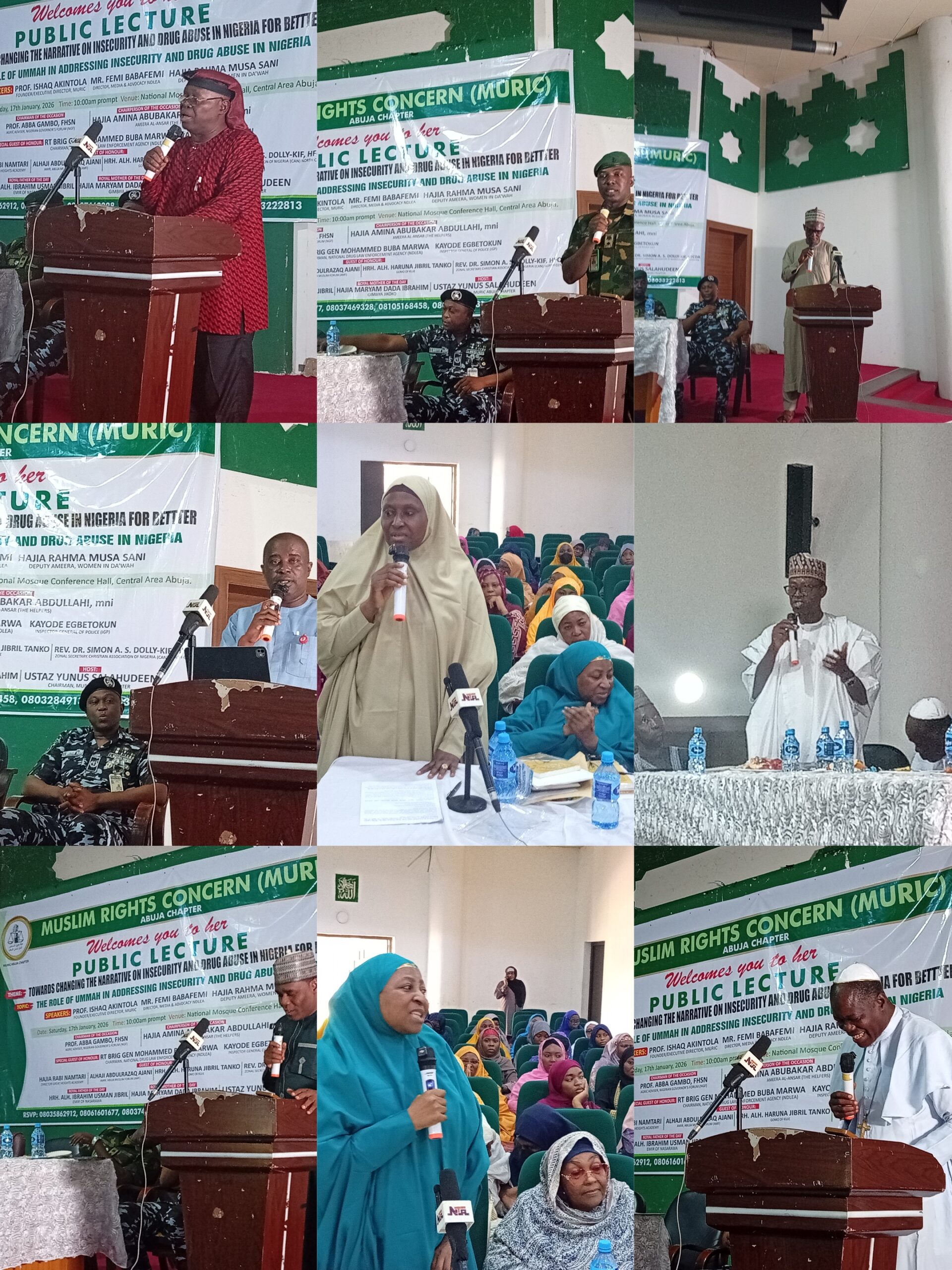
The National Drug Law Enforcement Agency (NDLEA) has called for a strong faith-based and community-driven alliance to confront insecurity and drug abuse in Nigeria, described substance abuse as a major driver of violent crime and social instability.
The call was made by the Director of Media and Advocacy, NDLEA, Mr. Femi Babafemi, who was the guest speaker at a public lecture titled “The Role of Ummah in Addressing Insecurity and Drug Abuse in Nigeria”, organised by the Muslim Rights Concern (MURIC), Abuja Chapter, at the Conference Hall of the National Mosque, Abuja. Babafemi also represented the Chairman/Chief Executive Officer of NDLEA, Brig. Gen. Mohamed Buba Marwa (Rtd), at the event.
Babafemi said empirical evidence from security agencies and criminological studies confirmed a strong nexus between drug abuse and criminal behaviour, noting that individuals under the influence of mind-altering substances were more likely to engage in kidnapping, terrorism, banditry and other violent crimes.
He cited the 2018 National Drug Use Survey conducted by the United Nations Office on Drugs and Crime (UNODC) in collaboration with the National Bureau of Statistics (NBS), which showed that Nigeria has one of the highest drug use prevalence rates globally. According to the survey, about 14.4 per cent of Nigerians aged between 15 and 64 an estimated 14.3 million people use illicit drugs other than tobacco and alcohol.
Highlighting NDLEA’s recent achievements, Babafemi disclosed that in the last 12 months, the agency recorded 19,944 arrests, seized about 4.9 million kilograms of illicit drugs, secured 3,653 convictions, and provided treatment and rehabilitation for 10,395 drug users nationwide. He added that 4,496 advocacy lectures were conducted across schools, worship centres, markets, motor parks, workplaces and communities under the War Against Drug Abuse (WADA) initiative.
He explained that the National Drug Control Master Plan (NDCMP) had been strengthened to address drug abuse not only as a law enforcement issue but also as a public health and educational challenge, urging religious leaders to intensify moral reorientation through sermons, teachings and community outreach.
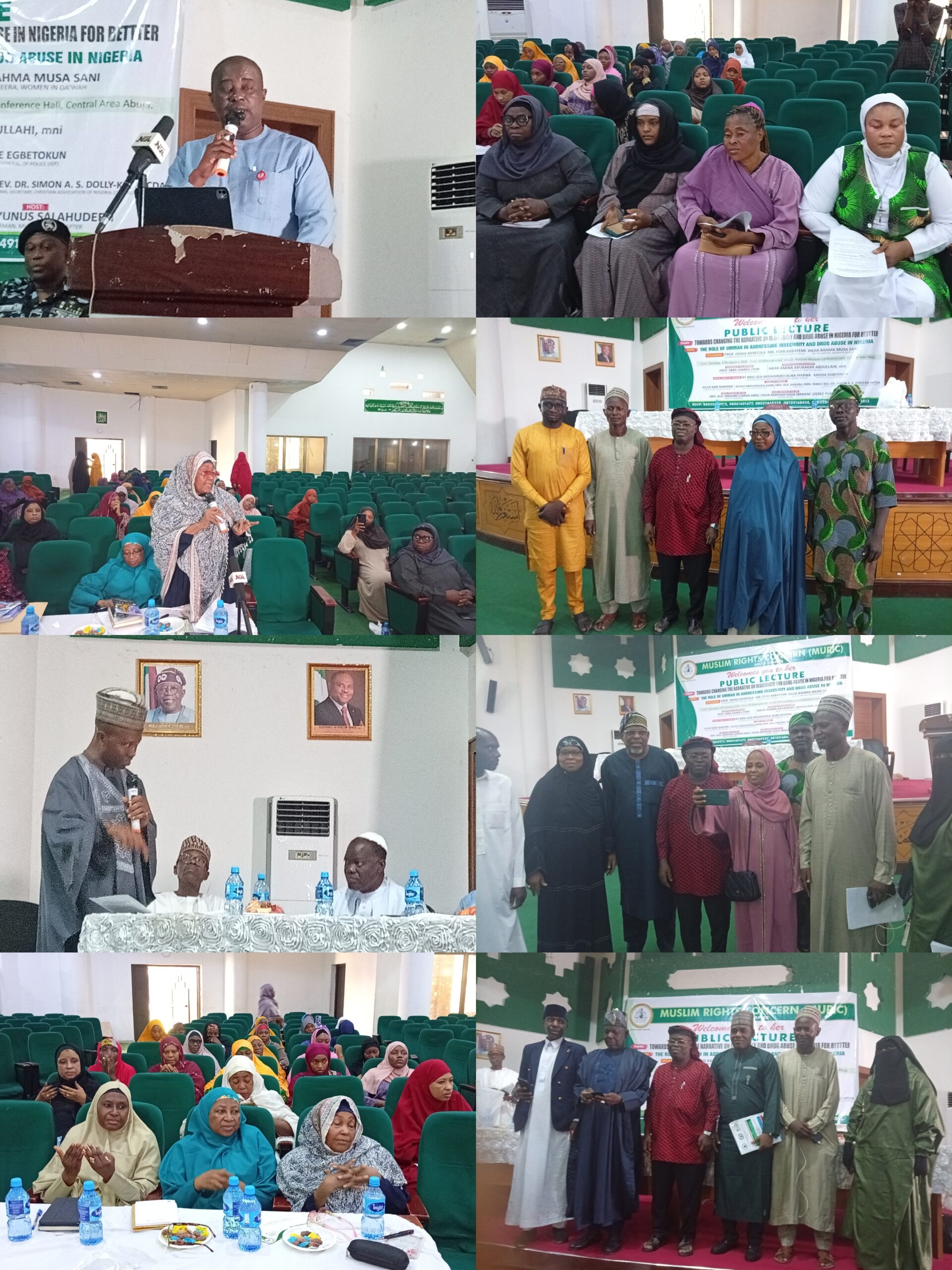
Earlier in his welcome address, Ustaz Yunus Salahudeen, Chairman of MURIC Abuja Chapter, stressed the urgent need to engage the Ummah in addressing insecurity and drug abuse. He described the lecture as a platform for reflection and action aimed at mobilising proactive responses, reshaping harmful narratives and expanding MURIC’s Enlightenment Campaign to the six area councils of the Federal Capital Territory.
Salahudeen said the campaign would collaborate with government agencies, schools, mosques, churches and rehabilitation centres to reach a wider audience and support youths at risk.
In his lecture, Prof. Ishaq Akintola, Founder and Executive Director of MURIC, linked insecurity to corruption and political mismanagement. He recalled the alleged diversion of $2.1 billion meant for military procurement under the administration of former President Goodluck Jonathan, argued that such mismanagement weakened the armed forces and enabled the expansion of Boko Haram and other terrorist groups.
“If those funds had been properly used to equip the armed forces, Boko Haram and other terrorist elements might have been eradicated,” Akintola said, added that wasteful public spending had worsened poverty, youth vulnerability and social instability.
Also speaking, Hajiya Amina Abubakar Abdullahi highlighted the disproportionate impact of insurgency on women, noting that they often bear the brunt of violence while caring for families. She called on Nigerians to take ownership of the country’s challenges, stressing that sustainable change must begin at the community level.
Representatives of the Nigerian Army and other security agencies pledged continued collaboration with faith-based organisations. Lt. Col. A. A. Daurawa, representing the Chief of Army Staff, Lt. Gen. W. A. Shaibu, said the Army had integrated moral conduct into its promotion and discipline policies and had made notable progress in countering Boko Haram, ISWAP, banditry and kidnapping.
Similarly, the Chief Imam of the National Defence College, representing the Commandant, Rear Admiral Abdullahi Ahmad, urged religious leaders to counter misinformation, confront wrongdoing and guide communities, while condemning terrorist groups for falsely claiming to represent Islam.
In a goodwill message, the Inspector General of Police, IGP Kayode Egbetokun, represented by ACP (Dr.) Hassan Yagba, commended MURIC for complementing police efforts in promoting national security, human rights, religious tolerance and intercommunal peace. He emphasised the role of faith-based organisations in community policing, intelligence sharing and addressing the root causes of crime through education and economic empowerment.
The Christian Association of Nigeria (CAN), North Central Zone, through its Zonal Secretary, Rev. Simon Dolly, represented by Bishop Edward Williams Chanomi (VIA), underscored the importance of interfaith collaboration in combating insecurity and substance abuse, praising MURIC for promoting unity and cooperation among religious communities.
The lecture concluded with a collective commitment to expand MURIC’s advocacy and enlightenment campaigns nationwide, focusing on interfaith collaboration, community engagement and sustained moral reorientation.
In his closing remarks, the Public Relations Officer of MURIC Abuja Branch, Mr. Lukman Laleye Babalola, thanked dignitaries, speakers, participants and security agencies for their support, reaffirmed MURIC’s commitment to proactive advocacy, community mobilisation and moral guidance aimed at securing a safer and more peaceful Nigeria.