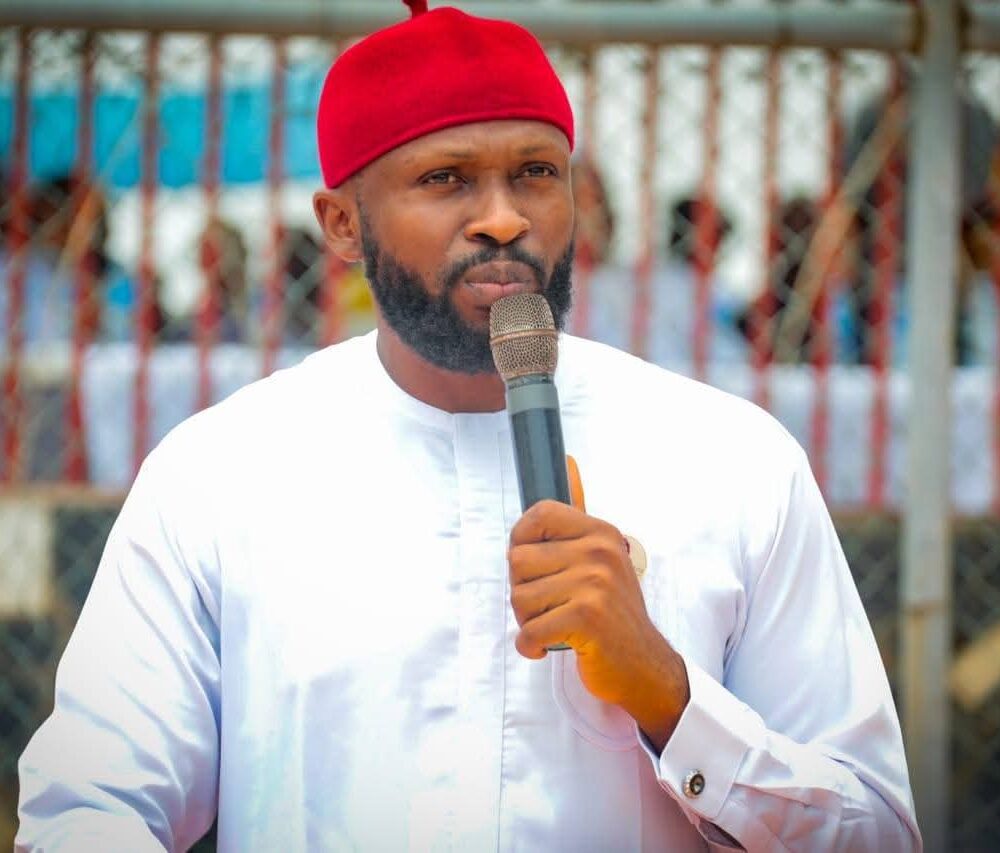
Former Senate Leader, Senator Victor Ndoma-Egba, has lamented the moral and cultural decay in Nigeria’s political leadership, saying the humility and sense of service that defined the nation’s founding fathers have been replaced by vanity and self-interest.
Speaking on The Exchange, a podcast hosted by Femi Soneye, the distinguished lawyer and statesman drew a stark contrast between the simple lifestyle of Nigeria’s early leaders and the flamboyance of today’s office holders.
“Prime Minister Tafawa Balewa lived in a mud house, yet he commanded respect and dignity. Today’s leaders live in mansions and fly private jets, but the defining environment for governance modesty and service has been lost,” he said.
Ndoma-Egba, who turns 70 in five months, reflected on his firsthand experience of Nigeria’s evolution from the promise of independence to the turbulence of military rule and the struggles of democracy. He recalled an era when Nigeria’s economy was “one of the fastest growing in the world” and the challenge “was not money, but how to spend it.”
He blamed the fragility of national institutions on a deep-seated cultural problem: excessive reverence for authority.
“We have become too timid to hold those in power accountable,” he lamented. “Leaders are idolized rather than questioned, and that is why institutions remain weak.”
Recalling his early days in public service, Ndoma-Egba noted that he was appointed a commissioner at just 26, when state cabinets had no more than nine members. While acknowledging the ongoing debate about the cost of governance, he warned that austerity taken too far can cripple efficiency.
“I was in charge of what would now amount to more than a dozen ministries. Reducing government size without considering functionality can backfire,” he cautioned.
Turning to his experience as Chairman of the Niger Delta Development Commission (NDDC), the former senator described the agency as a “victim of political convenience.” He disclosed that a comprehensive, stakeholder-developed master plan for the Niger Delta was abandoned almost immediately after its creation.
He also exposed the suffocating bureaucracy within the Commission, revealing that processing a single payment involved 62 different steps.
“Corruption is opportunistic it thrives where systems are inefficient,” he explained. “The NDDC’s structure practically invites corruption.”
On public perception of the National Assembly, Ndoma-Egba defended lawmakers, recalling the controversy over the “furniture allowance saga.” He clarified that while the public believed legislators demanded excess, the Assembly had actually reduced its own proposed allowance from ₦12 million to ₦3 million.
“It shows how misunderstood the legislature is Nigerians see it as an irritant, not as a key institution of democracy,” he said.
Looking ahead, Ndoma-Egba said his greatest wish is to see a “secure and prosperous Nigeria” for his grandchildren a nation where citizens can once again travel safely at night and industries like Kano’s textile factories thrive.
On the state of his home, Cross River, he lamented that the post-Donald Duke era has been one of “experimentation,” saying, “unfortunately, those experiments haven’t worked.” He urged the current administration to return to “traditional, proven governance models.”
In a lighter moment, the veteran politician revealed that he might have become a Catholic priest or journalist if not for politics and confessed a lifelong habit:
“Every day I’m in Nigeria, I eat pounded yam. It’s my one unbroken tradition.”
Share via: