
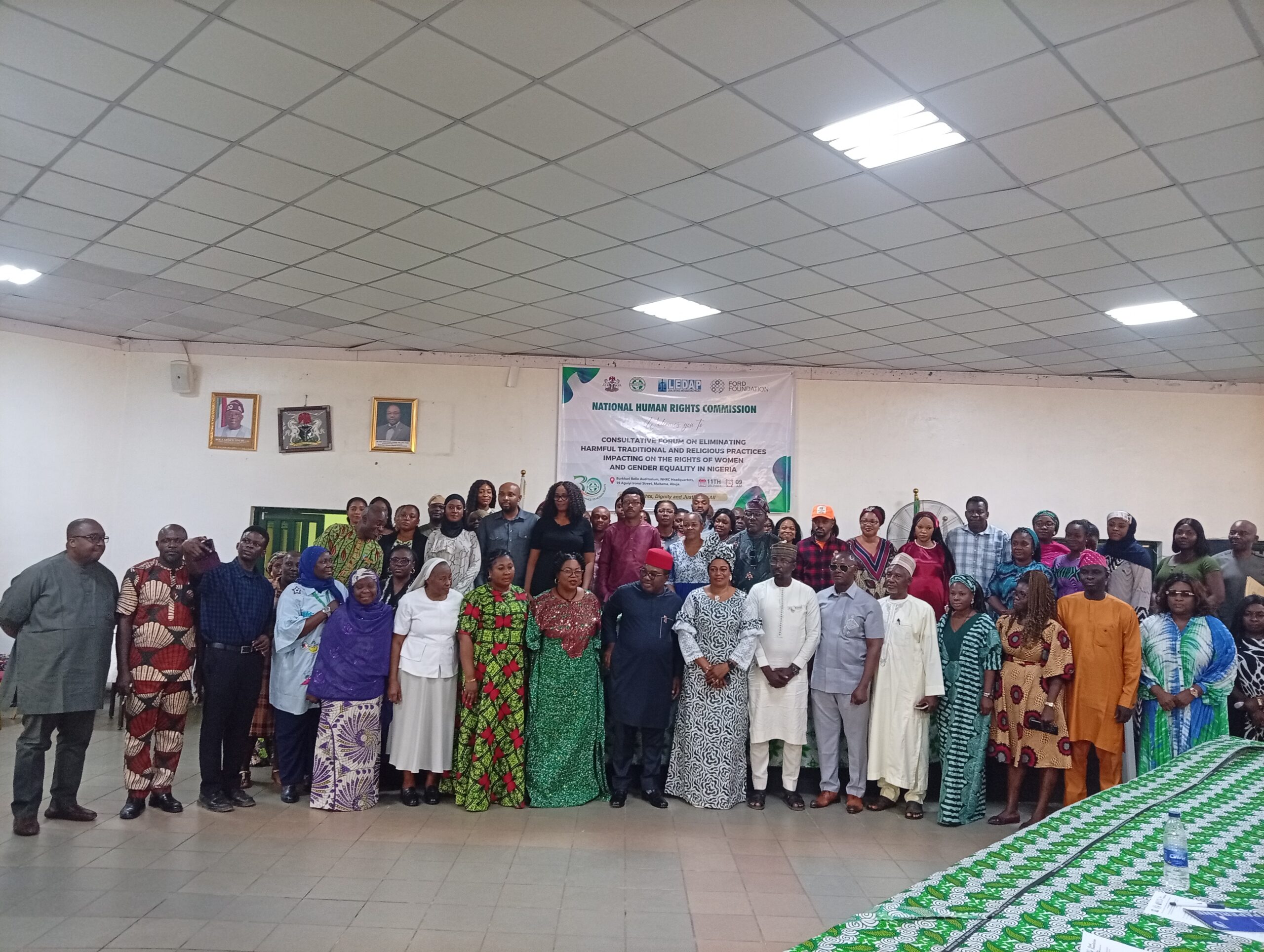
The National Human Rights Commission (NHRC), in collaboration with the Legal Defence and Advocacy Project (LEDAP), organized a high-level consultative forum aimed at eliminating harmful traditional and religious practices that undermined the rights of women and gender equality in Nigeria. The event took place at the Bukhari Bello Auditorium, NHRC Headquarters, Maitama, Abuja.
Dr. Tony Ojukwu Executive Secretary of NHRC, welcomed participants, noted that gender-based violence and harmful practices ranging from female genital mutilation and child marriage to discriminatory inheritance laws and dehumanizing widowhood rites remained a serious threat to Nigerian women and girls. He highlighted that NHRC had received over 50,000 complaints related to gender-based violence and harmful practices between January and November 2025.
Ojukwu emphasized the role of traditional and religious leaders in changing social norms, called on them to publicly condemn harmful practices and support girls’ education and the rights of survivors. He also urged law enforcement, the justice sector, and health and social services to improve training, survivor-centred services, and access to justice.
Hon. Imaan Sulaiman-Ibrahim, Minister of Women Affairs, represented by the Director of Legal Services, Sweet Adesewa Okundaye, reaffirmed the Ministry’s commitment to ending harmful practices, promoting women’s rights, and strengthening social protection programs under the Renewed Hope Agenda. She highlighted statistics from the 2024 Nigeria Demographic and Health Survey, including low female literacy rates, widespread malnutrition, and continued prevalence of female genital mutilation, as evidence of the urgent need for reform.
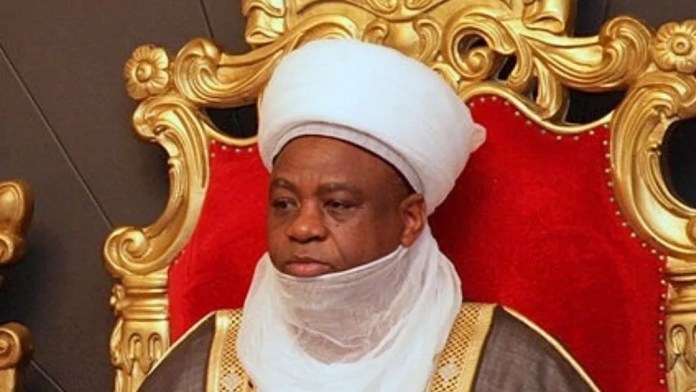
Delivering a goodwill message on behalf of His Eminence, Sultan of Sokoto and President of the Supreme Council for Islamic Affairs,Alhaji Saad Abubakar, Dr. Aminu Hayatu stressed the importance of engaging religious leaders in efforts to eliminate harmful practices.
Chino Obiagwu, National Coordinator of LEDAP, outlined the project “Empowering Traditional Rulers in Nigeria to Adopt and Implement Community Guidelines for Gender Equity and Non-Discrimination Against Women,” emphasizing the critical role of traditional and religious leaders in influencing community norms and promoting women’s rights.
Professor Joy Ezeilo, Executive Director of Women Aid Collective (WACOL) and former UN Special Rapporteur on Trafficking in Persons, delivered the keynote on the legal framework and ongoing efforts to combat gender-based violence in Nigeria, highlighting harmful socio-cultural norms that persist despite existing laws.
The forum included interactive discussions and breakout sessions aimed at developing community-sensitive strategies to prevent harmful practices, ensure protection for survivors, and promote accountability.
Both NHRC and LEDAP reaffirmed their commitment to work with traditional and religious institutions, civil society, and government agencies to eradicate harmful practices, promote gender equity, and strengthen human rights protection for women and girls across Nigeria.