Nigeria and Israel have reaffirmed their commitment to strengthening bilateral relations, with renewed focus on cooperation in border security, healthcare, technology, and innovation.
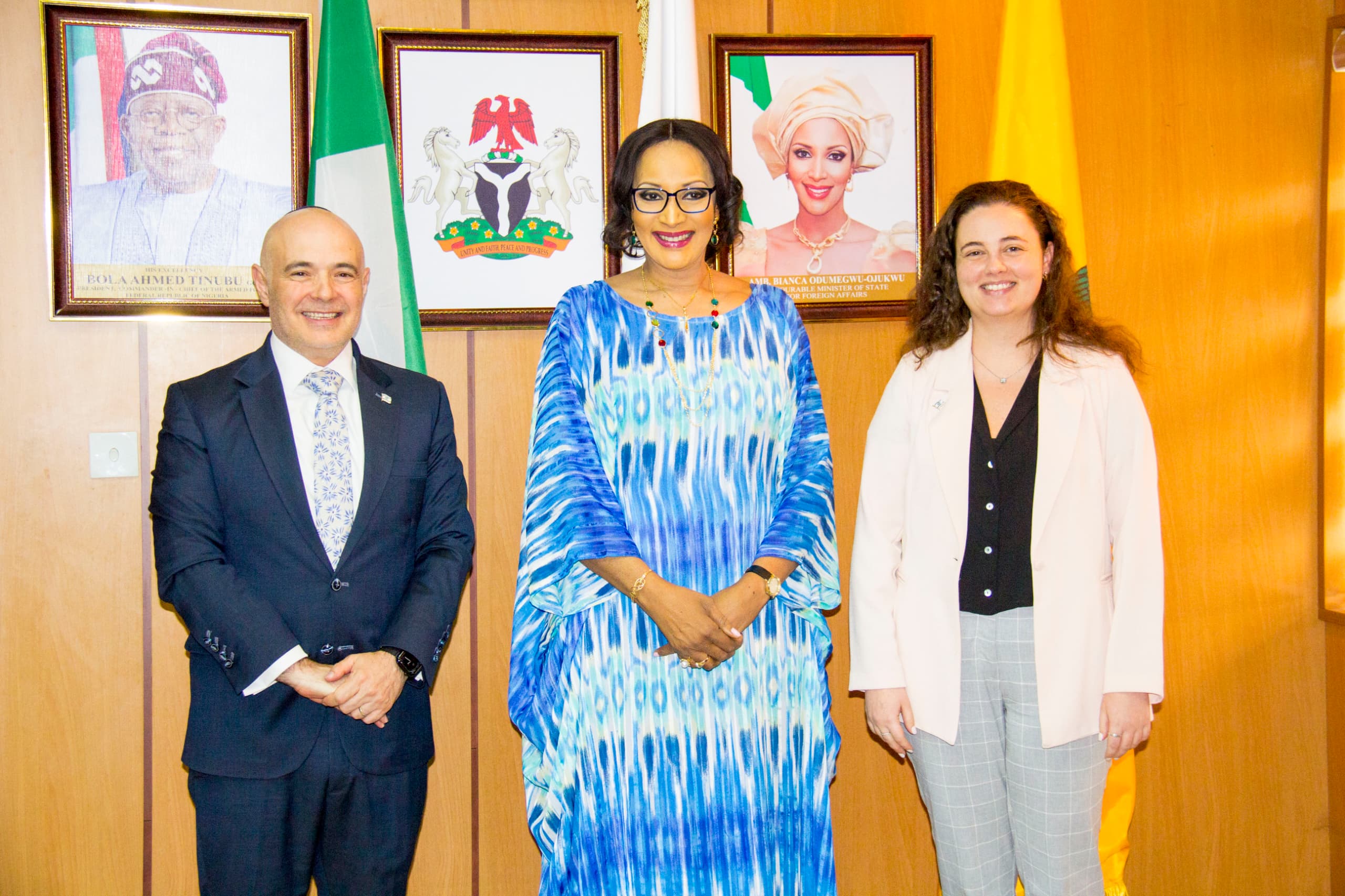
Nigeria’s Minister of State for Foreign Affairs, Bianca Odumegwu-Ojukwu, restated the country’s position while receiving the Israeli Ambassador to Nigeria, Michael Freeman, during a courtesy visit at Tafawa Balewa House in Abuja.
The meeting explored a broad range of areas including defence and intelligence collaboration, economic cooperation, religious tourism, consular matters, and multilateral relations between both nations.
Odumegwu-Ojukwu noted that Nigeria could benefit significantly from Israel’s expertise in border security management, particularly as the country continues efforts to tackle insurgency and terrorism. She stressed that enhanced cooperation would gain momentum with the operationalisation of the Nigeria–Israel Joint Commission.
The minister also commended Israel’s pledge to donate about 60 fully equipped ambulances to Nigeria, described the initiative as a critical intervention for improving emergency response services nationwide.
“These kinds of initiatives are very significant because we have challenges regarding first responders. For me, this marks the beginning of integrating an ambulance culture in Nigeria,” she said.
In his remarks, Ambassador Freeman described Nigeria as a strategic partner, highlighting its position as Africa’s most populous nation. He said Israel was committed to strengthening ties through sustained dialogue and official exchanges.
Freeman disclosed that Israel was already working with Nigeria’s Federal Ministry of Health to commence the phased donation of ambulances, beginning with three or four units, alongside training programmes for personnel who will operate them.
“We want to donate 50–60 ambulances to Nigeria. This is a significant package aimed at saving lives, and we will also train those who will manage them,” he stated.
The ambassador further revealed plans to support Nigeria’s food security efforts through the deployment of Israeli agricultural technology.
The renewed engagement build on earlier diplomatic interactions between both countries. In August 2025, Odumegwu-Ojukwu and Israel’s Deputy Minister of Foreign Affairs, Sharren Miriam Haskel-Harpaz, held a political dialogue in Abuja that underscored shared commitments to counter-terrorism cooperation, intelligence sharing, technology transfer, and expanded bilateral exchanges.
The joint communiqué from the meeting emphasised that terrorism remains a global challenge requiring coordinated international action, while both countries also agreed to deepen collaboration in agriculture, innovation, culture, tourism, immigration matters, and capacity building through study tours and sustained diplomatic engagement.
The latest discussions signaled a continued push by Nigeria and Israel to advance a more robust and mutually beneficial strategic partnership.