
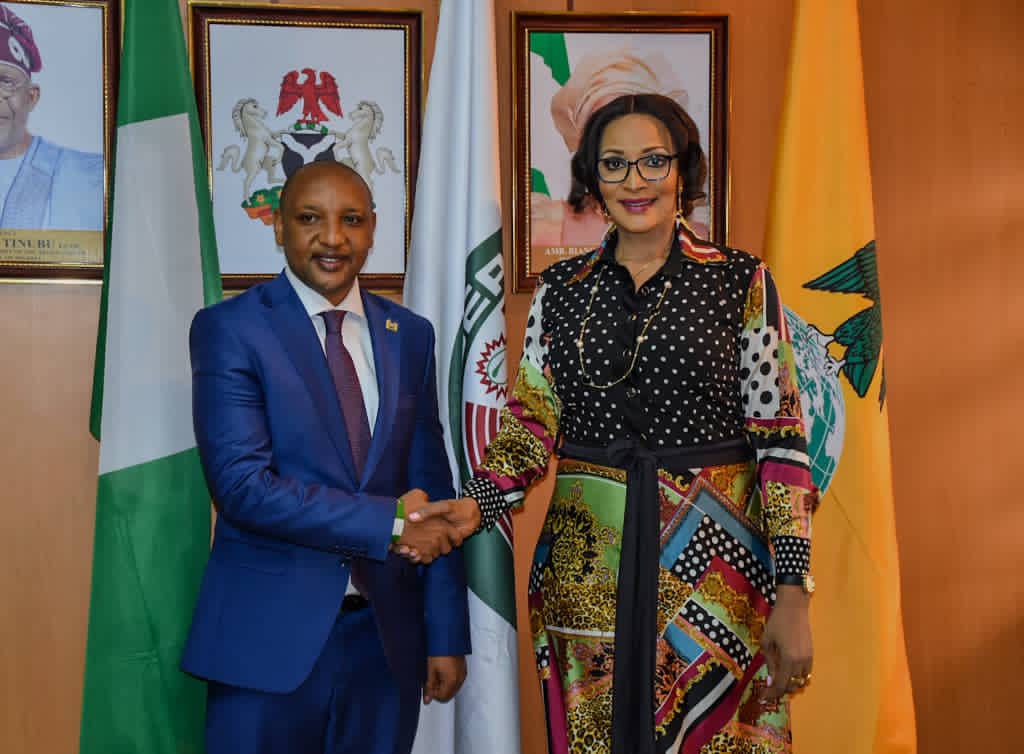
Nigeria and Kenya have taken steps to deepen diplomatic and economic cooperation following a high-level meeting between the Honourable Minister of State for Foreign Affairs, Bianca Odumegwu-Ojukwu, and Kenya’s High Commissioner to Nigeria, Isaac Keen Parashina, in Abuja.
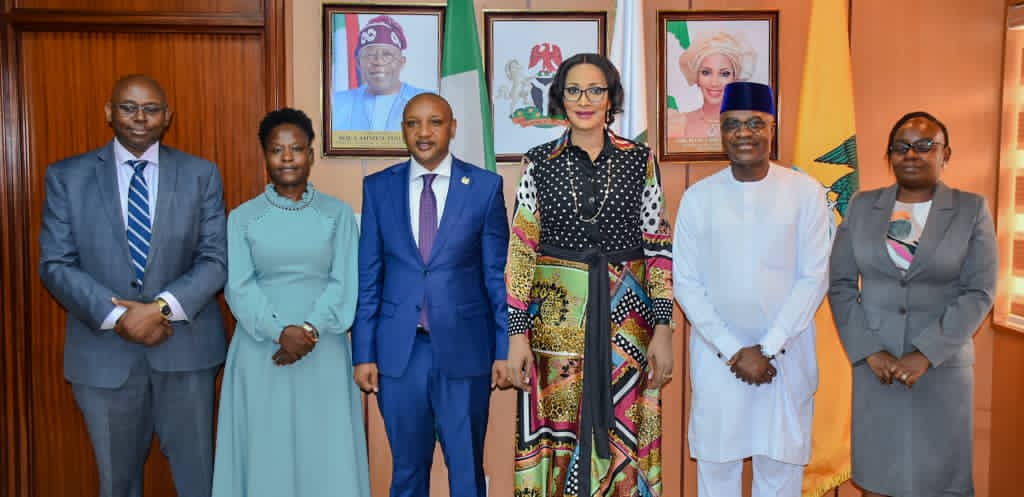
The meeting, held on Wednesday at Nigeria’s Ministry of Foreign Affairs, underscored renewed commitment by both countries to strengthen bilateral relations and reinvigorate structured cooperation mechanisms, particularly the Nigeria–Kenya Joint Commission for Cooperation (JCC), which has not convened for more than a decade.
Welcoming the Kenyan envoy, Odumegwu-Ojukwu reaffirmed Nigeria’s appreciation for longstanding cordial relations between Nigeria and Kenya, commending Nairobi’s renewed enthusiasm toward revitalising institutional engagement frameworks. She described the Joint Commission as the most effective platform for reviewing Memoranda of Understanding (MoUs), strengthening collaboration, and ensuring implementation of agreed initiatives.
The minister noted that although African countries have signed numerous bilateral agreements over the years, the absence of regular review mechanisms has often limited tangible outcomes. She stressed the need to prioritise sectors capable of delivering visible economic and social benefits to citizens of both nations.
Key areas identified for enhanced cooperation include trade facilitation, fintech innovation, digital agriculture, livestock development, tourism, migration management, and joint action against human trafficking. Odumegwu-Ojukwu highlighted the importance of collaboration between Nigeria’s National Agency for the Prohibition of Trafficking in Persons (NAPTIP) and corresponding Kenyan institutions to combat cross-border criminal networks.
She further emphasised the demographic realities facing both countries, noting that a large proportion of their populations are under 45 years of age. According to her, youth unemployment, migration pressures, and evolving labour markets require coordinated African responses focused on entrepreneurship, innovation, and job creation.
The minister also stressed the shared responsibility of both nations, as two of Africa’s most dynamic economies, to drive intra-African trade under the African Continental Free Trade Area (AfCFTA) framework.
In his remarks, Ambassador Parashina conveyed greetings from the Government of Kenya and reaffirmed Nairobi’s commitment to strengthening ties with Nigeria. He expressed interest in operationalising visa reciprocity arrangements and advancing discussions through the Joint Commission to create safer and more predictable travel and business environments for citizens.
The High Commissioner also briefed the minister on Kenya’s forthcoming Africa–France Summit scheduled to hold in Nairobi, describing it as a continental platform aimed at strengthening Africa–France partnerships for international development rather than a bilateral engagement. He invited Nigeria’s active participation and stressed the importance of private-sector involvement in development initiatives.
Parashina referenced the Kenya–Nigeria trade mission held in November 2025, welcoming Nigeria’s follow-up engagement to address logistical challenges identified during the exercise. He noted that sustained follow-up mechanisms are essential for translating trade discussions into measurable outcomes.
On multilateral cooperation, both sides exchanged views on international candidacies and reaffirmed mutual support, while the Kenyan envoy commended Nigeria’s advocacy for reforms within the United Nations system and greater African representation in global governance institutions.
Responding, Odumegwu-Ojukwu described Kenya as a strategic partner in advancing African-led solutions to continental challenges. She noted that shifting global geopolitical dynamics and evolving development financing patterns make stronger intra-African partnerships increasingly necessary for prosperity, security, and resilience.
The minister added that reactivating the Joint Commission would help both countries identify priority ministries, establish sectoral working groups, and institutionalise regular progress reviews. She also encouraged closer coordination between Nigeria’s High Commission in Nairobi and relevant Kenyan agencies ahead of the Commission’s reconvening.
Both parties expressed optimism that renewed diplomatic engagement would translate into stronger trade relations, improved mobility frameworks, enhanced cooperation on migration management and regional security, and broader economic opportunities.
The meeting concluded with a shared commitment to building a more integrated, prosperous, and self-reliant Africa through sustained bilateral cooperation and structured diplomatic engagement.