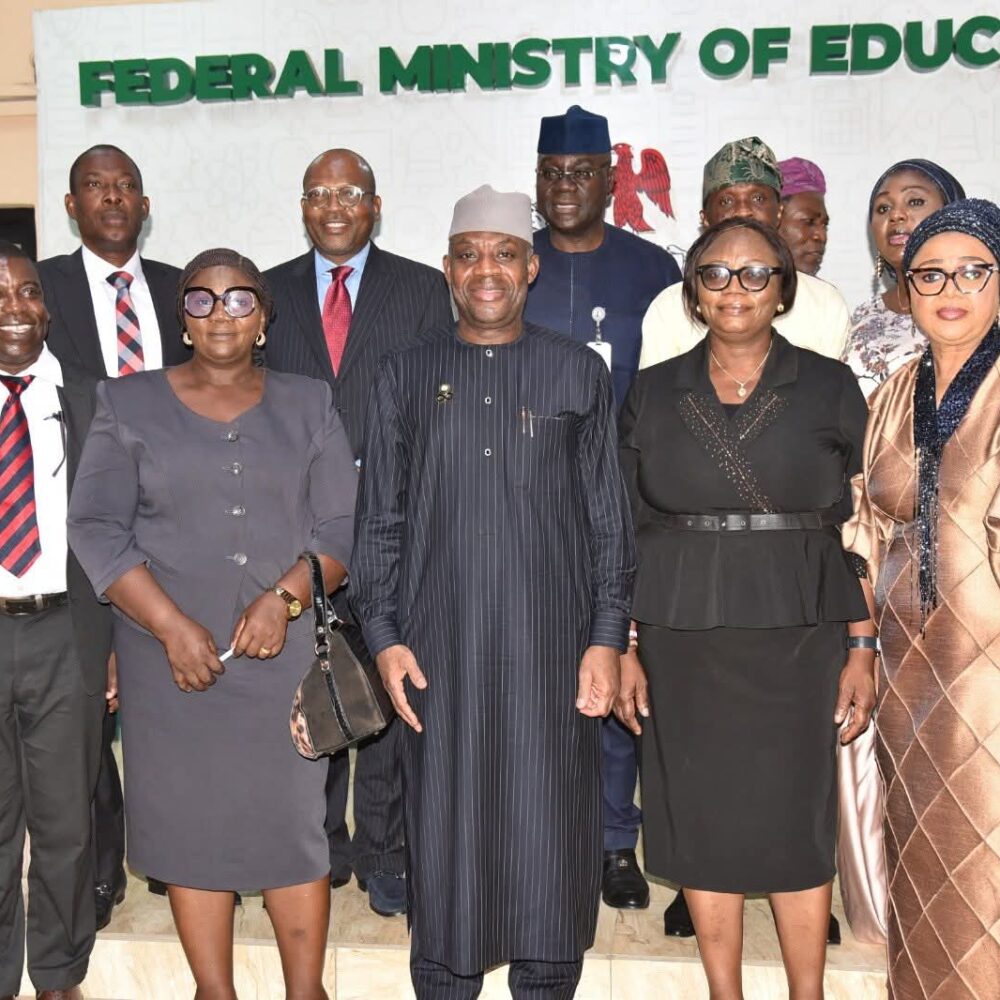

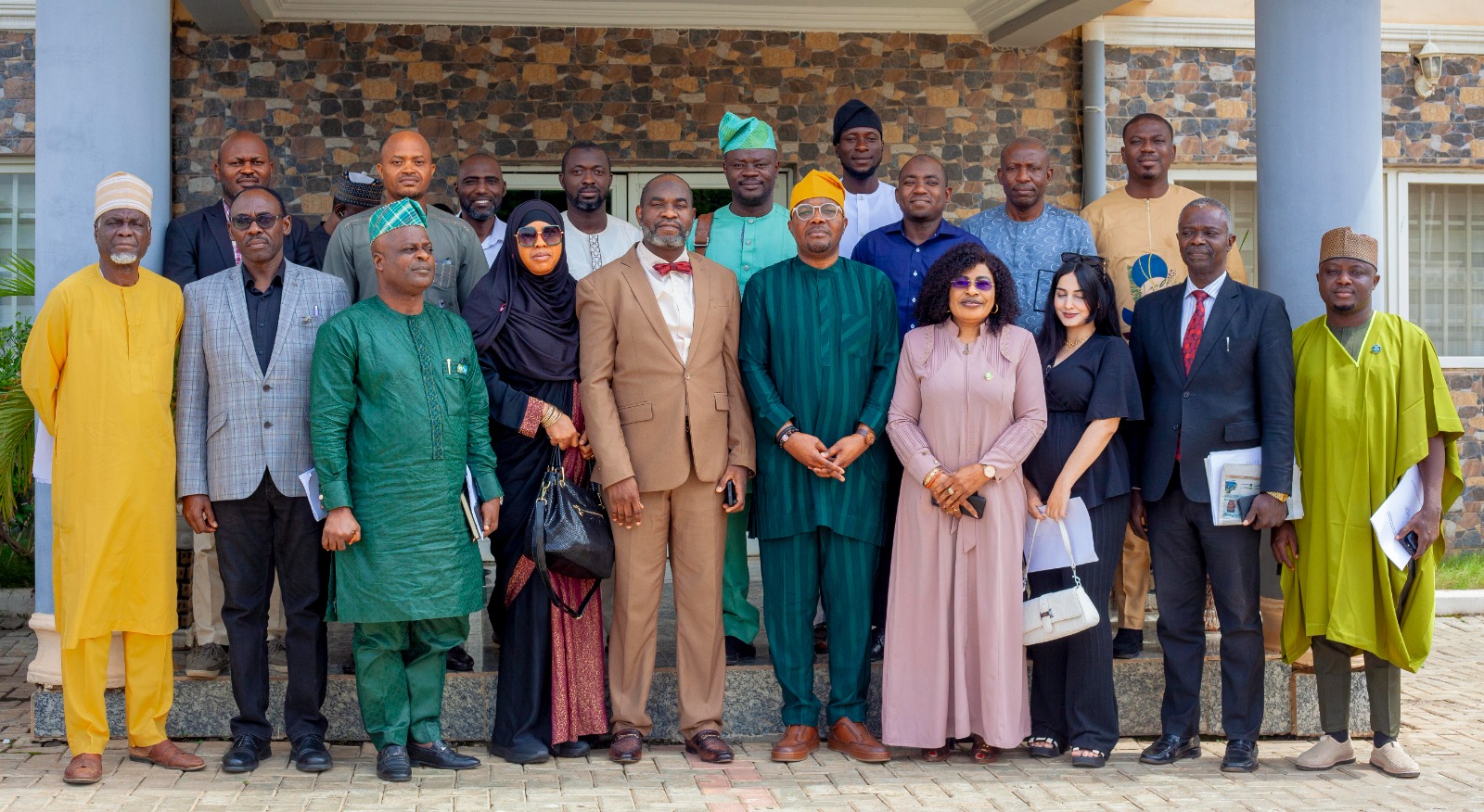
The National Universities Commission (NUC) and the Committee of Vice-Chancellors of Nigerian Universities (CVCNU) have called for a bold shift in the mandate of Nigerian universities, urged them to embrace innovation, entrepreneurship, and relevance in the face of 21st-century global realities.
This call was made during the fourth Public Lecture of the African School of Economics (ASE), Abuja, delivered by Prof. Moses Ochonu of Vanderbilt University, USA. The lecture, themed “The 21st Century Nigerian University: Pitfalls and Pathways,” attracted top academics, administrators, and members of the public.
In a goodwill message, the Executive Secretary of the NUC, Prof. Abdullahi Yusuf Ribadu, stressed that universities must move beyond the traditional role of awarding degrees and become active drivers of national development. Represented by the NUC Director of Skills Development and Entrepreneurship, Mr. Ashafa Ladan, Prof. Ribadu said institutions must become “a hub of innovation, a crucible for problem-solving, and a launchpad for global competitiveness.”
He emphasized that 21st-century Nigerian university graduates must be “adaptable, entrepreneurial, and ethically grounded,” adding that research from universities should not only inform but also transform society through technological advancement and social impact.
Prof. Ribadu further highlighted the eight pillars of his transformative agenda at the NUC, including expanding access, curriculum innovation, digital transformation, skills and entrepreneurship development, university-industry-government collaboration, improved graduate employability, commercialisation of research, and cross-border synergies.
Also speaking at the event, the Secretary-General of the CVCNU, Prof. Andrew Haruna, praised ASE and its Vice-Chancellor, Prof. Mahfouz Adedimeji, for their commitment to knowledge advancement. He noted that Nigerian universities stand at a critical juncture, balancing global transformation and local challenges.
“Our universities must critically re-examine their structures, values, and systems to better serve national and continental aspirations,” Prof. Haruna said, identifying key issues such as infrastructural deficits, inadequate funding, brain drain, curriculum relevance, and employability.
He commended ASE for its vision and drive, stating, “The African School of Economics has shown purpose in building youth capacity and aligning higher education with the needs of the Fourth Industrial Revolution.”
The lecture was well-attended by vice-chancellors, heads of tertiary institutions, scholars, university staff, and members of the public.