A leader’s stumble is perhaps the easiest political moment to interpret and the cheapest. It demands no study of fiscal constraints, no reading of monetary transmission, no understanding of inflation dynamics, and no patience for reform sequencing. It is the politics of the eye: quick, viral, and often cruel.
But philosophy begins where spectacle ends.
The first truth is basic: to be human is to be fragile. The wisest political traditions never promised invulnerability. They insisted instead that dignity lies not in the absence of weakness, but in the governance of the self amid weakness. A mortal body is not an argument against leadership; it is the condition under which leadership is exercised.
The second truth is older than philosophy itself. Prophetic history does not equate physical limitation with moral failure. In the sacred imagination of billions, the most consequential voices were not selected for bodily perfection. They were chosen for moral clarity and the capacity to carry burdens.
Prophetic lessons on strength amid limitation:
Musa (Moses) speaks openly of a limitation in speech, yet is entrusted with a civilisational mandate.
Yaqub (Jacob) carries a limp, yet remains foundational in moral memory.
Ayyub (Job) suffers profoundly, yet becomes a universal symbol of perseverance when life appears unjust.
What, then, is the insinuation that legitimacy in governance depends on gait? That authority collapses at the sight of human frailty? This is not accountability. It is prejudice, dressed in civic language.
History offers a further rebuke. Some of the most effective leaders of the modern era governed while physically constrained. Franklin D. Roosevelt led his country through depression and world war while living with paralysis. Nelson Mandela emerged from long captivity with a body marked by hardship, yet became a global moral reference point.
Nigeria’s own rebuttal to ableist politics:
Nigeria does not require imported examples to understand that physical limitation can coexist with moral audacity and administrative speed. Our own history is populated by leaders whose bodies carried burdens, but whose wills refused to outsource responsibility to discomfort.
Murtala Ramat Muhammed, whose brief six months in office still read like a compressed syllabus of statecraft, remains an emblem of urgency, a government that moved because it believed the nation could not wait. Popular recollection speaks of persistent pain and even a limp; whether read as literal biography or national metaphor, the lesson endures: a wounded gait can still move a country toward renewal.
Umaru Musa Yar’Adua governed under the shadow of illness, yet his tenure was defined by sober, low-theatre seriousness: the Niger Delta amnesty framework that calmed a volatile region; a commitment to macroeconomic stability amid global financial turbulence; and an instinct for urgency rather than excuses.
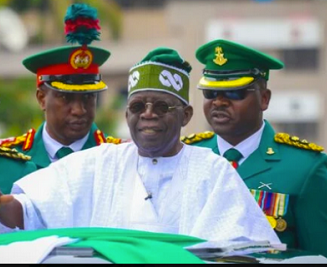
In the present moment, any serious and depoliticised critique of Bola Ahmed Tinubu’s administration must also confront the macroeconomic decisions that have reshaped Nigeria’s policy landscape: the removal of the petrol subsidy, consolidation of foreign-exchange windows, efforts to end monetary financing of fiscal deficits, and a sweeping re-write of the tax architecture.
These are not slogans; they are structural choices. Their human costs are real, and mitigation must be real as well. But intellectual honesty demands a clear baseline: reforms of this scale are judged by coherence, sequencing, credibility, and distributional safeguards, not by a viral image of human frailty.
Leadership, ultimately, is measured by the quality of decisions, the discipline of institutions, and the outcomes delivered to citizens, not by the illusion of bodily invincibility.
Nigerians are suffering. That suffering is neither abstract nor imagined. Inflation bites. Purchasing power has eroded. Adjustment is palpable. The responsible response is not ridicule, but rigorous debate about policy design and mitigation: targeted transfers, transport cushioning, food supply interventions, credible market signalling, anti-rent enforcement, and consistent public communication.
A stumble abroad is not a metric of economic policy. If government must be judged, let it be judged on matters worthy of judgment: inflation trajectories, food affordability, employment absorption, security stabilisation, fiscal credibility, and the tangible reach of social protection.
If we cannot defend the dignity of frailty, if we cannot allow a leader to be mortal without turning mortality into indictment, then we have not advanced democracy. We have merely refined cruelty.
The moral test of a society is not whether it can criticise power. It is whether it can do so without surrendering decency.
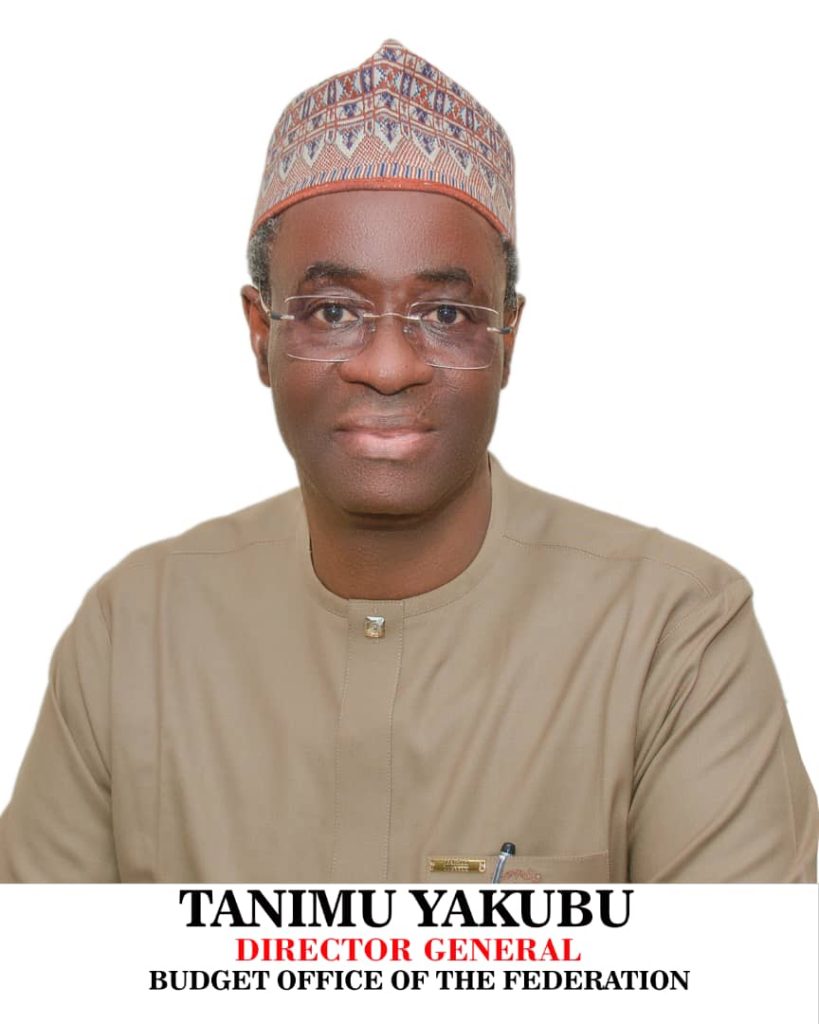
*Tanimu Yakubu is Director General, Budget Office of the Federation
Share via: