
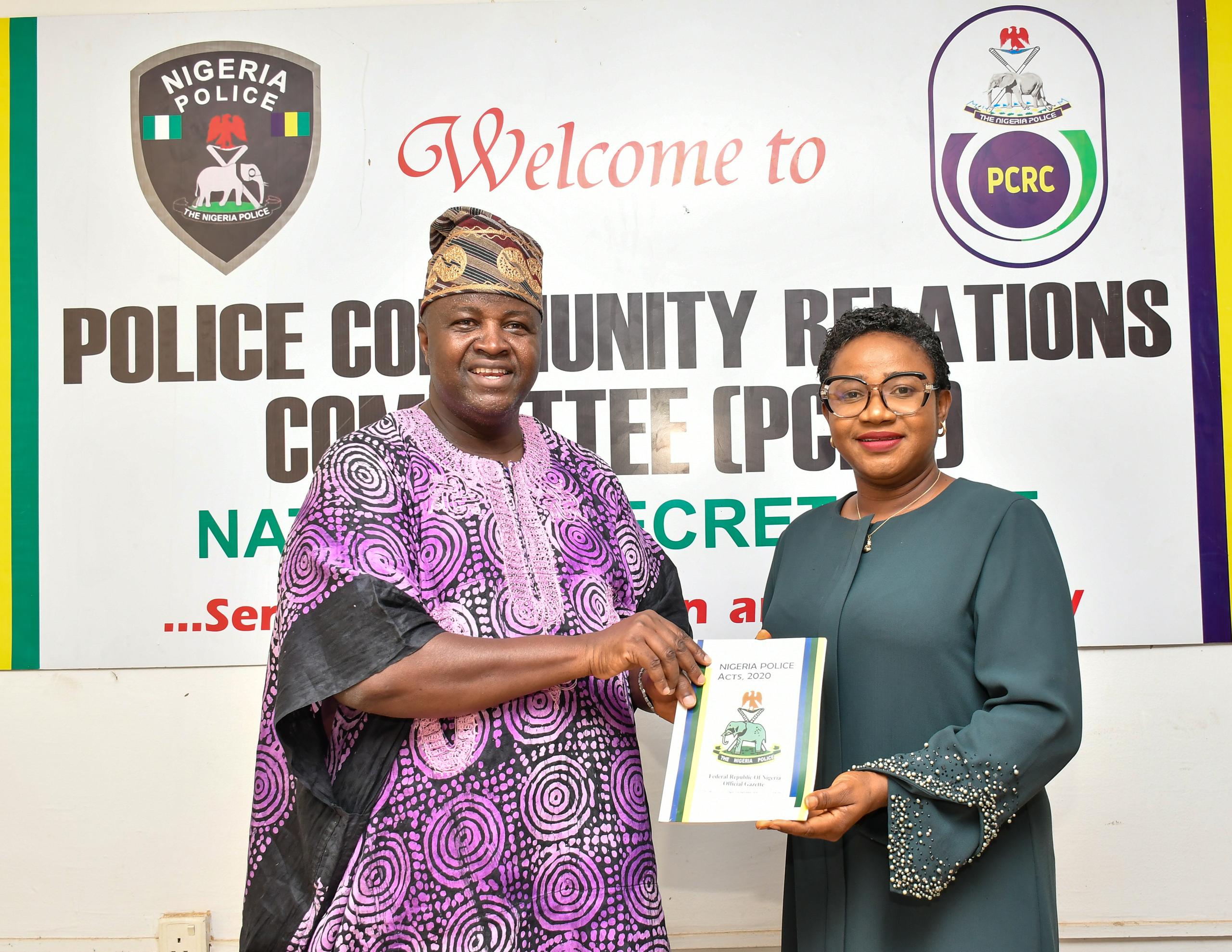
The National Chairman of the Police Community Relations Committee (PCRC), Alhaji Mogaji Ibraheem Olaniyan, has reaffirmed the committee’s strong partnership with the media, describing journalists as indispensable allies in promoting accountability, transparency, and national development.
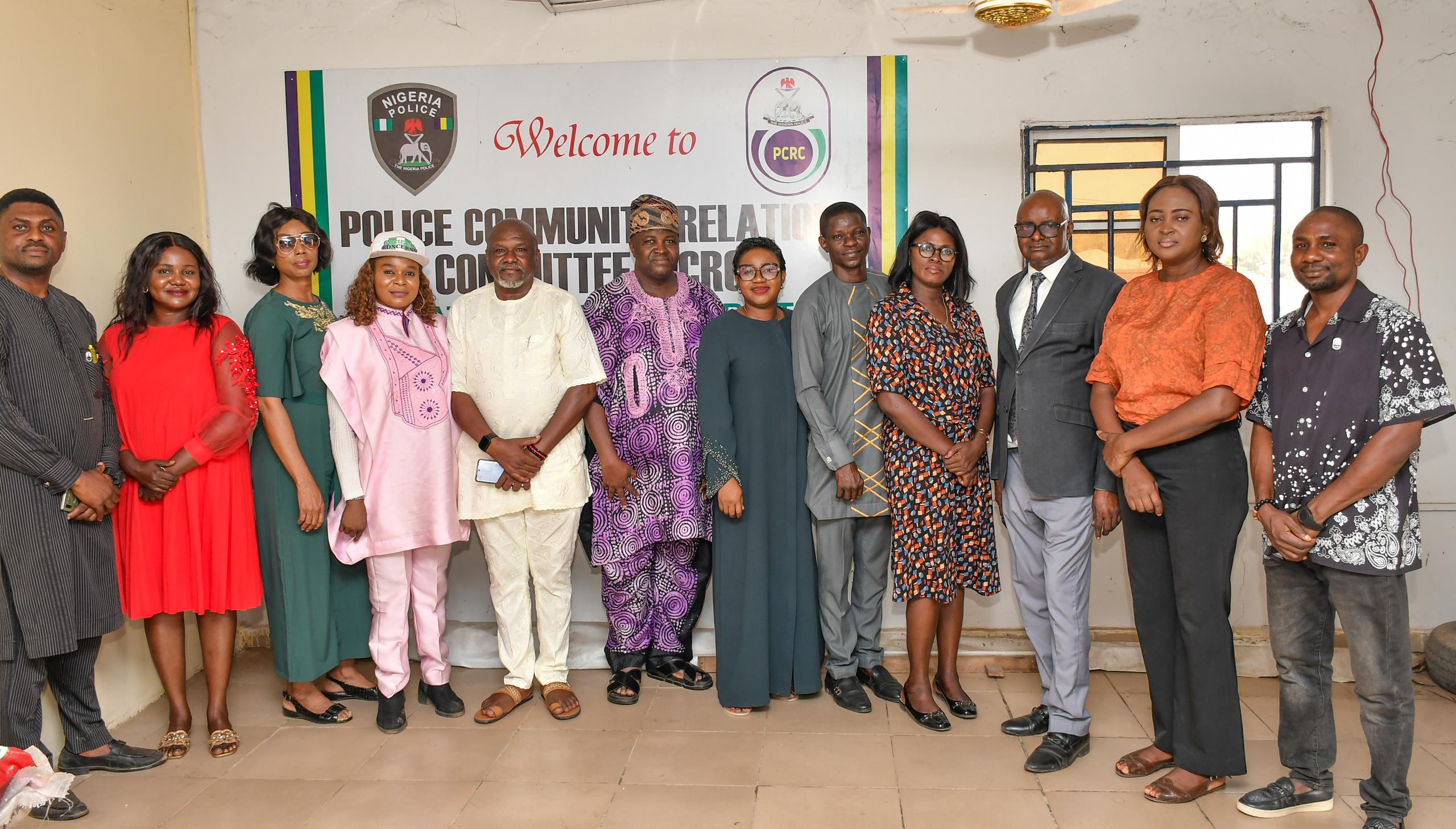
Olaniyan made this known in Abuja while receiving the executive members of the Nigeria Union of Journalists (NUJ), Federal Capital Territory (FCT) Council, led by its Chairman, Ms Grace Ike, during a familiarisation visit to the PCRC National Secretariat.
He stressed that the PCRC does not discriminate on the basis of gender in leadership and engagement, noting that competence, integrity, and dedication to service remain the key criteria for responsibility and advancement.
According to him, journalists and police officers enjoy unrestricted access to his office because of their critical roles in governance, public enlightenment, and nation-building.
Since assuming office on November 27, Olaniyan said the committee has recorded notable achievements, including the recovery of jointly owned land belonging to the PCRC, the Nigeria Police, and the Ministry of Police Affairs. He disclosed that plans are underway to develop the property through partnerships with reputable investors.
He also highlighted several welfare initiatives implemented by the PCRC, including scholarship programmes for children of police officers and other support schemes aimed at improving the welfare of personnel and their families.
The PCRC Chairman further pledged to facilitate strategic partnerships for the NUJ FCT Council, especially with private sector stakeholders and philanthropists committed to police welfare and national development.
Addressing gender inclusion, Olaniyan expressed concern over the continued neglect of retired female police officers in post-service appointments, despite their qualifications and professional experience.
He urged the NUJ FCT leadership to leverage its platform and influence to sustain advocacy for equal opportunities and greater recognition of women in the security sector.
“The media has a vital role to play in reshaping public perception and influencing policy by highlighting the contributions of female police officers and promoting inclusive appointment practices,” he said.
Quoting him, “What a man can do, a woman can do even better. Merit, integrity, and experience—not gender—should determine opportunities in the security sector.”
He observed that while retired male officers are frequently engaged as security advisers, consultants, and heads of security for public and private institutions, their female counterparts are often overlooked.
According to Olaniyan, this trend reflects a wider gender imbalance within the security sector and sends discouraging signals to serving female officers.
“Many states readily appoint retired male officers as security advisers or heads of regional security outfits, while equally qualified female officers are rarely considered. This undermines ongoing efforts to promote gender equity,” he stressed.
On media ethics and security reporting, the PCRC chairman called on journalists to always verify facts and maintain balance in reporting police-related matters, warning against one-sided narratives that could weaken public confidence in national institutions.
He acknowledged existing challenges within the police but maintained that the force remains a critical pillar of national security that deserves fair and responsible coverage.
Olaniyan assured the NUJ delegation of PCRC’s continued support, describing the relationship between both organisations as a family bond, and reaffirmed the committee’s commitment to strengthening police-community-media collaboration for national stability and development.
Earlier in her remarks, NUJ FCT Chairman, Ms Grace Ike, commended Olaniyan for his humanitarian efforts, describing him as a “man of the people” whose activities have continued to attract public goodwill.
She said the visit marked the beginning of a stronger partnership between the NUJ FCT and the PCRC in promoting national development, community relations, and positive police-media engagement.
“The NUJ FCT, as the umbrella body for media organisations in Abuja, remains committed to objective, balanced, and responsible reporting. We pledge to amplify PCRC activities across our network of over 700 journalists,” she stated.
Ike emphasised that collaboration must be mutual, assuring the PCRC of sustained publicity, story syndication, and collective engagement whenever issues arise.
She added that the media’s role in community relations makes the NUJ a natural partner of the PCRC, stressed that journalists would continue to report the truth while supporting institutions working for national stability.
Highlighting challenges facing journalists in the FCT, Ike drew attention to the poor state of the NUJ Secretariat, particularly the absence of a functional congress hall, which forces members to hold meetings under unfavourable conditions.
She appealed for support in completing the long-abandoned building project and called for collaboration on affordable housing schemes for journalists, similar to existing initiatives in Lagos.
The meeting ended with mutual assurances of sustained cooperation aimed at strengthening police-community relations and enhancing responsible media engagement in the FCT and beyond.