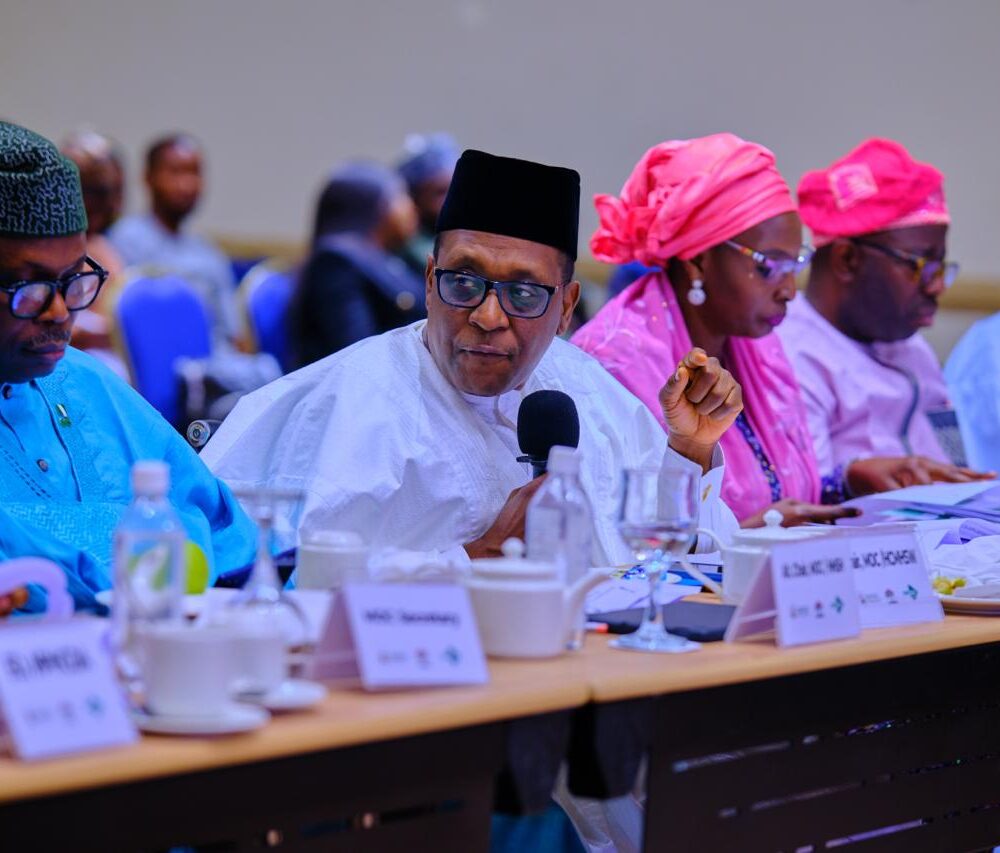

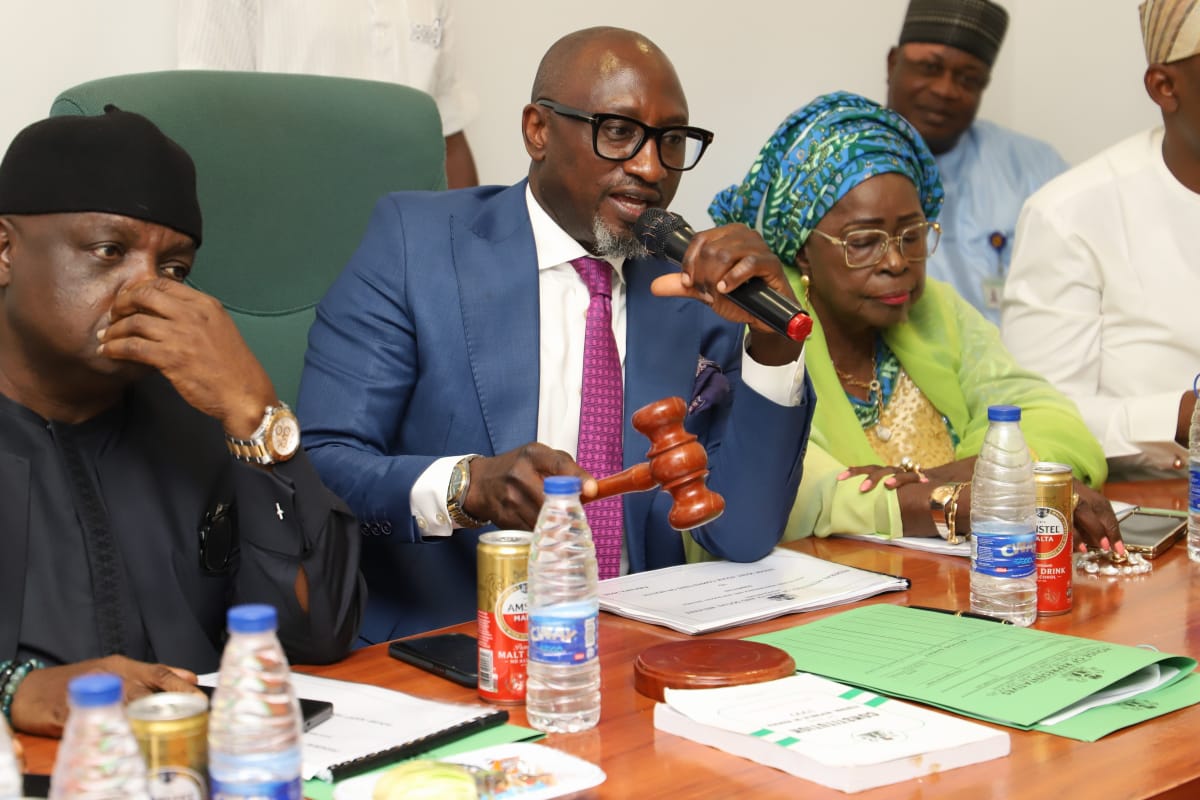
The House of Representatives has commended the Federal Ministry of Health and Social Welfare for its performance, particularly in the implementation of the Basic Health Care Provision Fund (BHCPF), while backing its proposed ₦224.36 billion budget for the 2026 fiscal year.
The commendation came on Monday in Abuja during the presentation of the Ministry’s 2026 Headquarters Budget Proposal to the Joint House Committees on Health Services.
Presenting the proposal, the Coordinating Minister of Health and Social Welfare, Prof. Muhammad Ali Pate, said the Ministry proposed a total estimate of ₦224.36 billion for 2026. He explained that the breakdown includes ₦186.72 billion for capital expenditure, ₦10.36 billion for personnel costs, ₦25.89 billion for multilateral and bilateral loans, and ₦1.59 billion for overhead costs.
Prof. Pate emphasised that effective service delivery depends more on the timely release of funds than on allocations alone. He expressed confidence that improved coordination among relevant government institutions would enhance liquidity and ensure efficient budget execution.
“It’s not the allocation; it’s about the releases. If the resources are made available, the ministry and my colleagues are ready to execute efficiently,” he said.
The Minister also disclosed that Nigeria will host two major international health events in 2026 the Fifth High-Level Ministerial Meeting on Antimicrobial Resistance (AMR) scheduled for June 29–30, and the Commonwealth Meeting on Nursing. According to him, the AMR meeting, expected to attract about 170 ministers and other high-level global officials, will be the first of its kind to be hosted in Africa, requiring an additional provision of about ₦2 billion.
On the 2025 budget performance, Prof. Pate reported 100 per cent utilisation of personnel costs, implemented through the Integrated Personnel and Payroll Information System (IPPIS). He added that out of the ₦1.5 billion overhead allocation for 2025, ₦832.28 million was released between January and October, with a 99.8 per cent utilisation rate recorded.
However, he noted that capital releases for 2025 were yet to be utilised due to the bottom-up cash plan policy of the Office of the Accountant-General of the Federation, describing the situation as unusual. Despite this, he highlighted achievements recorded through key intervention programmes such as the Presidential Vaccine Taskforce (PVAC), the Sector-Wide Approach (SWAp), and the BHCPF.
In his remarks, Chairman of the House Committee on Health Services, Rt. Hon. Amos Gwamna Magaji, praised the Ministry’s implementation of the BHCPF, describing it as a lifeline for improving healthcare delivery at the grassroots.
“If we truly want to provide healthcare for our people, it starts from primary healthcare. We may not be where we ought to be yet, but many states and local governments have risen to the challenge,” Magaji said.
While backing the proposed 2026 budget, the House urged the Ministry to work with relevant authorities to shorten delays in the release of BHCPF funds to states and primary healthcare facilities. Lawmakers also requested the designation of a liaison officer to improve communication and coordination on intervention programmes.
Magaji assured that the committee would scrutinise the budget proposal with a view to approving it, but expressed concern that the Ministry’s budget growth does not adequately reflect Nigeria’s rising population. He added that the Minister may be invited for further clarification or adjustments where necessary.
The Coordinating Minister was accompanied to the budget defence by the Permanent Secretary, Daju Kachollom, and Directors and Heads of Departments of the Ministry.