
The Senate Committee on Federal Character and Inter-Governmental Affairs has applauded ongoing reforms within the Federal Road Safety Corps (FRSC), citing improved professionalism, operational discipline, and enhanced conduct of officers nationwide, while emphasizing the need for budget accountability and stronger emergency response systems to consolidate the agency’s progress.
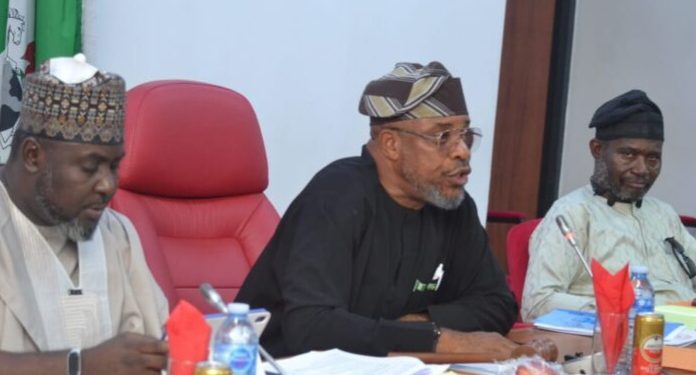
The position of the Committee was conveyed through its Chairman, Senator Allwell Heacho Onyesoh, during an oversight engagement with the Corps Marshal and Chief Executive Officer of the FRSC, Shehu Mohammed, at the National Assembly in Abuja.
Speaking on behalf of the Committee, Senator Onyesoh noted that lawmakers had observed visible improvements in the conduct of road safety officers across the country, described their composure, discipline, and structured command during field operations as clear indicators of strengthened leadership and sustained institutional reforms within the Corps.
A member of the Committee, Senator Kevin Chukwu, representing Enugu East Senatorial District, particularly praised officers for their maturity in handling difficult enforcement situations, stating that measurable progress should be recognized in a climate where enforcement agencies are often subjected to criticism. He added that acknowledging positive performance helps reinforce professionalism and public trust in national institutions.
During the engagement, the Committee conducted a detailed review of the FRSC’s 2026 budget proposal, focusing on personnel costs, overhead expenditure, and capital allocations. Lawmakers drew attention to the proposed increase in personnel costs from ₦84 billion in 2025 to ₦99.737 billion in 2026, as well as the rise in overhead expenditure from ₦10 billion to ₦26 billion. While acknowledging that wage adjustments and structural reclassifications may partly account for the increases, the Committee emphasized the need for transparency and comprehensive justification of all budget components to ensure alignment between allocations and measurable outcomes.
The Committee stressed that legislative oversight remains constructive and is aimed at strengthening institutional efficiency and accountability rather than penalizing officers operating within approved mandates.
Lawmakers also highlighted the need to reinforce emergency response capacity nationwide, noting that improved enforcement must be complemented by faster and more coordinated rescue operations. Senators underscored the importance of strategically located rescue stations, modern operational equipment, and adequate funding to improve response time to road crashes and other emergencies, particularly outside major urban centres where delayed intervention often increases casualties.
In addition, the Committee called for stronger collaboration between the FRSC, the Federal Fire Service, the Nigeria Police, and the Federal Ministry of Works to address engineering deficiencies, poor road signage, and other structural challenges contributing to preventable accidents. Preventive infrastructure improvements, lawmakers noted, must work alongside enforcement and rescue operations to achieve sustainable reductions in road fatalities.
In response, the FRSC leadership reaffirmed its commitment to sustained reforms, continuous training of personnel, and modernization initiatives designed to enhance operational efficiency and deepen public confidence in the Corps.
The Committee reiterated that its oversight engagement remained focused on promoting accountability, supporting institutional growth, and advancing national road safety objectives aimed at protecting lives and property on Nigerian roads.