
The Senate has fixed March 17, 2026, as the target date for the final consideration and passage of Nigeria’s ₦58.47 trillion 2026 Appropriation Bill, as lawmakers intensify scrutiny of President Bola Tinubu’s spending proposal.
Chairman of the Senate Committee on Appropriations, Senator Solomon Adeola, disclosed this on Friday after a special session of the committee, where February 2 to 13 was approved for the review of budget estimates by various standing committees.
Adeola announced that a public hearing on the budget would hold on February 9, while an interactive session with key economic managers of the Federal Government is scheduled for March 5. The engagement will involve the Minister of Finance and Coordinating Minister of the Economy, Wale Edun, and the Minister of Budget and National Planning, Atiku Bagudu.
He further stated that reports from committees on budget defence would be submitted between February 16 and 23, formed the basis of the Appropriations Committee’s final report expected on March 17.
According to him, the Senate leadership had initially planned to pass the budget by March 12 but granted an additional week to allow for more detailed examination of the estimates.
“To facilitate deeper scrutiny, hard copies of the 2026 budget have been printed and distributed to all standing committee members,” Adeola said.
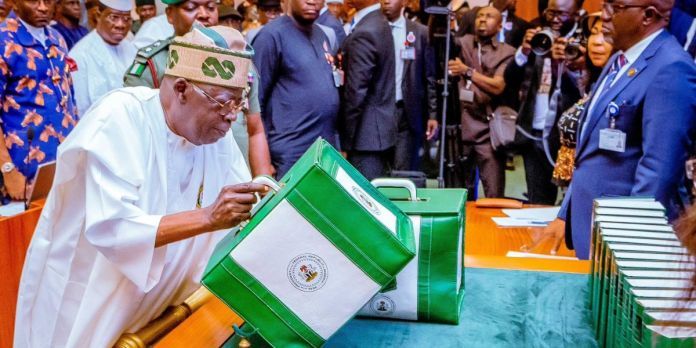
President Tinubu had presented the 2026 Appropriation Bill to a joint session of the National Assembly in December 2025, describing it as a “Budget of Consolidation, Renewed Resilience and Shared Prosperity.”
The proposed budget provided ₦26.08 trillion for capital expenditure, with a crude oil benchmark of $64.85 per barrel. Total projected revenue stands at ₦34.33 trillion, while debt servicing is estimated at ₦15.52 trillion.
The budget deficit of ₦23.85 trillion represents 4.28 per cent of Nigeria’s Gross Domestic Product, based on an oil production target of 1.84 million barrels per day and an exchange rate assumption of ₦1,400 to the dollar.
A sectoral breakdown shown Defence receiving the highest allocation of ₦5.41 trillion, followed by infrastructure (₦3.56 trillion), education (₦3.52 trillion), and health (₦2.48 trillion).
President Tinubu said security spending would be tied to clear performance outcomes to ensure value for money and improved national safety.
Lawmakers said the timetable is designed to promote transparency, public participation, and thorough legislative oversight before final passage in March.